
Top 10 Mid-Century Modern Architects
Top 10 Mid-Century Modern Architects
In This Content
1. Frank Lloyd Wright
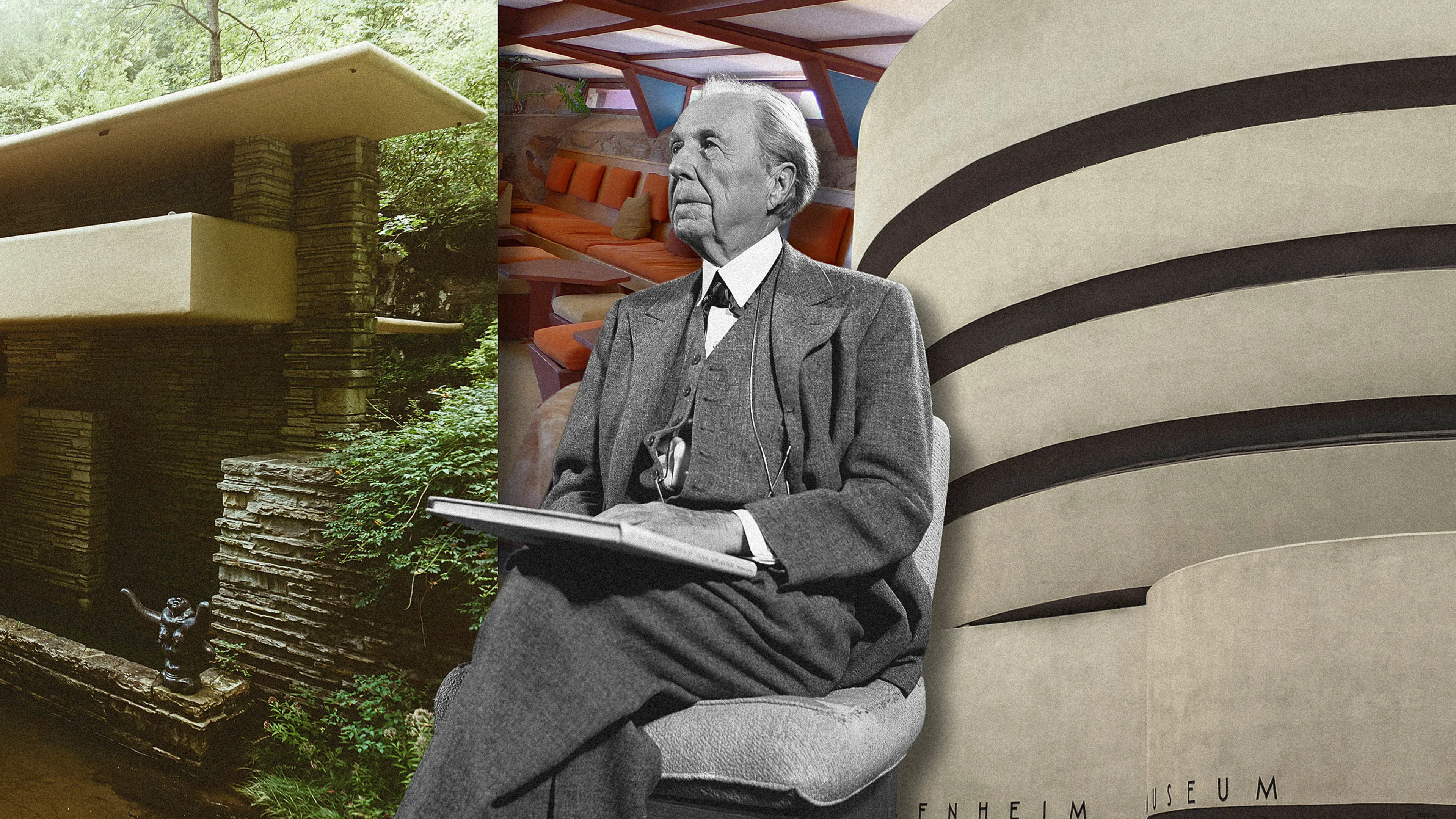
Frank Lloyd Wright’s journey toward defining modern architecture began in rural Wisconsin, where he was born into a family deeply invested in intellectual and creative pursuits. His mother, a schoolteacher, surrounded him with educational tools and early exposure to geometry, nurturing an architectural imagination long before formal training. Wright’s childhood experiences with nature, particularly the Midwestern landscape, became foundational to his philosophy of organic architecture structures that harmonize with their environment rather than dominate it.
His professional beginnings unfolded in Chicago during the aftermath of the Great Fire, when the city became a laboratory for architectural experimentation. Working under Louis Sullivan, Wright absorbed the principle that “form follows function,” yet he soon diverged, developing a personal style that emphasized horizontality, open plans, and integration with nature. Early Prairie School houses established him as a radical thinker, challenging Victorian conventions and reshaping domestic architecture.
His breakthrough came with projects such as the Robie House and later Fallingwater, which exemplified his commitment to structural innovation and aesthetic cohesion. Wright’s designs of the mid-20th century, including the Guggenheim Museum, represented a mature phase of experimentation. During the late 1980s and 1990s, his legacy reached renewed prominence as postmodern critics re-evaluated his influence, positioning him as a pioneer of modern design thinking and sustainable architecture.
By the close of the century, Wright’s philosophy had permeated global architectural education. His emphasis on site-specific design, material honesty, and spatial fluidity shaped generations of architects and redefined residential and institutional building standards worldwide. His legacy remains inseparable from the narrative of mid-century modernism and its evolution into contemporary practice.
Key Facts
- Full name of the subject: Frank Lloyd Wright
- Date of birth: 8 June 1867
- Place of birth: Richland Center, Wisconsin, USA
- Family background: Educated household with strong intellectual influence
- Early childhood experiences: Exposure to geometry and rural landscapes
- Education history: University of Wisconsin–Madison (did not graduate)
- Influences and mentors: Louis Sullivan and Prairie School architects
- Career beginnings: Draftsman in Chicago architectural firms
- Major achievements: Development of organic architecture philosophy
- Challenges and obstacles faced: Financial instability and personal controversies
- Turning points in life: Fallingwater and Guggenheim Museum commissions
- Contributions to society: Redefined residential and organic architecture
- Personal life (marriage, children, relationships): Multiple marriages and children
- Awards and recognitions: AIA Gold Medal (posthumous recognition of influence)
- Beliefs, values, or philosophy: Harmony between buildings and nature
- Legacy and impact: Pioneer of modern American architecture
- Historical or cultural significance: Bridge between traditional and modern design
Notable Works: Fallingwater, Robie House, Guggenheim Museum, Taliesin West, Unity Temple
Controversies:
Personal life scandals involving relationships and marriages
Financial difficulties leading to unpaid debts
Criticism of authoritarian leadership in Taliesin community
Debate over structural practicality of some designs
Posthumous disputes over restoration authenticity
2. Le Corbusier
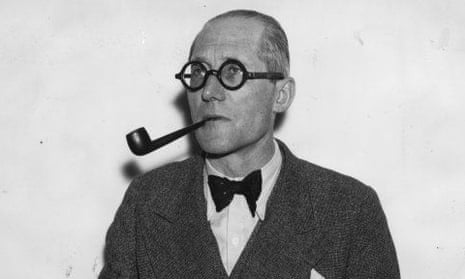
Le Corbusier emerged from La Chaux-de-Fonds in Switzerland, a watchmaking town where precision and craftsmanship defined local culture. Born Charles-Édouard Jeanneret, he initially trained in engraving, but exposure to European travel reshaped his aspirations toward architecture. Early exposure to classical forms and industrial innovation laid the groundwork for his revolutionary thinking about modern urban living.
His career began with theoretical writing and small residential commissions, where he introduced concepts such as pilotis, free façades, and open floor plans. His manifesto-like publications, including “Vers une Architecture,” positioned him as both practitioner and philosopher. Through the 1920s and 1930s, he developed a radical vision for cities organized by efficiency, light, and space.
His breakthrough arrived with projects like Villa Savoye, which embodied the “Five Points of Architecture.” By the mid-20th century, he transitioned toward sculptural forms, exemplified in the Unité d’Habitation and the city plan for Chandigarh. During the 1990s, his influence surged again as urban planners revisited his ideas about density and public housing, sparking both admiration and critique.
Le Corbusier’s global legacy is marked by his role in shaping modernist urban planning. His work influenced architecture across continents, particularly in post-war reconstruction. Though controversial, his ideas reshaped discussions about housing, infrastructure, and the relationship between architecture and society.
Key Facts
- Full name of the subject: Charles-Édouard Jeanneret-Gris
- Date of birth: 6 October 1887
- Place of birth: La Chaux-de-Fonds, Switzerland
- Family background: Watchmaking artisan family
- Early childhood experiences: Exposure to craftsmanship and precision
- Education history: Local art school in La Chaux-de-Fonds
- Influences and mentors: Peter Behrens and Auguste Perret
- Career beginnings: Residential architecture and theoretical writing
- Major achievements: Five Points of Architecture and urban planning models
- Challenges and obstacles faced: Criticism of large-scale urban proposals
- Turning points in life: Chandigarh city planning commission
- Contributions to society: Modernist urban planning principles
- Personal life (marriage, children, relationships): Married to Yvonne Gallis
- Awards and recognitions: International architecture honors
- Beliefs, values, or philosophy: Functionalism and industrial efficiency
- Legacy and impact: Father of modernist urban planning
- Historical or cultural significance: Influenced global post-war reconstruction
Notable Works: Villa Savoye, Unité d’Habitation, Chandigarh Capitol Complex, Ronchamp Chapel, Maison La Roche
Controversies:
Criticism of urban plans for being overly rigid
Debate over social impact of high-density housing
Political associations during mid-century Europe
Accusations of authoritarian urban philosophy
Ongoing reassessment of modernist planning consequences
3. Ludwig Mies van der Rohe
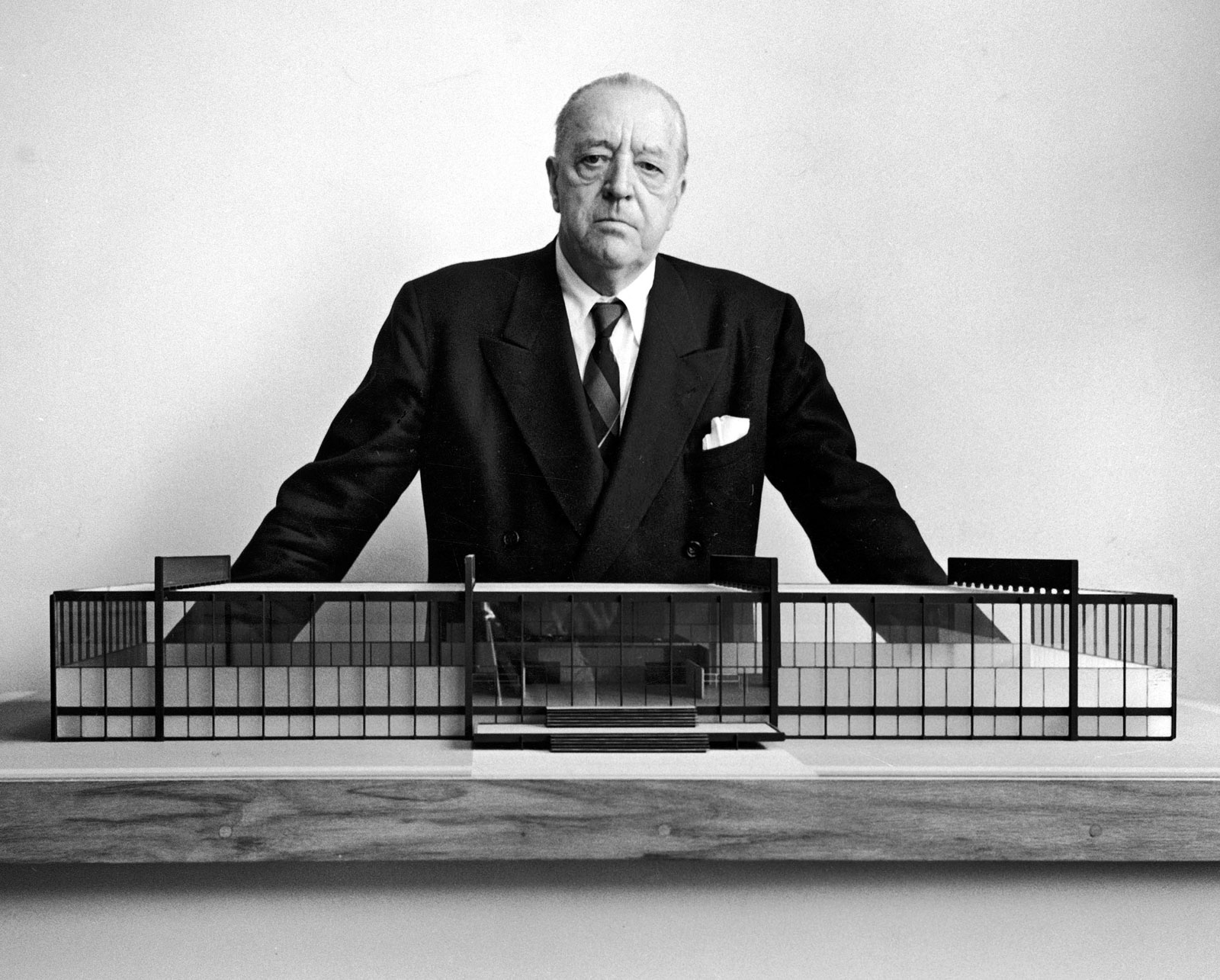
Born in Aachen, Germany, Ludwig Mies van der Rohe grew up in a stonemason’s household where craftsmanship and material understanding formed his earliest education. His lack of formal architectural schooling did not hinder his development; instead, practical apprenticeship shaped his appreciation for structure and proportion. Exposure to classical architecture during his early career influenced his minimalist sensibility.
His career began in Berlin, where he worked for influential architects and gradually developed a modernist vocabulary. His leadership of the Bauhaus in its final years placed him at the center of avant-garde design. After emigrating to the United States, he transformed architectural education at the Illinois Institute of Technology, promoting simplicity and structural clarity.
His breakthrough came with the Barcelona Pavilion and later American skyscrapers such as the Seagram Building. By the late 20th century, his “less is more” philosophy dominated corporate architecture. The 1990s saw a revival of glass-and-steel minimalism, reaffirming his enduring influence on contemporary urban skylines.
Mies van der Rohe’s legacy is defined by structural purity and minimalism. His designs established the international style, shaping corporate architecture worldwide. His work continues to influence modern design principles and architectural pedagogy.
Key Facts
- Full name of the subject: Ludwig Mies van der Rohe
- Date of birth: 27 March 1886
- Place of birth: Aachen, Germany
- Family background: Stonemason family
- Early childhood experiences: Practical craftsmanship training
- Education history: Apprenticeship-based learning
- Influences and mentors: Peter Behrens and Karl Friedrich Schinkel
- Career beginnings: Work in Berlin architectural studios
- Major achievements: Development of minimalist international style
- Challenges and obstacles faced: Closure of Bauhaus under political pressure
- Turning points in life: Emigration to United States
- Contributions to society: Modern skyscraper design principles
- Personal life (marriage, children, relationships): Married, later separated
- Awards and recognitions: Presidential Medal of Freedom (post-career recognition)
- Beliefs, values, or philosophy: “Less is more” minimalism
- Legacy and impact: Shaped modern corporate architecture
- Historical or cultural significance: Leader of Bauhaus and international styl
Notable Works: Barcelona Pavilion, Seagram Building, Farnsworth House, Crown Hall, Lake Shore Drive Apartments
Controversies:
Criticism over functional austerity
Debates about livability of minimalist spaces
Professional conflicts during Bauhaus closure
Structural cost concerns in glass buildings
Postmodern criticism of uniform corporate design
4. Eero Saarinen
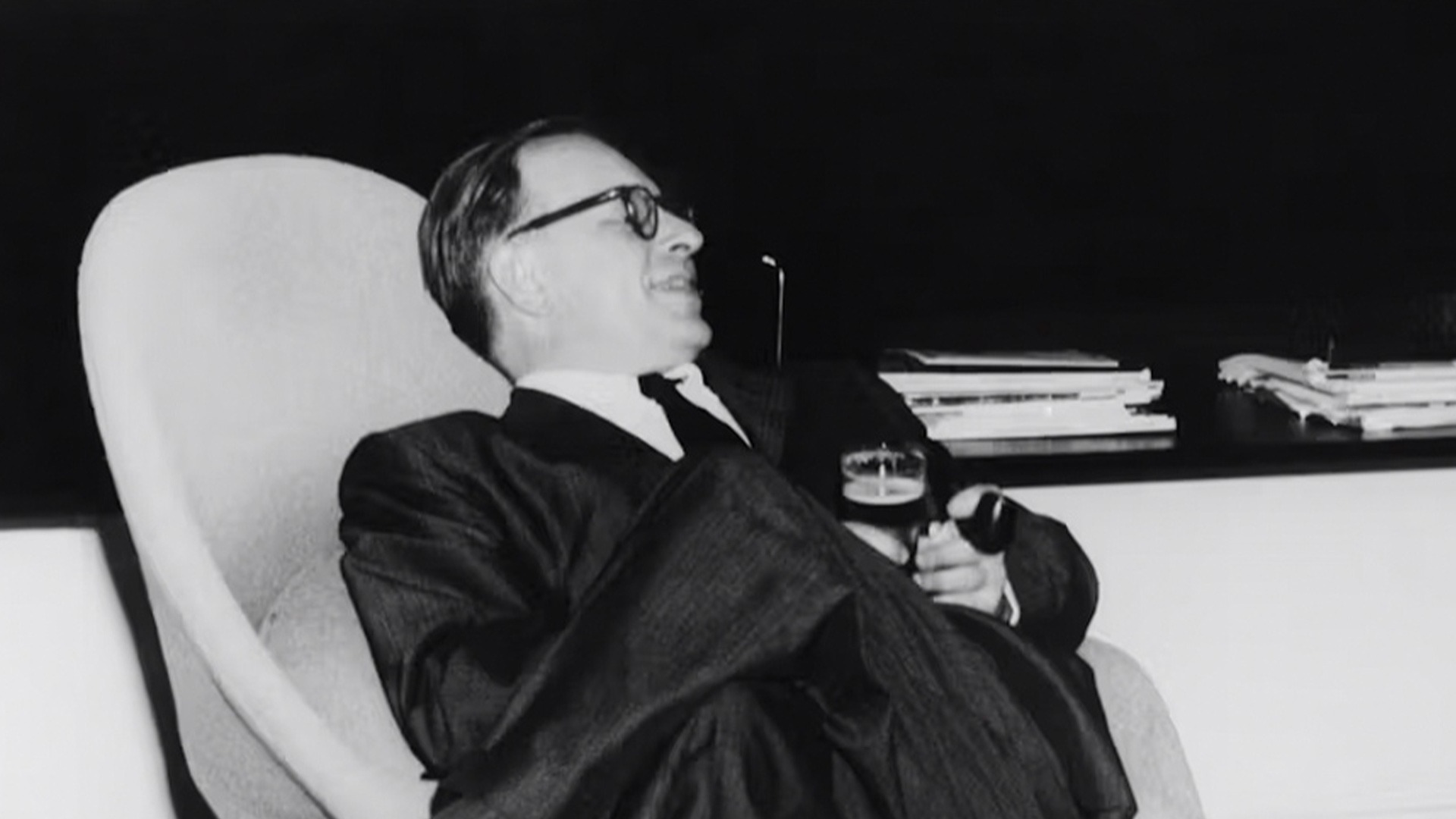
Eero Saarinen was born into an architectural household in Kirkkonummi, Finland, where design discussions shaped his early intellectual environment. His father, Eliel Saarinen, was already an accomplished architect, and this familial influence exposed Eero to modernist experimentation from childhood. After immigrating to the United States, he grew up within the Cranbrook educational community in Michigan, where art, design, and architecture merged into a holistic creative culture. These formative experiences cultivated his sensitivity to sculptural form and spatial drama.
His career began in collaboration with his father, contributing to projects that emphasized modernist clarity. Saarinen initially worked across furniture design and architecture, demonstrating versatility rarely seen among his contemporaries. His early recognition came through the design of innovative furniture pieces with Charles Eames, but he soon transitioned fully into architecture, seeking expressive structural solutions that balanced engineering and aesthetics.
His breakthrough arrived with the Gateway Arch in St. Louis and the General Motors Technical Center, which showcased his ability to merge monumental symbolism with functional planning. By the late 20th century, particularly during the 1990s, renewed interest in expressive modernism led scholars to reassess Saarinen’s work as a bridge between strict functionalism and sculptural experimentation.
Saarinen’s legacy lies in his willingness to challenge stylistic consistency. Rather than adhering to a single visual language, he tailored each design to its context and purpose. His work expanded mid-century modernism into expressive territory, influencing later generations of architects who embraced structural drama and innovation.
Key Facts
- Full name of the subject: Eero Saarinen
- Date of birth: 20 August 1910
- Place of birth: Kirkkonummi, Finland
- Family background: Son of architect Eliel Saarinen
- Early childhood experiences: Raised in Cranbrook artistic community
- Education history: Yale University School of Architecture
- Influences and mentors: Eliel Saarinen and Cranbrook designers
- Career beginnings: Collaboration with father and furniture design
- Major achievements: Gateway Arch and TWA Flight Center
- Challenges and obstacles faced: Criticism for stylistic inconsistency
- Turning points in life: Winning Gateway Arch competition
- Contributions to society: Integration of sculpture and architecture
- Personal life (marriage, children, relationships): Married to Aline Saarinen
- Awards and recognitions: AIA Gold Medal (posthumous recognition)
- Beliefs, values, or philosophy: Context-driven design solutions
- Legacy and impact: Expanded expressive modernist architecture
- Historical or cultural significance: Bridged functionalism and sculptural modernism
Notable Works: Gateway Arch, TWA Flight Center, Dulles International Airport, GM Technical Center, Yale Ingalls Rink
Controversies:
Criticism over lack of consistent architectural language
Debates about structural costs of expressive forms
Concerns about maintenance of complex geometries
Professional rivalry within modernist movement
Posthumous discussions on authorship within large firm
5. Richard Neutra
Richard Neutra was born in Vienna, Austria, where the cultural vibrancy of early 20th-century Europe shaped his intellectual development. Growing up amid the city’s artistic and philosophical movements, he absorbed ideas about psychology, technology, and modern living. His education in engineering and architecture fostered a scientific approach to design, emphasizing human comfort and environmental sensitivity.
Neutra’s career began in Europe, but his relocation to the United States marked a defining transition. Settling in California, he became a central figure in the development of modernist residential architecture. His early houses emphasized glass walls, open plans, and integration with landscape, reflecting both European modernism and the Californian lifestyle.
His breakthrough came with the Lovell Health House, which introduced steel-frame construction in residential design. By the 1990s, architectural historians revisited Neutra’s work as a precursor to sustainable architecture. His focus on climate-responsive design gained renewed relevance in discussions about environmental responsibility.
Neutra’s legacy is defined by his human-centered approach. He believed architecture should enhance psychological well-being, blending indoor and outdoor spaces. His work influenced residential design worldwide and shaped the development of modern Californian architecture.
Key Facts
- Full name of the subject: Richard Joseph Neutra
- Date of birth: 8 April 1892
- Place of birth: Vienna, Austria
- Family background: Middle-class Jewish family
- Early childhood experiences: Exposure to Viennese intellectual culture
- Education history: Vienna University of Technology
- Influences and mentors: Adolf Loos and Frank Lloyd Wright
- Career beginnings: Work in Europe and relocation to California
- Major achievements: Development of modern residential architecture
- Challenges and obstacles faced: Cultural adaptation in United States
- Turning points in life: Lovell Health House commission
- Contributions to society: Climate-responsive residential design
- Personal life (marriage, children, relationships): Married with children
- Awards and recognitions: AIA Gold Medal (1977)
- Beliefs, values, or philosophy: Architecture for human well-being
- Legacy and impact: Influenced modern residential architecture
- Historical or cultural significance: Pioneer of Californian modernism
Notable Works: Lovell Health House, Kaufmann Desert House, VDL Research House, Tremaine House, Cyclorama Building
Controversies:
Criticism for overly delicate structural systems
Professional rivalry with contemporaries
Debate about livability of glass-heavy homes
Client conflicts over construction budgets
Later criticism of repetitive stylistic approach
6. Charles Eames and Ray Eames
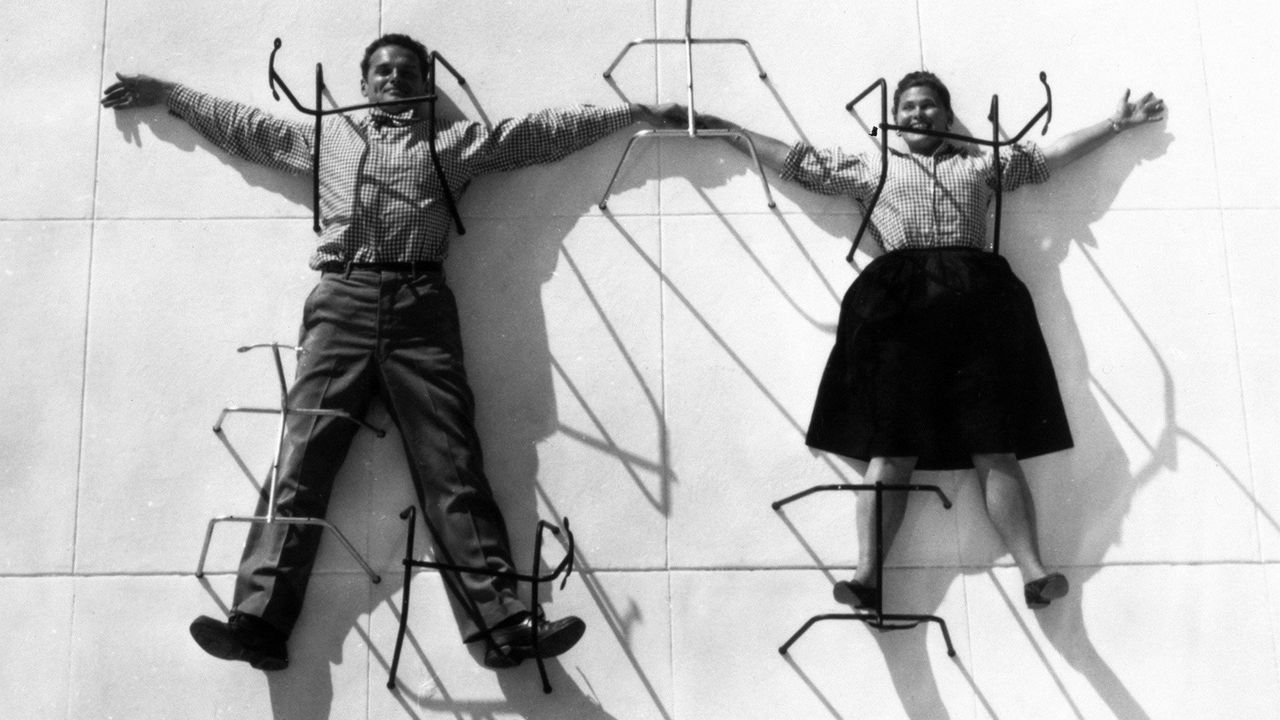
Charles and Ray Eames formed one of the most influential partnerships in mid-century modern design. Charles, born in Missouri, studied architecture, while Ray, born in California, trained in painting and abstract art. Their collaboration began at Cranbrook Academy, where their complementary skills technical and artistic merged into a unified design philosophy emphasizing experimentation and accessibility.
Their career began with furniture design, particularly molded plywood chairs developed during World War II. Their architectural ambitions matured with the Eames House in California, a project that demonstrated prefabrication, modular construction, and integration with landscape. Their approach emphasized affordability and mass production without sacrificing aesthetics.
Their breakthrough extended beyond architecture into multimedia exhibitions and industrial design. By the 1990s, their work experienced renewed appreciation as designers revisited mid-century modern furniture and architecture. Their influence extended across architecture, product design, and visual communication.
The Eames legacy rests on interdisciplinary innovation. They redefined modern living through accessible design, shaping the aesthetics of postwar America and influencing global design education.
Key Facts
- Full name of the subject: Charles Ormond Eames Jr.
- Date of birth: 17 June 1907
- Place of birth: St. Louis, Missouri, USA
- Family background: Middle-class American household
- Early childhood experiences: Interest in engineering and drawing
- Education history: Washington University (architecture studies)
- Influences and mentors: Eliel Saarinen and Cranbrook community
- Career beginnings: Furniture and experimental design
- Major achievements: Eames House and molded plywood furniture
- Challenges and obstacles faced: Production limitations during early years
- Turning points in life: Cranbrook collaboration with Ray
- Contributions to society: Accessible modern design
- Personal life (marriage, children, relationships): Married to Ray Eames
- Awards and recognitions: Numerous design awards
- Beliefs, values, or philosophy: Design for everyday life
- Legacy and impact: Influenced modern industrial design
- Historical or cultural significance: Defined mid-century design culture
Notable Works: Eames House, Case Study House No. 8, Eames Lounge Chair, IBM Pavilion, Powers of Ten
Controversies:
Debates about authorship between Charles and Ray
Criticism regarding commercialization of modernism
Production quality variations in mass manufacturing
Intellectual property disputes over furniture reproductions
Scholarly reassessment of Ray’s underrecognized role
7. Philip Johnson
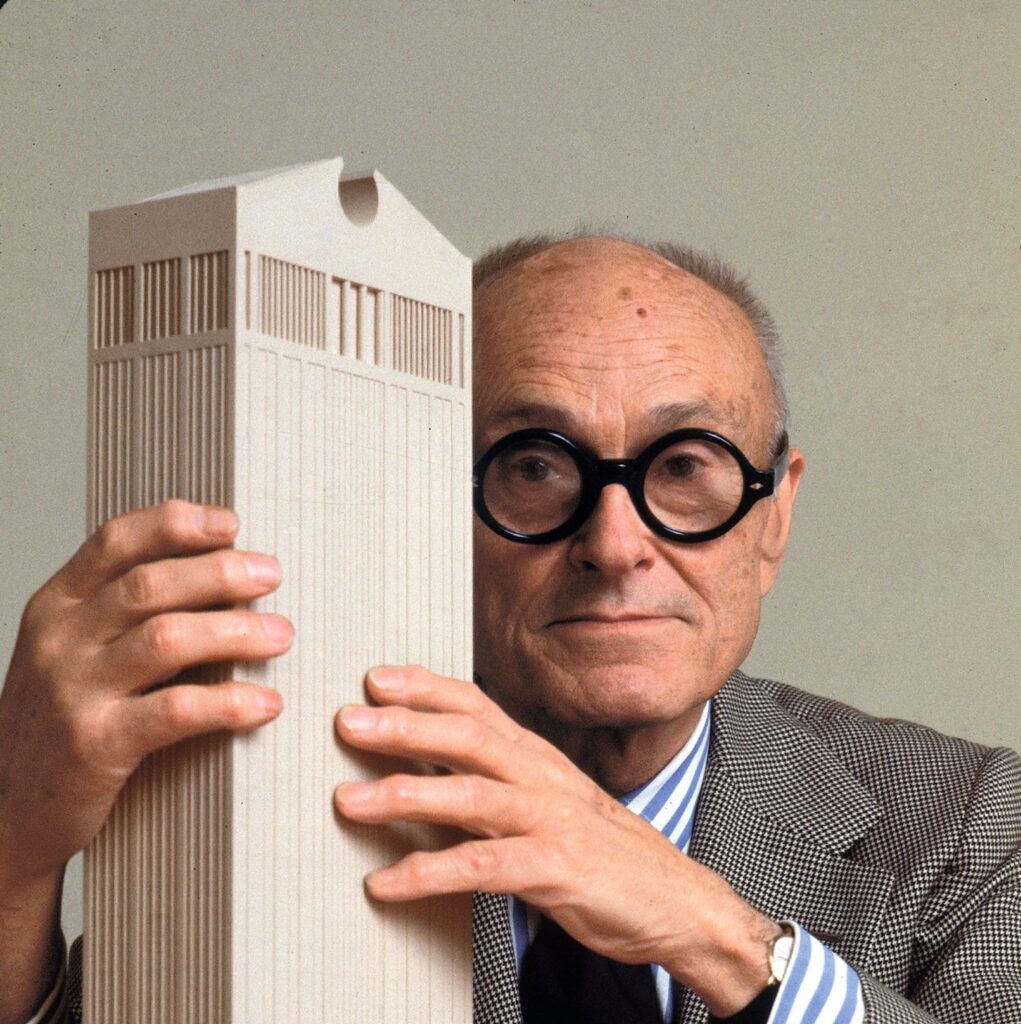
Philip Johnson was born in Cleveland, Ohio, into a wealthy family that enabled extensive travel and intellectual exposure. His early fascination with philosophy and art led him to study at Harvard, where he developed an interest in modern European architecture. His exposure to international modernism shaped his advocacy for the International Style in America.
Johnson’s career began not as a practicing architect but as a curator at the Museum of Modern Art, where he organized influential exhibitions promoting modernist architecture. His transition into architectural practice produced early works such as the Glass House, which embodied minimalist principles inspired by Mies van der Rohe.
His breakthrough came through institutional commissions and skyscraper design. By the 1990s, Johnson’s career was reassessed for its longevity and stylistic evolution, from strict modernism to postmodern experimentation. His adaptability kept him relevant across decades.
Johnson’s legacy is complex yet influential. He played a pivotal role in introducing modern architecture to American audiences and shaped architectural discourse through both practice and criticism.
Key Facts
- Full name of the subject: Philip Cortelyou Johnson
- Date of birth: 8 July 1906
- Place of birth: Cleveland, Ohio, USA
- Family background: Wealthy American family
- Early childhood experiences: Extensive travel in Europe
- Education history: Harvard University
- Influences and mentors: Ludwig Mies van der Rohe
- Career beginnings: Museum of Modern Art curator
- Major achievements: Glass House and corporate skyscrapers
- Challenges and obstacles faced: Criticism of political associations
- Turning points in life: Design of Glass House
- Contributions to society: Promotion of modern architecture
- Personal life (marriage, children, relationships): Private personal life
- Awards and recognitions: First Pritzker Architecture Prize winner
- Beliefs, values, or philosophy: Architectural experimentation
- Legacy and impact: Popularized International Style in America
- Historical or cultural significance: Influential critic and architect
Notable Works: Glass House, Seagram Building collaboration, AT&T Building, Crystal Cathedral, IDS Center
Controversies:
Early political affiliations criticized
Accusations of opportunistic stylistic shifts
Debates over originality versus influence
Criticism of elite architectural patronage
Scholarly reassessment of curatorial influence
8. Alvar Aalto
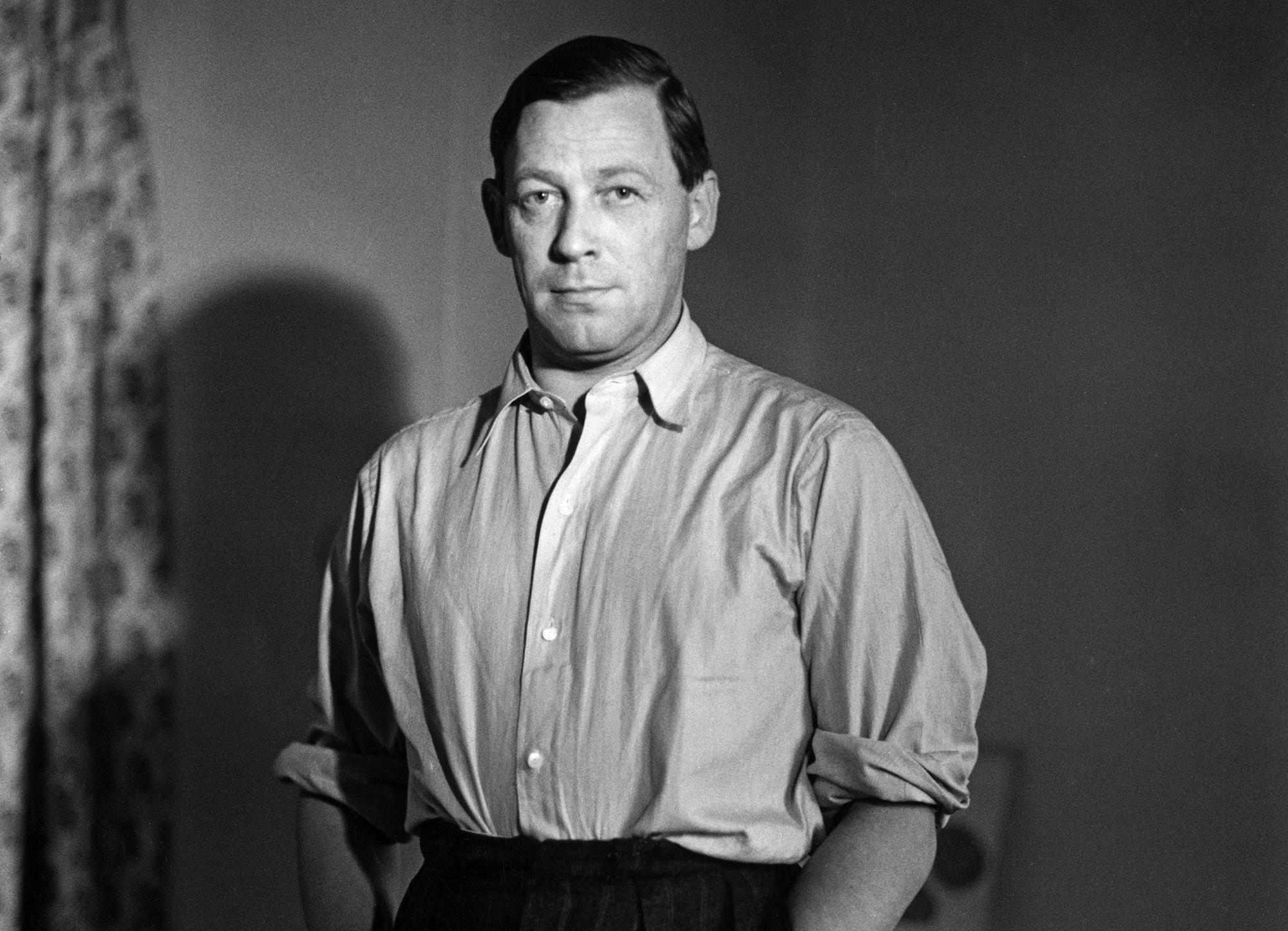
Alvar Aalto was born in Kuortane, Finland, into a culturally rich environment where literature, art, and craftsmanship intersected. His upbringing in the Nordic landscape shaped his sensitivity to nature, materials, and light. Unlike many contemporaries who embraced rigid functionalism, Aalto’s early experiences fostered a more humanistic interpretation of modernism, blending technology with organic forms.
His career began in Finland during the 1920s, designing small civic and residential projects that reflected classical influences. Gradually, he transitioned toward modernism, but with a distinctive warmth absent in many International Style buildings. His designs incorporated wood, natural light, and flowing spatial arrangements, signaling a departure from strict geometric austerity.
His breakthrough came with the Paimio Sanatorium, a project that demonstrated architecture as a tool for healing and human comfort. By mid-century, Aalto expanded internationally, designing libraries, cultural centers, and furniture. During the 1990s, architects revisited his work as an early model for sustainable and human-centered design, reaffirming his importance in modern architectural discourse.
Aalto’s legacy lies in his fusion of modernism with regional identity. He demonstrated that functional architecture could remain emotionally resonant and environmentally responsive. His influence continues to shape contemporary Nordic design and sustainable architecture globally.
Key Facts
- Full name of the subject: Hugo Alvar Henrik Aalto
- Date of birth: 3 February 1898
- Place of birth: Kuortane, Finland
- Family background: Father was a land surveyor, mother a postmistress
- Early childhood experiences: Exposure to Nordic landscapes
- Education history: Helsinki University of Technology
- Influences and mentors: Nordic classicism and modernist peers
- Career beginnings: Small civic and residential commissions
- Major achievements: Humanistic interpretation of modernism
- Challenges and obstacles faced: Balancing tradition with innovation
- Turning points in life: Paimio Sanatorium commission
- Contributions to society: Human-centered healthcare architecture
- Personal life (marriage, children, relationships): Married Aino Aalto, later Elissa Aalto
- Awards and recognitions: AIA Gold Medal, Royal Gold Medal
- Beliefs, values, or philosophy: Architecture for human well-being
- Legacy and impact: Pioneer of organic modernism
- Historical or cultural significance: Defined Scandinavian modern architecture
Notable Works: Paimio Sanatorium, Finlandia Hall, Villa Mairea, Säynätsalo Town Hall, Viipuri Library
Controversies:
Criticism of high construction costs
Debate over functional practicality of organic forms
Professional disputes within Finnish architecture
Maintenance challenges of experimental materials
Later criticism for stylistic repetition
9. Oscar Niemeyer

Oscar Niemeyer was born in Rio de Janeiro, Brazil, where colonial architecture and tropical landscapes influenced his visual imagination. Growing up in a culturally vibrant city, he developed an early appreciation for curves and monumental scale. His education at the National School of Fine Arts introduced him to modernist principles, but his artistic temperament pushed him beyond rigid orthodoxy.
His career began in collaboration with Lucio Costa, participating in government commissions that embraced modernism as a symbol of national progress. Niemeyer quickly distinguished himself through sculptural concrete forms, rejecting strict functionalism in favor of expressive geometry. His early projects established him as a rising figure in Latin American architecture.
His breakthrough came with Brasília, Brazil’s new capital, where his designs defined the city’s civic identity. Buildings such as the National Congress and Cathedral showcased dramatic curves and structural daring. By the 1990s, his work gained renewed global attention as architects revisited expressive modernism and large-scale civic planning.
Niemeyer’s legacy rests on his poetic use of reinforced concrete. He demonstrated that modernism could be both monumental and sensual, influencing generations of architects worldwide. His work remains a defining symbol of Brazilian cultural identity.
Key Facts
- Full name of the subject: Oscar Ribeiro de Almeida Niemeyer Soares Filho
- Date of birth: 15 December 1907
- Place of birth: Rio de Janeiro, Brazil
- Family background: Middle-class Brazilian family
- Early childhood experiences: Exposure to Rio’s urban culture
- Education history: National School of Fine Arts, Rio de Janeiro
- Influences and mentors: Lucio Costa and Le Corbusier
- Career beginnings: Government commissions in Brazil
- Major achievements: Design of Brasília civic buildings
- Challenges and obstacles faced: Political changes affecting commissions
- Turning points in life: Brasília capital project
- Contributions to society: Monumental civic architecture
- Personal life (marriage, children, relationships): Married with family
- Awards and recognitions: Pritzker Architecture Prize
- Beliefs, values, or philosophy: Architecture as artistic expression
- Legacy and impact: Global influence on sculptural modernism
- Historical or cultural significance: Defined Brazilian modern architecture
Notable Works: Brasília Cathedral, National Congress of Brazil, Niterói Contemporary Art Museum, Palácio da Alvorada, Pampulha Modern Ensemble
Controversies:
Criticism of Brasília’s urban functionality
Debates over cost of monumental projects
Political affiliations attracting criticism
Maintenance challenges in concrete structures
Urban planning critiques regarding pedestrian scale
10. Marcel Breuer
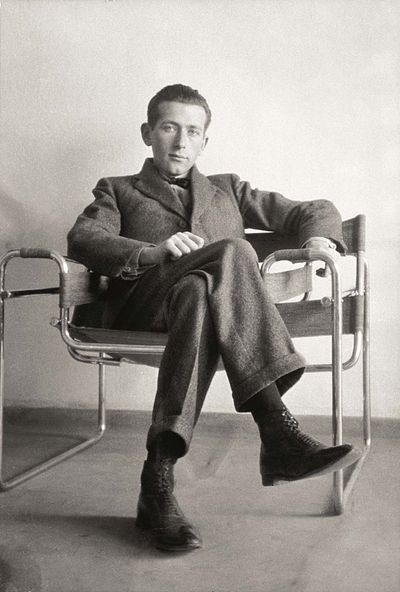
Marcel Breuer was born in Pécs, Hungary, where he developed an early interest in craftsmanship and design. His education at the Bauhaus in Germany immersed him in avant-garde experimentation, shaping his commitment to modern materials and industrial production. Breuer’s formative years at the Bauhaus exposed him to interdisciplinary design thinking that blended architecture, furniture, and art.
His career began as a furniture designer, most notably with tubular steel chairs that revolutionized modern interiors. Transitioning into architecture, he applied similar principles of structural clarity and material honesty. After emigrating to the United States, he became an influential educator and practitioner, shaping American modernism.
His breakthrough came with institutional projects such as the UNESCO Headquarters and Whitney Museum of American Art. By the 1990s, his Brutalist-influenced modernism gained renewed appreciation, particularly in academic and cultural architecture. His work demonstrated the expressive potential of concrete and modular forms.
Breuer’s legacy lies in his versatility across scales. From furniture to monumental buildings, he redefined modernist aesthetics. His influence persists in contemporary institutional architecture and design education.
Key Facts
- Full name of the subject: Marcel Lajos Breuer
- Date of birth: 21 May 1902
- Place of birth: Pécs, Hungary
- Family background: Middle-class Hungarian family
- Early childhood experiences: Interest in craftsmanship
- Education history: Bauhaus School, Weimar
- Influences and mentors: Walter Gropius and Bauhaus movement
- Career beginnings: Furniture design at Bauhaus
- Major achievements: Tubular steel furniture and institutional architecture
- Challenges and obstacles faced: Migration and adaptation in U.S.
- Turning points in life: Transition from furniture to architecture
- Contributions to society: Integration of industrial materials in design
- Personal life (marriage, children, relationships): Married with children
- Awards and recognitions: AIA Gold Medal
- Beliefs, values, or philosophy: Functional modernism with material honesty
- Legacy and impact: Influenced Brutalist and institutional architecture
- Historical or cultural significance: Key Bauhaus figure in America
Notable Works: Whitney Museum of American Art, UNESCO Headquarters, Saint John’s Abbey, Breuer House II, IBM Research Center
Controversies:
Criticism of Brutalist aesthetics
Debate over harsh concrete surfaces
Preservation challenges of concrete buildings
Public resistance to monumental scale
Reassessment of Brutalism in later decades
Notable Mentions: Louis Kahn
Gordon Bunshaft
Edward Durell Stone
Paul Rudolph
Minoru Yamasaki