
Top 10 Pop Art Pioneers
Top 10 Pop Art Pioneers
In This Content
1. Andy Warhol
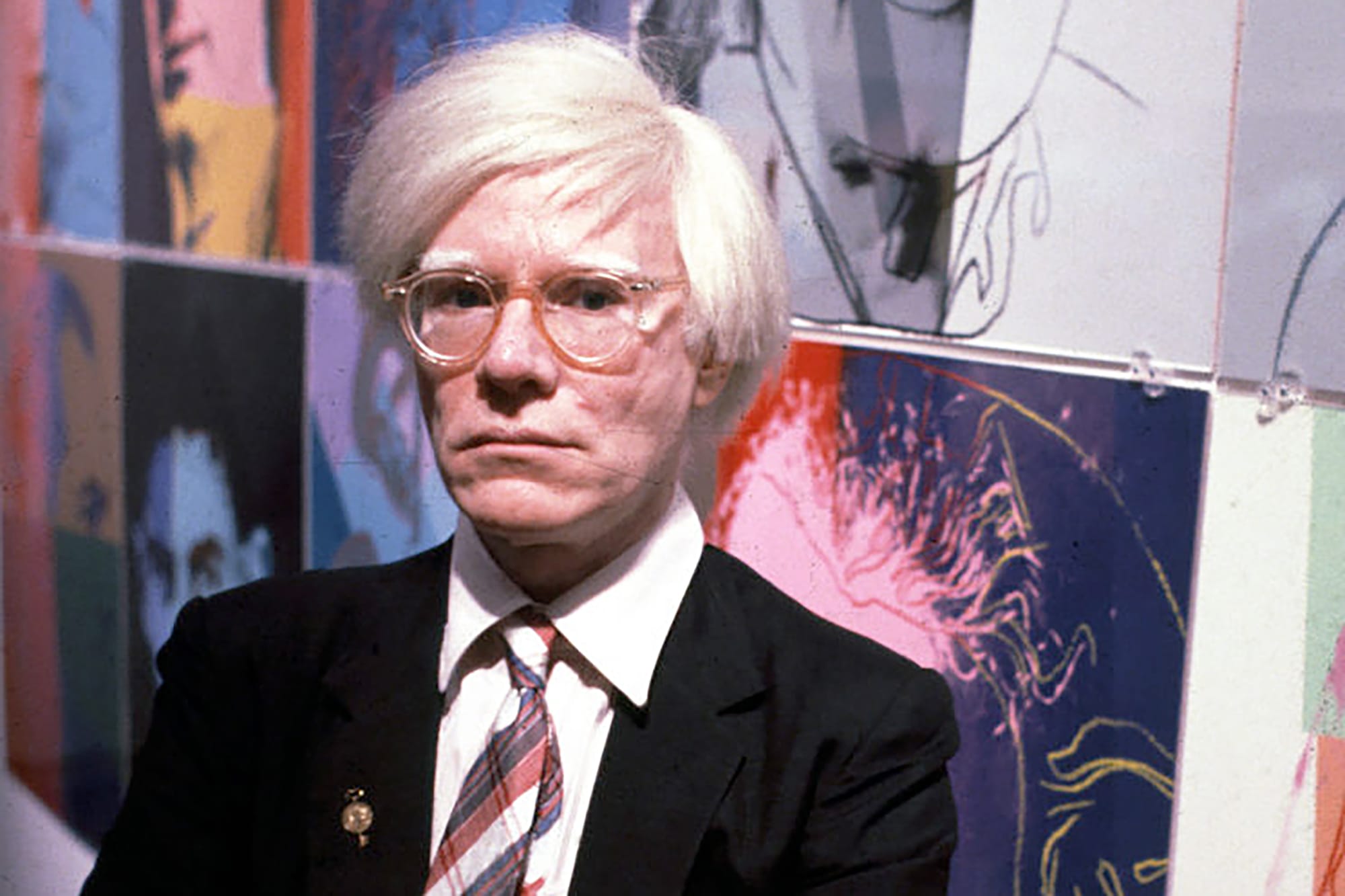
Andy Warhol’s early life in Pittsburgh was shaped by working-class immigrant roots and a persistent fascination with commercial imagery. Born to Slovakian parents, he experienced frequent illness in childhood, which led him to spend extended periods drawing, cutting images from magazines, and developing an early sensitivity to visual repetition. These formative experiences created a foundation for his later obsession with consumer culture and mechanical reproduction.
Warhol’s career began in commercial illustration in New York City during the 1950s. He worked in advertising and fashion illustration, developing a distinctive style that blurred the line between commercial art and fine art. His early work already reflected a fascination with mass-produced objects, but it was his transition into gallery spaces that marked a decisive shift in his artistic trajectory.
The breakthrough came with his iconic depictions of consumer goods such as Campbell’s soup cans and Coca-Cola bottles. These works transformed everyday commodities into cultural symbols, challenging traditional definitions of artistic originality. During the broader cultural shifts of the 1960s and the retrospective evaluation of the 1990s art market boom, Warhol’s Factory studio became synonymous with celebrity culture, repetition, and mechanical art production. His artistic identity fused performance, branding, and social commentary.
Warhol’s legacy lies in redefining art as a mirror of consumer society. His work anticipated the rise of celebrity culture, branding dominance, and media saturation, making him one of the most influential cultural figures of the twentieth century.
Andy Warhol Key Facts
- Full name of the subject: Andrew Warhola (Andy Warhol)
- Date of birth: 6 August 1928
- Place of birth: Pittsburgh, Pennsylvania, United States
- Family background: Working-class immigrant family
- Early childhood experiences: Frequent illness and early drawing interest
- Education history: Carnegie Institute of Technology
- Influences and mentors: Commercial illustrators; mass media culture
- Career beginnings: Advertising and magazine illustration
- Major achievements: Pop Art movement leadership; The Factory studio
- Challenges and obstacles faced: Critical rejection of commercial-style art
- Turning points in life: Transition to pop art painting
- Contributions to society: Redefined the relationship between art and consumer culture
- Personal life (marriage, children, relationships): Private personal relationships
- Awards and recognitions: Major museum retrospectives
- Beliefs, values, or philosophy: Art as mass production and culture reflection
- Legacy and impact: Global pop culture icon
- Historical or cultural significance: Founder of Pop Art movement
Notable Works: Campbell’s Soup Cans, Marilyn Diptych, The Factory productions
Andy Warhol Controversies:
Warhol’s commercialization of art sparked debate about artistic authenticity and mass production. The issue centers on whether his use of mechanical reproduction undermined traditional notions of originality. The background involves the emergence of Pop Art in post-war consumer society. Stakeholders included critics, galleries, collectors, and fellow artists. Critics argued that his work blurred the line between art and commodity, while supporters viewed it as a deliberate commentary on consumer culture. Art historians confirm that Warhol intentionally embraced industrial methods. The impact reshaped modern art markets and redefined artistic value systems.
2. Roy Lichtenstein
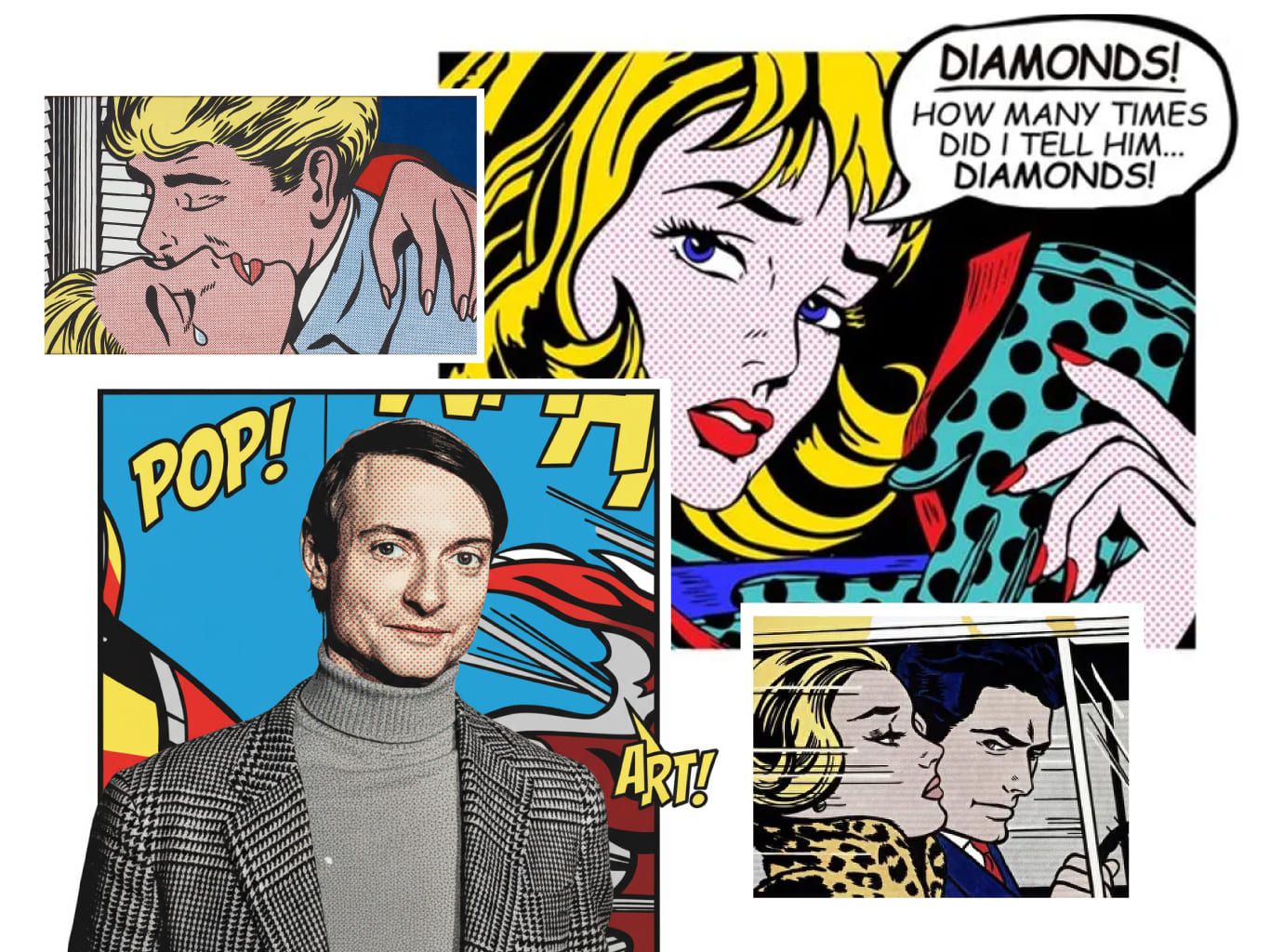
Roy Lichtenstein’s early life in New York City exposed him to both academic art traditions and the emerging visual language of comic books. Raised in a middle-class environment, he developed an early interest in drawing and classical painting techniques. His formal education in fine arts provided him with a strong technical foundation, which he later used to challenge artistic conventions.
Lichtenstein’s career beginnings included teaching art while experimenting with abstract expressionism. However, his artistic direction shifted when he began incorporating comic strip aesthetics into large-scale paintings. This transition marked a deliberate departure from emotional abstraction toward structured visual irony.
The breakthrough came with works that replicated comic book panels using Ben-Day dots and bold outlines. These pieces transformed low-culture imagery into high-art contexts, provoking debates within the art world. During the retrospective reassessment of Pop Art in the 1990s, his work was recognized as central to the movement’s critique of mass media and reproduction.
Lichtenstein’s legacy lies in elevating commercial illustration techniques into fine art discourse. His work challenged hierarchies between high and low culture, permanently altering contemporary visual language.
Roy Lichtenstein Key Facts
- Full name of the subject: Roy Fox Lichtenstein
- Date of birth: 27 October 1923
- Place of birth: New York City, United States
- Family background: Middle-class Jewish-American family
- Early childhood experiences: Early drawing and design interest
- Education history: Ohio State University
- Influences and mentors: Comics, advertising imagery, abstract expressionism
- Career beginnings: Art teaching and experimental painting
- Major achievements: Comic-style Pop Art paintings
- Challenges and obstacles faced: Initial critical rejection
- Turning points in life: Adoption of comic-strip visual language
- Contributions to society: Redefined visual culture in fine art
- Personal life (marriage, children, relationships): Married Isabel Wilson; children
- Awards and recognitions: Major museum exhibitions
- Beliefs, values, or philosophy: Art as cultural commentary
- Legacy and impact: Elevated commercial imagery in fine art
- Historical or cultural significance: Pop Art pioneer
Roy Lichtenstein Notable Works: Whaam!, Drowning Girl, comic-style series paintings
Roy Lichtenstein Controversies:
Lichtenstein faced criticism for directly referencing comic panels created by unknown illustrators. The issue centers on questions of originality and artistic appropriation. The background involves his adaptation of existing comic imagery into large-scale paintings. Stakeholders included original comic artists, galleries, critics, and collectors. Critics argued that his work appropriated commercial illustration without attribution, while supporters claimed he transformed context and meaning through scale and technique. Art historical analysis confirms reliance on source imagery but emphasizes conceptual transformation. The impact contributed to long-standing debates about appropriation in contemporary art.
3. Richard Hamilton
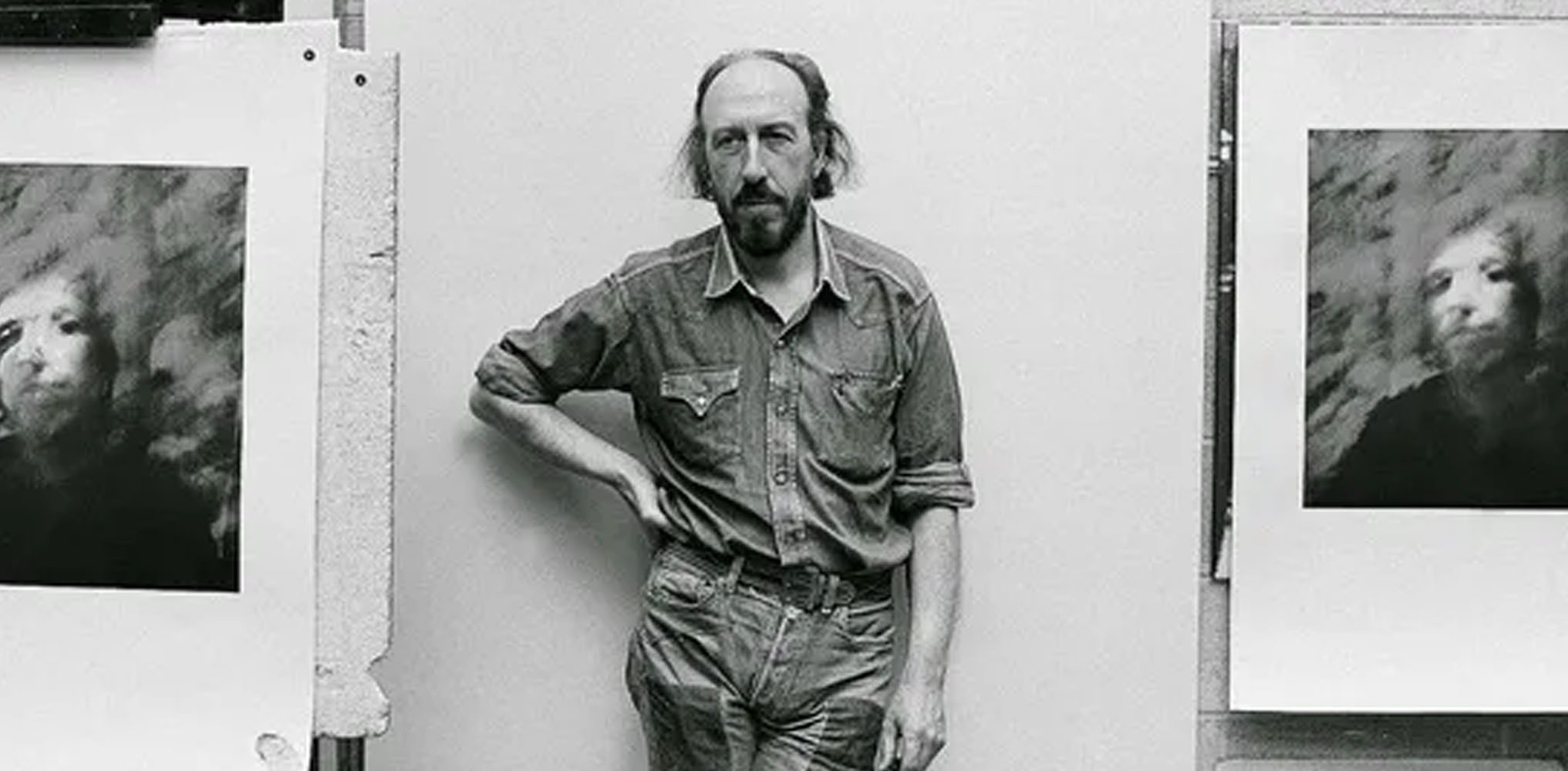
Richard Hamilton’s early life in London was shaped by post-war cultural reconstruction and exposure to both engineering and fine art traditions. He developed an early interest in technical drawing and visual composition, which later influenced his analytical approach to imagery. His education at the Royal Academy Schools refined his ability to merge conceptual thinking with visual experimentation.
Hamilton’s career beginnings emerged through teaching and early exhibitions that explored the intersection of technology, media, and consumer culture. He became closely associated with the Independent Group, a collective that questioned traditional artistic hierarchies and explored the impact of mass media on society.
The breakthrough came with his 1956 collage that is widely regarded as one of the earliest expressions of Pop Art. This work synthesized advertising imagery, household objects, and cultural symbols into a single composition. During the 1990s retrospective evaluation of Pop Art origins, Hamilton’s role as a conceptual architect of the movement was widely acknowledged.
Hamilton’s legacy lies in defining Pop Art as a critical response to consumer culture rather than mere aesthetic celebration. His analytical approach positioned him as a foundational thinker in modern visual culture.
Richard Hamilton Key Facts
- Full name of the subject: Richard William Hamilton
- Date of birth: 24 February 1922
- Place of birth: London, England
- Family background: Working-class British family
- Early childhood experiences: Technical drawing and engineering exposure
- Education history: Royal Academy Schools
- Influences and mentors: Bauhaus ideas; modernist designers
- Career beginnings: Teaching and experimental art
- Major achievements: Foundational Pop Art collage work
- Challenges and obstacles faced: Post-war resource limitations
- Turning points in life: Formation of Independent Group
- Contributions to society: Theoretical foundation of Pop Art
- Personal life (marriage, children, relationships): Married Terry O’Reilly; children
- Awards and recognitions: International art honors
- Beliefs, values, or philosophy: Art as media critique
- Legacy and impact: Intellectual founder of Pop Art
- Historical or cultural significance: Early Pop Art theorist
Richard Hamilton Notable Works: “Just what is it that makes today’s homes so different, so appealing?”, Independent Group contributions
Richard Hamilton Controversies:
Hamilton’s reinterpretation of consumer imagery raised debate about the boundaries between critique and endorsement. The issue centers on whether his collages subtly celebrated consumer culture while critiquing it. The background involves post-war Britain’s growing advertising industry. Stakeholders included art critics, cultural theorists, and galleries. Critics argued ambiguity weakened critical intent, while supporters viewed dual interpretation as intentional. Scholarly consensus confirms deliberate ambiguity. The impact strengthened conceptual art discourse and influenced media theory discussions.
4. Claes Oldenburg
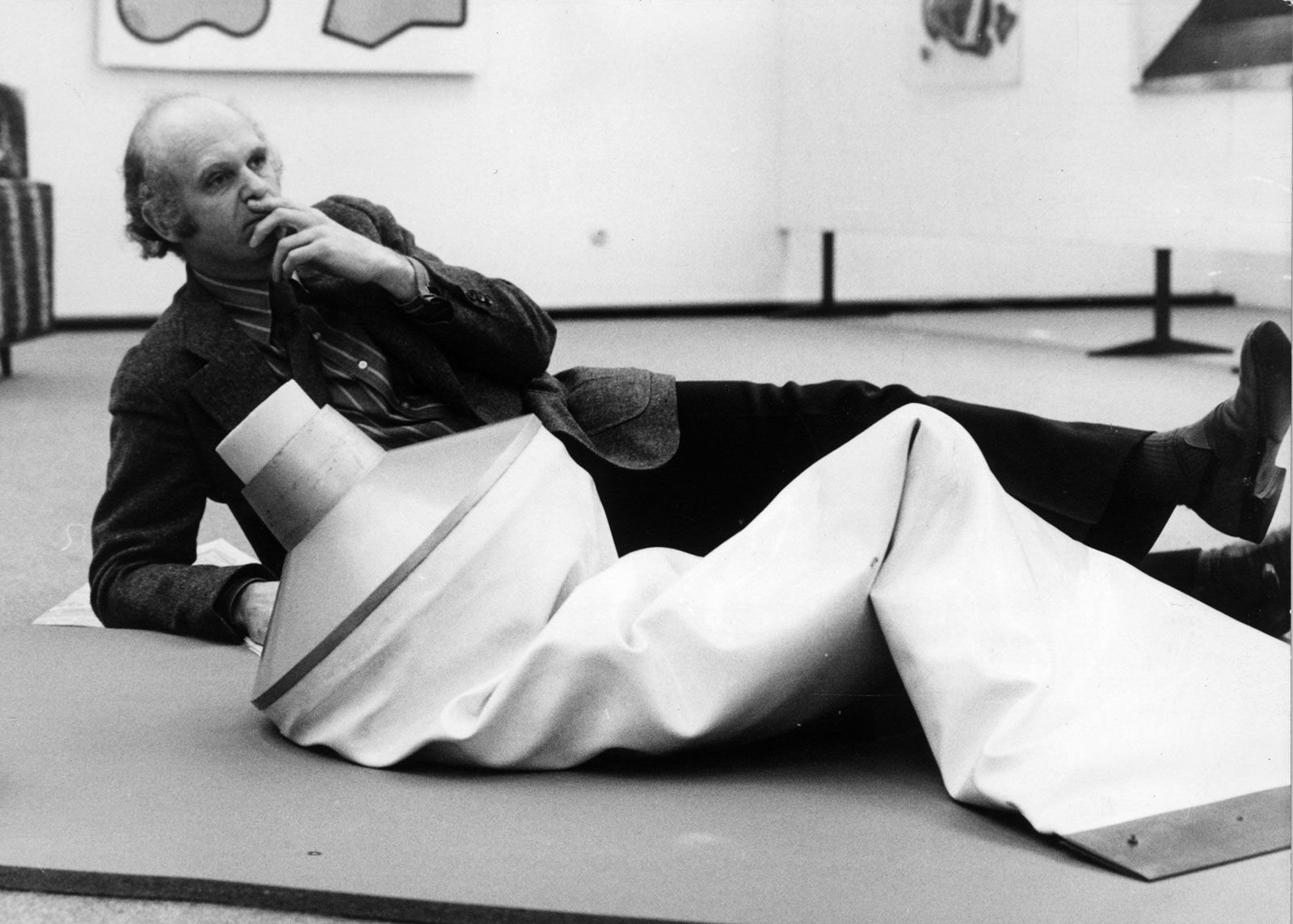
Claes Oldenburg’s early life in Stockholm and later Chicago shaped his sensitivity to scale, materiality, and urban visual culture. Born into a diplomatic household, he moved frequently, absorbing diverse cultural environments that later informed his artistic imagination. His education at Yale University exposed him to both literary theory and fine art traditions, laying the groundwork for his hybrid approach to sculpture and installation.
Oldenburg’s career beginnings unfolded in the early 1960s New York art scene, where he initially worked with performance art and experimental installations. He became associated with the emerging Pop Art movement through his interest in everyday objects and urban consumer goods. His early works often blurred sculpture, performance, and environmental art, challenging traditional boundaries of artistic form.
The breakthrough came with his large-scale soft sculptures and public installations that transformed mundane objects hamburgers, clothespins, and household items into monumental urban statements. During the 1990s reassessment of public art, Oldenburg’s collaborations with Coosje van Bruggen gained global recognition for redefining civic sculpture. His artistic identity combined humor, scale distortion, and architectural intervention.
Oldenburg’s legacy lies in redefining sculpture as an interactive dialogue with public space. His work permanently altered how cities integrate art into everyday environments, influencing generations of installation and conceptual artists.
Claes Oldenburg Key Facts
- Full name of the subject: Claes Thure Oldenburg
- Date of birth: 28 January 1929
- Place of birth: Stockholm, Sweden
- Family background: Diplomatic family
- Early childhood experiences: International relocation and cultural exposure
- Education history: Yale University
- Influences and mentors: Urban visual culture; Dadaism
- Career beginnings: Performance art and installation experiments
- Major achievements: Monumental public sculptures
- Challenges and obstacles faced: Critical resistance to non-traditional sculpture
- Turning points in life: Shift to soft sculpture and public art
- Contributions to society: Redefined public sculpture
- Personal life (marriage, children, relationships): Married Coosje van Bruggen; children
- Awards and recognitions: International public art awards
- Beliefs, values, or philosophy: Art as urban transformation
- Legacy and impact: Pioneer of monumental Pop sculpture
- Historical or cultural significance: Reimagined public space through Pop Art
Claes Oldenburg Notable Works: Spoonbridge and Cherry, soft sculpture series, public installations worldwide
Claes Oldenburg Controversies:
Oldenburg’s large-scale public installations sometimes sparked debate over urban aesthetics and public space usage. The issue centers on whether his monumental sculptures harmonized with or disrupted civic environments. The background involves municipal commissioning of public artworks in rapidly modernizing cities. Stakeholders included city planners, local communities, art institutions, and critics. Critics argued that oversized sculptures could overwhelm architectural settings, while supporters emphasized their accessibility and cultural value. Municipal reviews generally supported installations after evaluation. The impact contributed to ongoing discussions about public art integration in urban design.
5. James Rosenquist
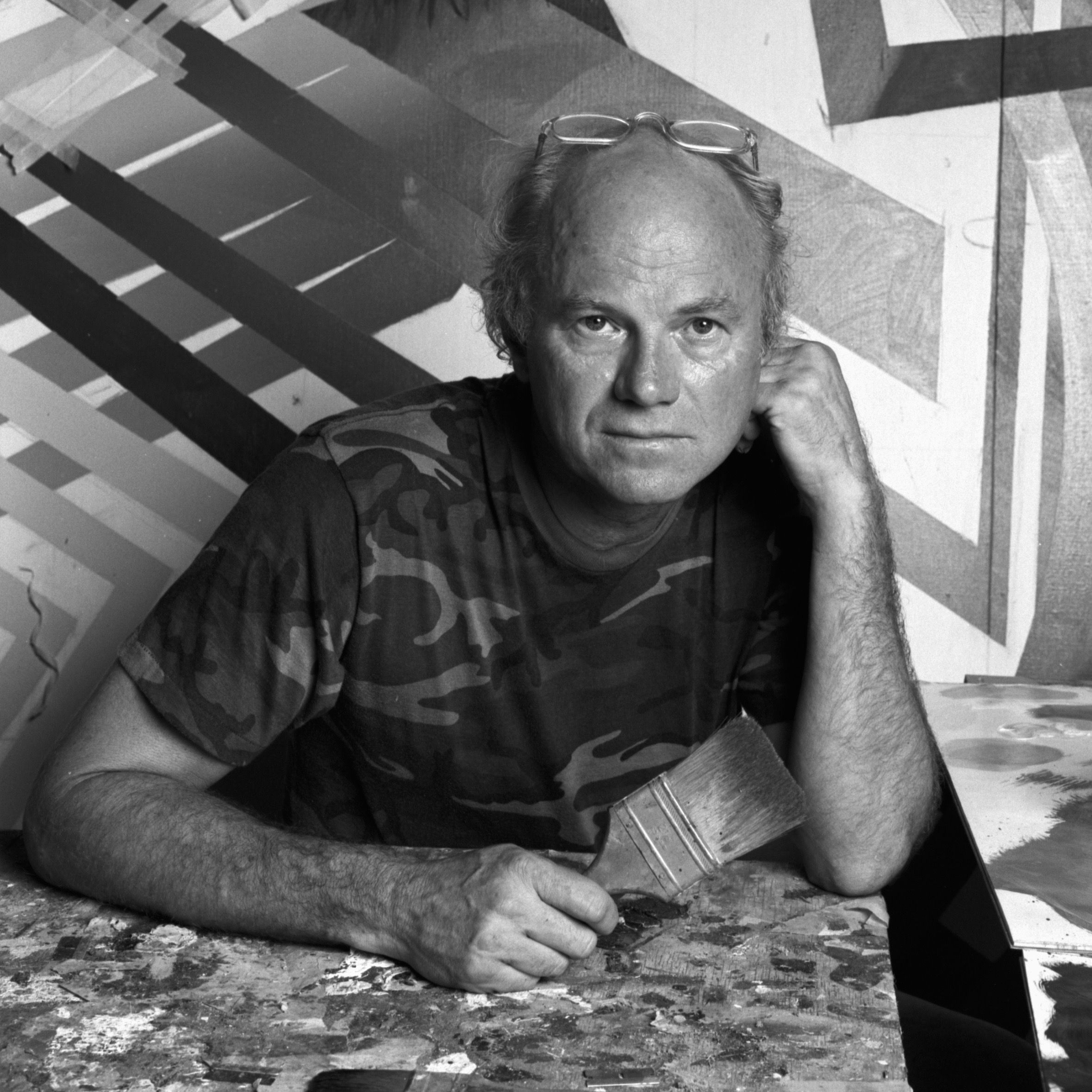
James Rosenquist’s early life in North Dakota was shaped by rural landscapes and early exposure to commercial billboard painting. Growing up in a working-class environment, he developed practical painting skills that later influenced his monumental approach to imagery. His education at the University of Minnesota and the Art Students League of New York refined his technical and conceptual abilities.
Rosenquist’s career beginnings were rooted in commercial billboard painting in New York City, where he learned large-scale visual communication techniques. This experience directly informed his later Pop Art style, which mimicked advertising aesthetics while subverting their meaning. His transition into fine art allowed him to merge commercial techniques with conceptual critique.
The breakthrough came with his monumental canvases that fragmented advertisements, political imagery, and consumer goods into surreal compositions. During the 1990s art world reassessment, his work was recognized as central to Pop Art’s critique of mass media saturation. His artistic identity emphasized scale, fragmentation, and visual overload.
Rosenquist’s legacy lies in transforming advertising language into fine art commentary. His work revealed the psychological and cultural impact of media saturation in modern society.
James Rosenquist Key Facts
- Full name of the subject: James Albert Rosenquist
- Date of birth: 29 November 1933
- Place of birth: Grand Forks, North Dakota, United States
- Family background: Working-class American family
- Early childhood experiences: Rural upbringing and painting exposure
- Education history: University of Minnesota; Art Students League
- Influences and mentors: Commercial billboard painters; advertising culture
- Career beginnings: Billboard painting in New York
- Major achievements: Large-scale Pop Art canvases
- Challenges and obstacles faced: Transition from commercial to fine art
- Turning points in life: Entry into New York art scene
- Contributions to society: Media critique through visual art
- Personal life (marriage, children, relationships): Married; children
- Awards and recognitions: International art exhibitions
- Beliefs, values, or philosophy: Critique of consumer culture
- Legacy and impact: Pioneer of media-based painting
- Historical or cultural significance: Pop Art innovator in large-scale format
James Rosenquist Notable Works: F-111, President Elect, fragmented advertising canvases
James Rosenquist Controversies:
Rosenquist’s incorporation of political and commercial imagery generated debate over the politicization of Pop Art. The issue centers on whether blending advertising with political symbolism diluted or strengthened artistic clarity. The background involves heightened political tensions during the Vietnam War era and consumer culture expansion. Stakeholders included critics, political commentators, galleries, and audiences. Critics argued his work could be visually overwhelming and ambiguous, while supporters emphasized its reflection of media saturation. Scholarly consensus recognizes intentional complexity. The impact reinforced Pop Art’s role in political and cultural critique.
6. Tom Wesselmann
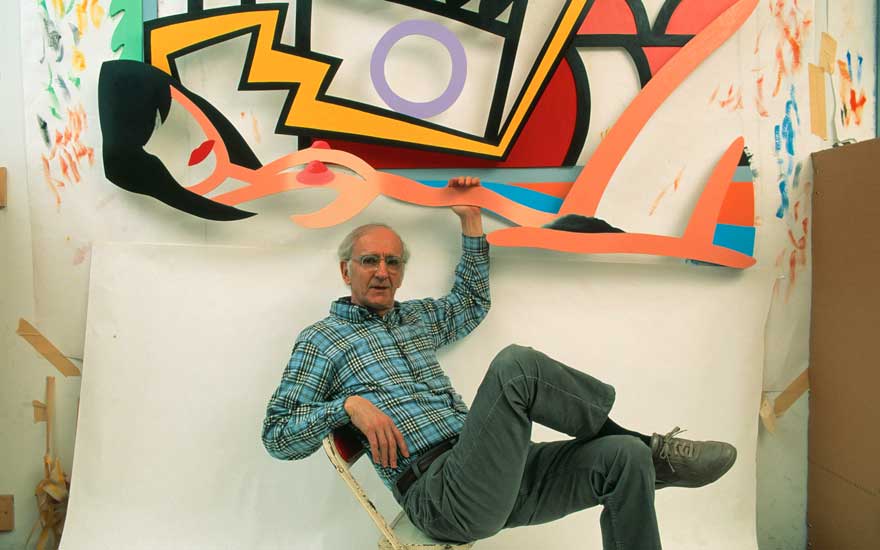
Tom Wesselmann’s early life in Cincinnati shaped his disciplined approach to drawing and composition. He initially pursued psychology before shifting to fine arts, a transition that influenced his analytical approach to visual culture. His education at Cooper Union in New York refined his technical skill and exposed him to avant-garde artistic movements.
Wesselmann’s career beginnings developed within the New York avant-garde scene of the early 1960s. He experimented with collage and assemblage before focusing on figurative Pop Art. His early works explored the intersection of advertising imagery and domestic interiors, emphasizing stylized representations of the human form.
The breakthrough came with his “Great American Nude” series, which combined bold color, simplified forms, and consumer aesthetics. During the 1990s retrospective evaluations of Pop Art, Wesselmann’s work was recognized for its contribution to visual abstraction and eroticized consumer imagery. His artistic identity merged sensuality with graphic clarity.
Wesselmann’s legacy lies in redefining figurative painting within Pop Art. His work influenced later explorations of body imagery, advertising aesthetics, and modern visual culture.
Tom Wesselmann Key Facts
- Full name of the subject: Tom Wesselmann
- Date of birth: 23 February 1931
- Place of birth: Cincinnati, Ohio, United States
- Family background: Middle-class American family
- Early childhood experiences: Interest in psychology and drawing
- Education history: Cooper Union
- Influences and mentors: Abstract expressionism; advertising design
- Career beginnings: Collage and assemblage art
- Major achievements: Great American Nude series
- Challenges and obstacles faced: Critical resistance to figurative Pop Art
- Turning points in life: Shift to large-scale figurative work
- Contributions to society: Expansion of Pop Art figurative language
- Personal life (marriage, children, relationships): Married Claire Selley; children
- Awards and recognitions: Museum retrospectives
- Beliefs, values, or philosophy: Exploration of consumer desire
- Legacy and impact: Figurative Pop Art pioneer
- Historical or cultural significance: Redefined erotic imagery in Pop Art
Tom Wesselmann vNotable Works: Great American Nude series, Bedroom Paintings, collage works
Tom Wesselmann Controversies:
Wesselmann’s eroticized depictions of the female form sparked debate over objectification in Pop Art. The issue centers on whether his stylized imagery reinforced or critiqued consumer-driven representations of women. The background involves 1960s cultural shifts in advertising and sexuality. Stakeholders included feminist critics, art historians, galleries, and audiences. Critics argued that the works reduced figures to aesthetic objects, while supporters emphasized formal abstraction and cultural commentary. Academic interpretations remain divided. The impact contributed to ongoing feminist discourse in visual art.
7. David Hockney
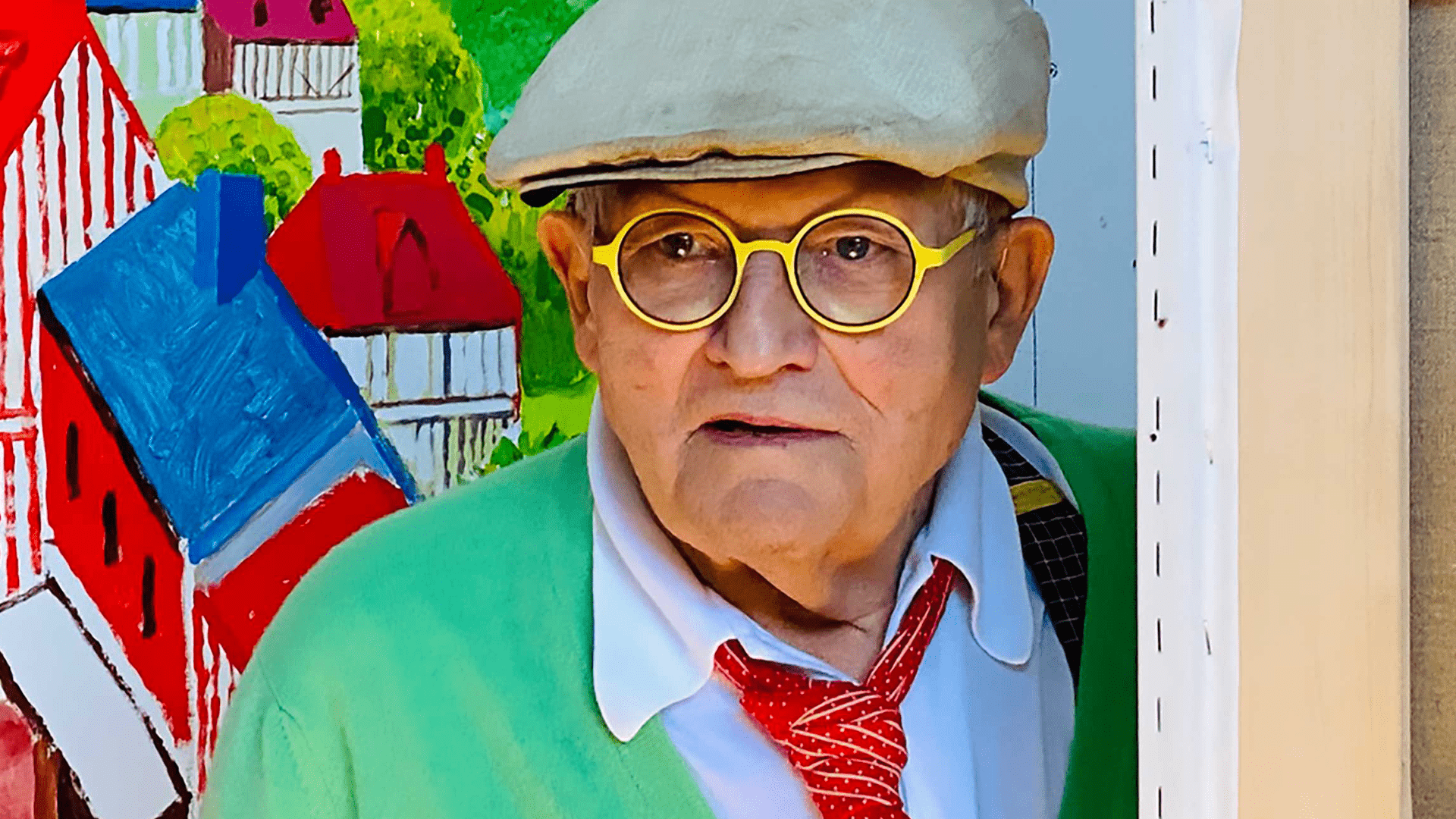
David Hockney’s early life in Bradford, England, was shaped by working-class roots and early artistic talent. Raised in a politically conscious household, he developed an independent perspective on visual storytelling. His education at the Royal College of Art in London introduced him to modernist experimentation and international art movements.
Hockney’s career beginnings were defined by early exhibitions in London during the 1960s, where his distinctive use of color and perspective set him apart. He became associated with Pop Art through his engagement with contemporary culture, though his work also retained strong elements of personal narrative and landscape tradition.
The breakthrough came with his California-inspired pool paintings, which merged bright color palettes with architectural clarity. During the 1990s and beyond, his experimentation with photography and digital media expanded his artistic language. His identity combined observational precision with emotional restraint.
Hockney’s legacy lies in bridging Pop Art with modern visual innovation. His work continues to influence painting, photography, and digital image-making.
David Hockney Key Facts
- Full name of the subject: David Hockney
- Date of birth: 9 July 1937
- Place of birth: Bradford, England
- Family background: Working-class British family
- Early childhood experiences: Early drawing and visual observation
- Education history: Royal College of Art
- Influences and mentors: Modernist painters; photography
- Career beginnings: London art exhibitions
- Major achievements: California pool paintings
- Challenges and obstacles faced: Critical categorization debates
- Turning points in life: Move to Los Angeles
- Contributions to society: Expansion of visual perception in art
- Personal life (marriage, children, relationships): Private relationships
- Awards and recognitions: International art awards
- Beliefs, values, or philosophy: Exploration of perception and space
- Legacy and impact: Contemporary painting innovation
- Historical or cultural significance: Pop Art and postmodern bridge
David Hockney Notable Works: A Bigger Splash, California Pool series, portrait photography works
David Hockney Controversies:
Hockney’s rejection of strict Pop Art classification generated debate about artistic categorization. The issue centers on whether his work should be considered Pop Art or postmodern figurative painting. The background involves evolving art historical frameworks in the late 20th century. Stakeholders included critics, museums, and historians. Critics argued classification ambiguity complicates Pop Art narratives, while supporters emphasize his stylistic independence. Academic consensus recognizes hybridity as intentional. The impact broadened definitions of Pop Art and contemporary painting boundaries.
8. Eduardo Paolozzi
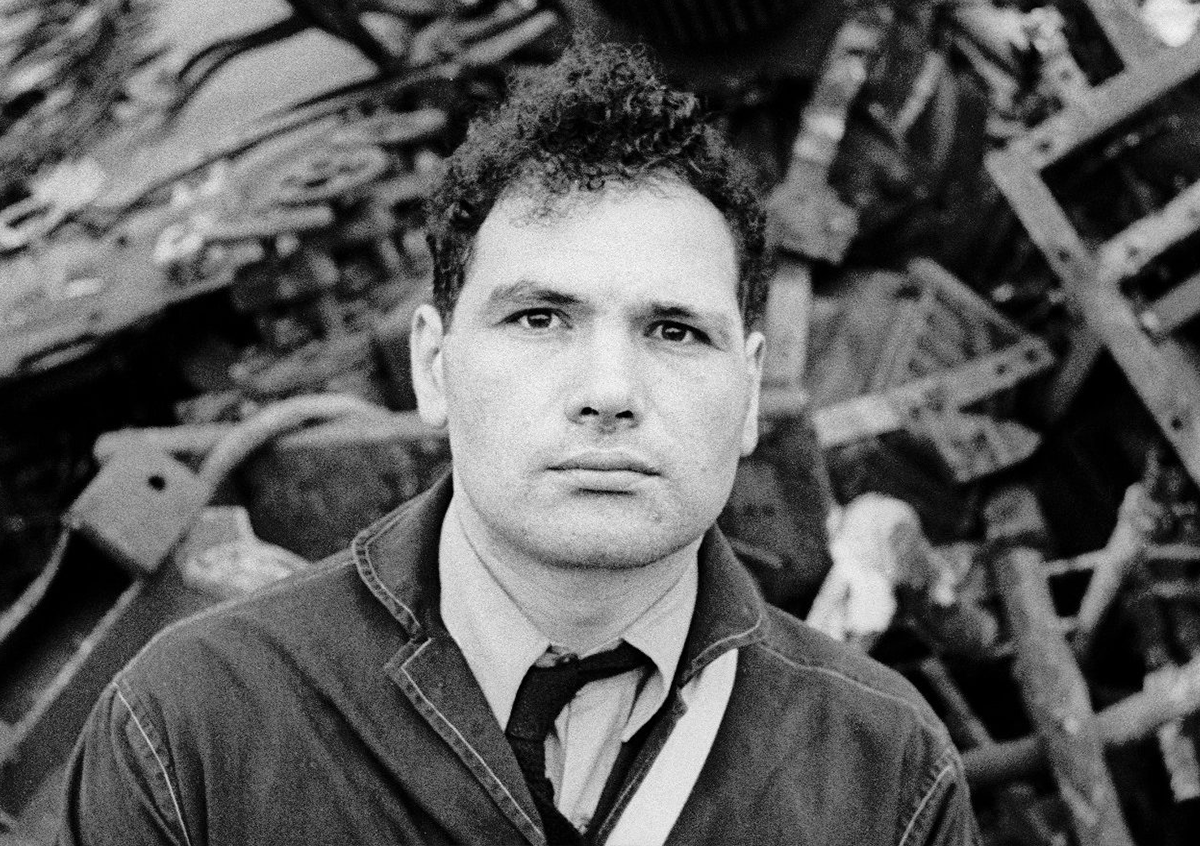
Eduardo Paolozzi’s early life in Leith, Edinburgh, unfolded within a working-class Italian immigrant household where mechanical objects, advertisements, and wartime imagery shaped his earliest visual impressions. Surrounded by a blend of industrial Scotland and European cultural heritage, he developed an early fascination with collage-like juxtapositions of image and meaning. His education at the Edinburgh College of Art and later studies in Paris exposed him to Surrealism and avant-garde experimentation, which became central to his artistic identity.
Paolozzi’s career beginnings emerged in post-war Europe, where he worked extensively with collage and printmaking. His early works reflected a deep engagement with fragmented imagery drawn from magazines, scientific diagrams, and advertising culture. This period established his interest in how modern life was increasingly defined by mechanical reproduction and mass communication systems.
The breakthrough came with his seminal collage work I Was a Rich Man’s Plaything (1947), which is widely regarded as a foundational image of Pop Art before the movement was formally defined. During the 1990s reassessment of Pop Art origins, Paolozzi’s influence was re-evaluated as critical to the movement’s conceptual birth in Britain. His artistic identity combined industrial aesthetics with philosophical inquiry into technology and society.
Paolozzi’s legacy lies in positioning collage as a central language of modern visual culture. His work bridged Surrealism and Pop Art, influencing generations of artists exploring media fragmentation and technological imagery.
Eduardo Paolozzi Key Facts
- Full name of the subject: Eduardo Luigi Paolozzi
- Date of birth: 7 March 1924
- Place of birth: Leith, Edinburgh, Scotland
- Family background: Italian immigrant working-class family
- Early childhood experiences: Exposure to mechanical and industrial environments
- Education history: Edinburgh College of Art; Académie Julian (Paris)
- Influences and mentors: Surrealists; Dada artists
- Career beginnings: Collage and printmaking experiments
- Major achievements: Foundational Pop Art collage works
- Challenges and obstacles faced: Post-war material limitations
- Turning points in life: Creation of early Pop Art proto-collage works
- Contributions to society: Expansion of collage as fine art
- Personal life (marriage, children, relationships): Private family life
- Awards and recognitions: Knighthood; international art honors
- Beliefs, values, or philosophy: Technology as cultural force
- Legacy and impact: Pioneer of British Pop Art
- Historical or cultural significance: Early architect of Pop Art language
Eduardo Paolozzi Notable Works: I Was a Rich Man’s Plaything, public sculptures, print and collage series
Eduardo Paolozzi Controversies:
Paolozzi’s use of commercial imagery in fine art prompted debate about originality and appropriation. The issue centers on whether his collages transformed or simply reassembled existing media content. The background involves post-war Britain’s growing advertising and media industries. Stakeholders included art critics, cultural theorists, and publishers. Critics argued his reliance on found imagery challenged notions of authorship, while supporters emphasized conceptual transformation. Art historical consensus recognizes his role in redefining collage as a critical art form. The impact strengthened theoretical foundations of Pop Art and media-based artistic practices.
9. Robert Rauschenberg
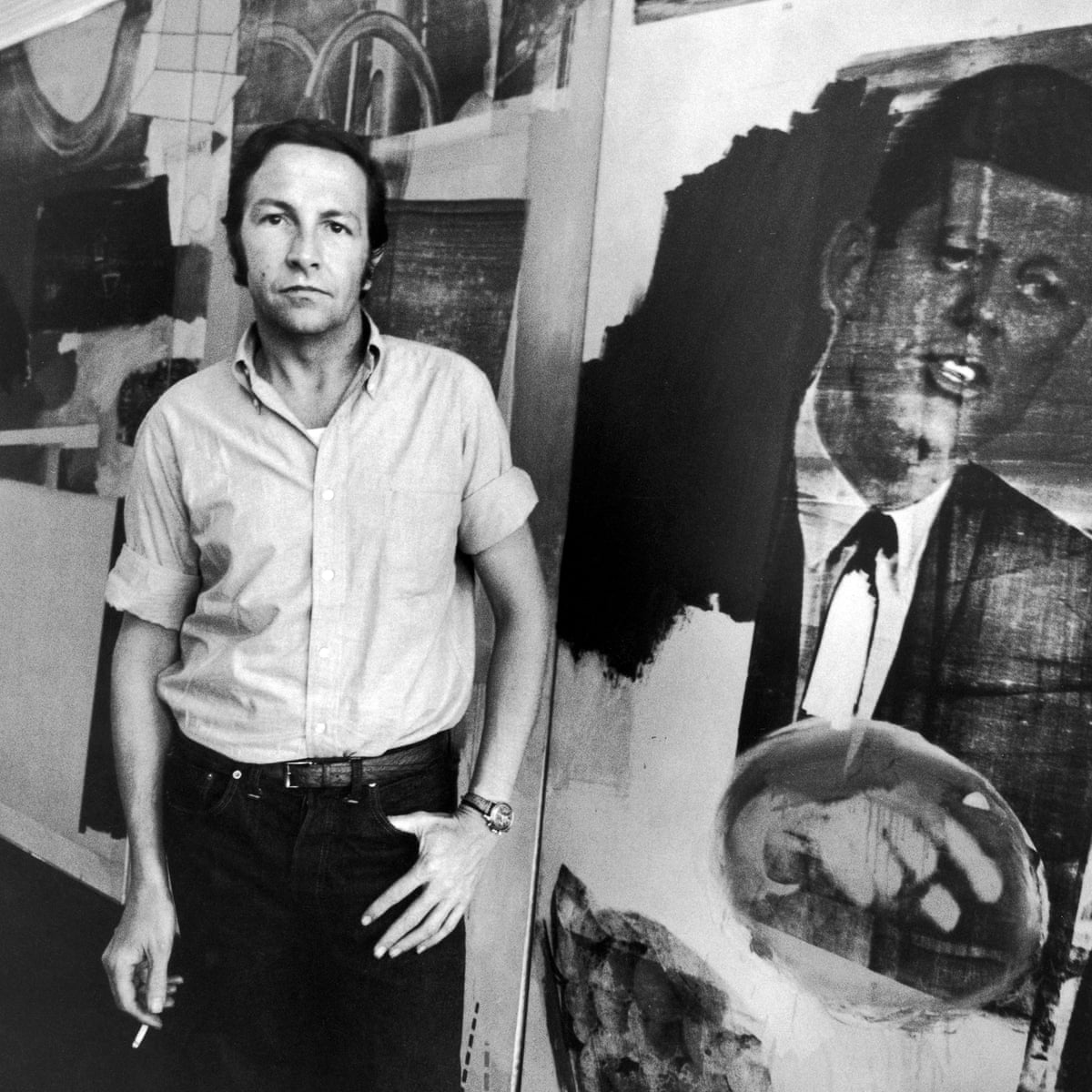
Robert Rauschenberg’s early life in Port Arthur, Texas, was shaped by a conservative industrial environment that contrasted sharply with his later experimental artistic identity. He initially studied pharmacy before turning to art, a shift that reflected his search for expressive freedom. His education at Black Mountain College exposed him to progressive artistic thinkers who profoundly influenced his interdisciplinary approach.
Rauschenberg’s career beginnings were defined by experimentation with mixed media, combining painting, photography, and found objects. He rejected traditional boundaries between painting and sculpture, developing what he termed “Combines,” which integrated everyday materials into fine art contexts. This period marked a decisive break from abstract expressionism.
The breakthrough came with his Combines series, which incorporated urban detritus, newspapers, and photographic imagery. During the 1990s critical reassessment of postwar art, Rauschenberg was recognized as a transitional figure between Abstract Expressionism and Pop Art. His work blurred distinctions between high art and everyday life, influencing subsequent conceptual movements.
Rauschenberg’s legacy lies in dissolving boundaries between artistic disciplines. His work redefined collage, installation, and mixed media practices in contemporary art.
Robert Rauschenber Key Facts
- Full name of the subject: Milton Ernest Rauschenberg
- Date of birth: 22 October 1925
- Place of birth: Port Arthur, Texas, United States
- Family background: Working-class American family
- Early childhood experiences: Industrial environment exposure
- Education history: Black Mountain College
- Influences and mentors: John Cage; Merce Cunningham
- Career beginnings: Experimental mixed-media art
- Major achievements: Combines series development
- Challenges and obstacles faced: Critical resistance to non-traditional art
- Turning points in life: Black Mountain College experience
- Contributions to society: Expansion of mixed-media art
- Personal life (marriage, children, relationships): Private relationships
- Awards and recognitions: Golden Lion (Venice Biennale)
- Beliefs, values, or philosophy: Art as integration of life and environment
- Legacy and impact: Bridge between modernism and Pop Art
- Historical or cultural significance: Pioneer of interdisciplinary art
Robert Rauschenber Notable Works: Combines series, Erased de Kooning Drawing, mixed-media installations
Robert Rauschenber Controversies:
Rauschenberg’s appropriation of existing images and artworks sparked debate over authorship and originality. The issue centers on his practice of incorporating found imagery into fine art compositions. The background involves postwar experimentation with conceptual art forms. Stakeholders included fellow artists, critics, and institutions. Critics argued that his methods blurred ethical boundaries of artistic ownership, while supporters emphasized transformative reinterpretation. Institutional reviews generally accepted his practice as innovative. The impact influenced legal and conceptual discussions about appropriation in contemporary art.
10. Jasper Johns
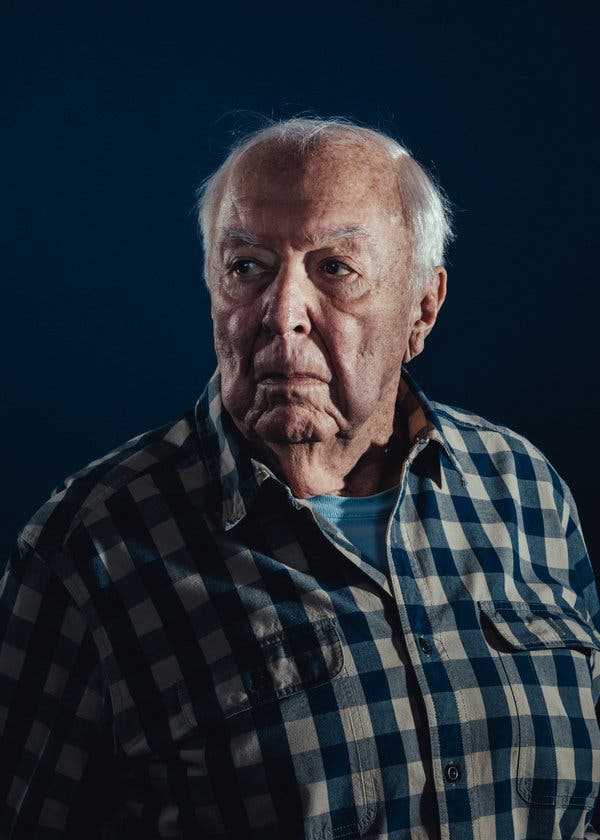
Jasper Johns’ early life in Augusta, Georgia, was marked by a quiet, introspective environment that contrasted with the expressive intensity of later artistic movements. Raised in the American South, he developed early drawing skills but lacked formal artistic exposure until adulthood. His move to New York City marked a turning point in his artistic development.
Johns’ career beginnings were closely tied to the postwar New York art scene, where he worked in commercial display design while experimenting with symbolic imagery. His early works focused on familiar icons such as flags, targets, and numerals, challenging assumptions about representation and meaning in art.
The breakthrough came with his flag paintings, which redefined perception by turning everyday symbols into complex visual inquiries. During the 1990s critical reevaluation of modern art, Johns was recognized as a foundational figure bridging Abstract Expressionism and Pop Art. His work emphasized perception, ambiguity, and the act of seeing itself.
Johns’ legacy lies in transforming ordinary symbols into philosophical investigations of meaning. His influence extends across conceptual art, minimalism, and contemporary visual culture.
Jasper Johns Key Facts
- Full name of the subject: Jasper Johns
- Date of birth: 15 May 1930
- Place of birth: Augusta, Georgia, United States
- Family background: Southern American family
- Early childhood experiences: Early interest in drawing and symbolism
- Education history: University of South Carolina (brief attendance)
- Influences and mentors: Abstract Expressionists; Robert Rauschenberg
- Career beginnings: Commercial design and studio experimentation
- Major achievements: Flag and target paintings
- Challenges and obstacles faced: Critical confusion over symbolic art
- Turning points in life: Introduction of iconic symbol paintings
- Contributions to society: Redefined representation in modern art
- Personal life (marriage, children, relationships): Private personal life
- Awards and recognitions: Presidential Medal of Freedom
- Beliefs, values, or philosophy: Exploration of perception and meaning
- Legacy and impact: Foundational influence on contemporary art
- Historical or cultural significance: Transition figure in modern art history
Jasper Johns Notable Works: Flag paintings, Target series, Number paintings
Jasper Johns Controversies:
Johns’ use of national symbols such as the American flag generated debate over artistic appropriation of patriotic imagery. The issue centers on whether such representations were critical commentary or neutral depictions. The background involves Cold War-era cultural sensitivities. Stakeholders included critics, government commentators, museums, and audiences. Critics interpreted the works as subversive, while supporters emphasized formal exploration of perception. Art historians confirm intentional ambiguity in symbolic interpretation. The impact influenced debates on symbolism, nationalism, and abstraction in contemporary art.
Notable Mentions:
Keith Haring
Robert Indiana
Takashi Murakami
Yayoi Kusama
Keith Sonnier