Top 10 People Who Built Careers Through Self-Learning
Top 10 People Who Built Careers Through Self-Learning
In This Content
1. Benjamin Franklin
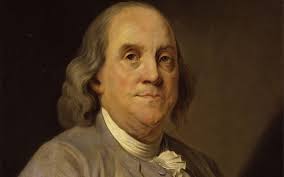
Born in colonial Boston in 1706, Benjamin Franklin’s path to prominence emerged not from formal schooling but from relentless self-directed education. The fifteenth child of a candle-maker, Franklin left school at the age of ten, forced by financial constraints into apprenticeship under his brother, a printer. Yet this early exit from structured education became the foundation of his lifelong philosophy: learning without institutional boundaries. He devoured books, borrowed volumes from local collections, and taught himself rhetoric, science, philosophy, and economics. Franklin’s formative years were marked by intellectual curiosity shaped by Enlightenment ideals, and his autodidactic habits cultivated a disciplined analytical mind that would later influence politics, science, and diplomacy.
Franklin’s career beginnings unfolded within the printing trade, where he quickly distinguished himself not only as a skilled craftsman but as a thinker. Moving to Philadelphia, he established his own printing business and launched publications that blended commentary, satire, and practical knowledge. His self-learning extended into scientific experimentation, where he studied electricity through independent research. His breakthrough arrived with his famous experiments demonstrating the electrical nature of lightning, culminating in the lightning rod’s invention. By the mid-eighteenth century, Franklin had transitioned from tradesman to intellectual authority, embodying the Enlightenment ideal of the self-made scholar.
Although Franklin’s peak occurred before the twentieth century, his influence experienced renewed relevance in the 1990s through the global resurgence of entrepreneurial self-learning culture. Business schools and leadership programs increasingly referenced Franklin’s “13 virtues” and self-improvement journals as prototypes for modern productivity systems. His writings, including “Poor Richard’s Almanack,” became case studies in personal development frameworks, demonstrating how self-education could shape leadership, civic responsibility, and innovation.
Franklin’s legacy rests on the fusion of intellectual independence and public service. As a diplomat, inventor, writer, and founding statesman, he demonstrated that self-learning could produce multidimensional excellence. His influence extends across entrepreneurship, civic institutions, and scientific inquiry, shaping global attitudes toward lifelong learning. Franklin’s life established the enduring narrative that disciplined self-education can rival formal credentials, a philosophy that continues to shape modern leadership culture.
Key Facts
- Full name of the subject: Benjamin Franklin
- Date of birth: January 17, 1706
- Place of birth: Boston, Massachusetts, British America
- Family background: Son of Josiah Franklin, a candle and soap maker, and Abiah Folger
- Early childhood experiences: Left formal schooling early; apprenticed in printing trade
- Education history: Mostly self-educated through reading and experimentation
- Influences and mentors: Enlightenment philosophers; printing mentors; scientific peers
- Career beginnings: Printer and publisher in Philadelphia
- Major achievements: Lightning rod invention; founding father; diplomat; writer
- Challenges and obstacles faced: Limited formal education; financial struggles
- Turning points in life: Establishment of printing press; electrical experiments
- Contributions to society: Scientific discoveries; civic institutions; governance
- Personal life (marriage, children, relationships): Married Deborah Read; several children
- Awards and recognitions: International scientific honors; Royal Society membership
- Beliefs, values, or philosophy: Self-improvement, civic virtue, rational inquiry
- Legacy and impact: Model of self-made intellectual and civic leader
- Historical or cultural significance: Symbol of Enlightenment self-learning tradition
Notable Works:
Lightning rod invention; Poor Richard’s Almanack; U.S. diplomatic negotiations in France; Founding of libraries and universities
Controversies:
Franklin’s involvement in slavery and subsequent abolitionist stance represents a complex historical debate. Early in his life, Franklin owned enslaved individuals and published advertisements related to slavery in his printing business, reflecting the prevailing norms of colonial society. Critics argue that his participation implicates him in systemic injustice, while supporters highlight his later transformation into an abolitionist leader. By the late eighteenth century, Franklin became president of the Pennsylvania Society for Promoting the Abolition of Slavery and petitioned Congress to end the practice. Historians distinguish between documented evidence of his ownership and his later advocacy, noting the evolution rather than absolution. The controversy has shaped modern assessments of Franklin, leading institutions to contextualize his legacy within both moral contradiction and intellectual growth.
Other notable controversies include debates about his personal relationships and diplomatic compromises.
2. Thomas Edison
Thomas Edison’s early life in Milan was shaped by unconventional education. Considered difficult in traditional classrooms, Edison’s formal schooling ended after only a few months. His mother, a former teacher, encouraged independent reading, but the majority of his education emerged from experimentation. As a young boy, Edison conducted chemical experiments in his family’s basement and read widely on science and engineering. This self-guided curiosity laid the foundation for a career defined by relentless trial and error rather than academic training.
Edison’s career beginnings were rooted in telegraphy, a field he entered as a self-taught operator. Traveling across the United States, he studied electrical systems and improved devices through hands-on experience. His breakthrough arrived with improvements to the telegraph and the invention of the phonograph, which established him as a pioneering innovator. Edison’s research laboratory in Menlo Park became synonymous with collaborative experimentation, reflecting his belief that knowledge could be built through iteration rather than formal study.
The 1990s marked a resurgence of Edison’s influence, particularly in Silicon Valley culture. Entrepreneurs referenced Edison’s quote about invention and perseverance as a guiding principle for startup innovation. His model of industrial research laboratories inspired modern R&D structures, reinforcing the value of learning by doing. Business schools examined Edison’s iterative processes as precursors to lean innovation methodologies.
Edison’s legacy is anchored in technological transformation and the validation of experiential learning. With over a thousand patents, he reshaped industries including communication, power generation, and entertainment. His career demonstrated that structured curiosity and persistence could rival academic pathways, influencing generations of innovators.
Key Facts
- Full name of the subject: Thomas Alva Edison
- Date of birth: February 11, 1847
- Place of birth: Milan, Ohio, United States
- Family background: Son of Samuel Edison and Nancy Edison
- Early childhood experiences: Minimal schooling; encouraged by mother to read
- Education history: Primarily self-taught
- Influences and mentors: Telegraph operators; scientific publications
- Career beginnings: Telegraph operator and inventor
- Major achievements: Phonograph; electric light system; motion picture camera
- Challenges and obstacles faced: Hearing loss; financial failures
- Turning points in life: Establishment of Menlo Park laboratory
- Contributions to society: Electrification and communication technologies
- Personal life (marriage, children, relationships): Married twice; six children
- Awards and recognitions: Congressional Gold Medal; international honors
- Beliefs, values, or philosophy: Experimentation and persistence
- Legacy and impact: Industrial research model
- Historical or cultural significance: Icon of American invention
Notable Works:
Phonograph; electric lighting system; motion picture camera; industrial research laboratory
Controversies:
Edison’s rivalry with Nikola Tesla during the “War of Currents” remains one of the most debated disputes in technological history. The controversy centered on Edison’s promotion of direct current (DC) systems against Tesla’s alternating current (AC) technology, backed by George Westinghouse. Critics argue Edison engaged in aggressive public demonstrations portraying AC as dangerous, including staged electrocutions of animals, which some interpret as fear-driven marketing. Edison’s defenders contend he genuinely believed DC systems were safer. Historical records confirm Edison publicly criticized AC, though interpretations vary regarding intent. The conflict influenced public perception of electricity and shaped infrastructure decisions. Ultimately, AC systems prevailed, and the episode remains a case study in technological competition, reputation management, and ethical boundaries in innovation.
Other notable controversies include disputes over patent ownership and collaboration credit.
3. Abraham Lincoln
Born in a log cabin in Hardin County in 1809, Abraham Lincoln’s formative years were defined by poverty and limited access to education. Formal schooling amounted to less than a year, leaving Lincoln to educate himself through borrowed books and independent study. He read law, literature, and philosophy by firelight, cultivating a disciplined intellectual framework. This self-learning shaped his analytical reasoning and rhetorical style, later evident in speeches that combined moral clarity with legal precision.
Lincoln’s early career began in manual labor and storekeeping before transitioning into law. He taught himself legal principles, studied casebooks, and passed the bar examination without attending law school. His breakthrough came through political debates, particularly his confrontation with Stephen A. Douglas, which elevated his national profile. Lincoln’s self-educated perspective enabled him to articulate constitutional arguments that resonated across political divides.
The 1990s saw renewed scholarly focus on Lincoln’s intellectual development. Leadership studies emphasized his self-taught decision-making style, highlighting his ability to synthesize complex information independently. His writings became central to discussions on adaptive leadership, demonstrating how self-learning can inform crisis management.
Lincoln’s legacy lies in his transformative leadership during the American Civil War. His Emancipation Proclamation and preservation of the Union reshaped national identity. Lincoln’s life continues to symbolize the power of intellectual perseverance, illustrating how self-education can produce visionary leadership.
Key Facts
- Full name of the subject: Abraham Lincoln
- Date of birth: February 12, 1809
- Place of birth: Hardin County, Kentucky, United States
- Family background: Son of Thomas Lincoln and Nancy Hanks Lincoln
- Early childhood experiences: Frontier upbringing; limited schooling
- Education history: Self-taught through reading
- Influences and mentors: Legal texts; political thinkers
- Career beginnings: Lawyer and politician
- Major achievements: Emancipation Proclamation; preservation of Union
- Challenges and obstacles faced: Political opposition; civil war leadership
- Turning points in life: Lincoln-Douglas debates; presidential election
- Contributions to society: Abolition of slavery; national unity
- Personal life (marriage, children, relationships): Married Mary Todd Lincoln; four children
- Awards and recognitions: Historical recognition as influential president
- Beliefs, values, or philosophy: Equality; democracy; moral leadership
- Legacy and impact: Enduring symbol of self-made leadership
- Historical or cultural significance: Transformational wartime president
Notable Works:
Emancipation Proclamation; Gettysburg Address; Union leadership
Controversies:
Lincoln’s suspension of habeas corpus during the Civil War remains a constitutional debate. The issue arose when Lincoln authorized military detention without trial in regions considered vulnerable to rebellion. Critics argued this violated civil liberties and exceeded executive authority, while supporters maintained it was necessary to preserve national security during wartime. The judiciary, including Chief Justice Roger B. Taney, challenged aspects of the decision, though enforcement remained inconsistent. Historical documentation confirms Lincoln defended the measure as temporary. The controversy influenced later legal interpretations of executive power in emergencies, shaping debates on civil liberties versus national security.
Other notable controversies include debates over wartime strategies and political appointments.
4. Andrew Carnegie
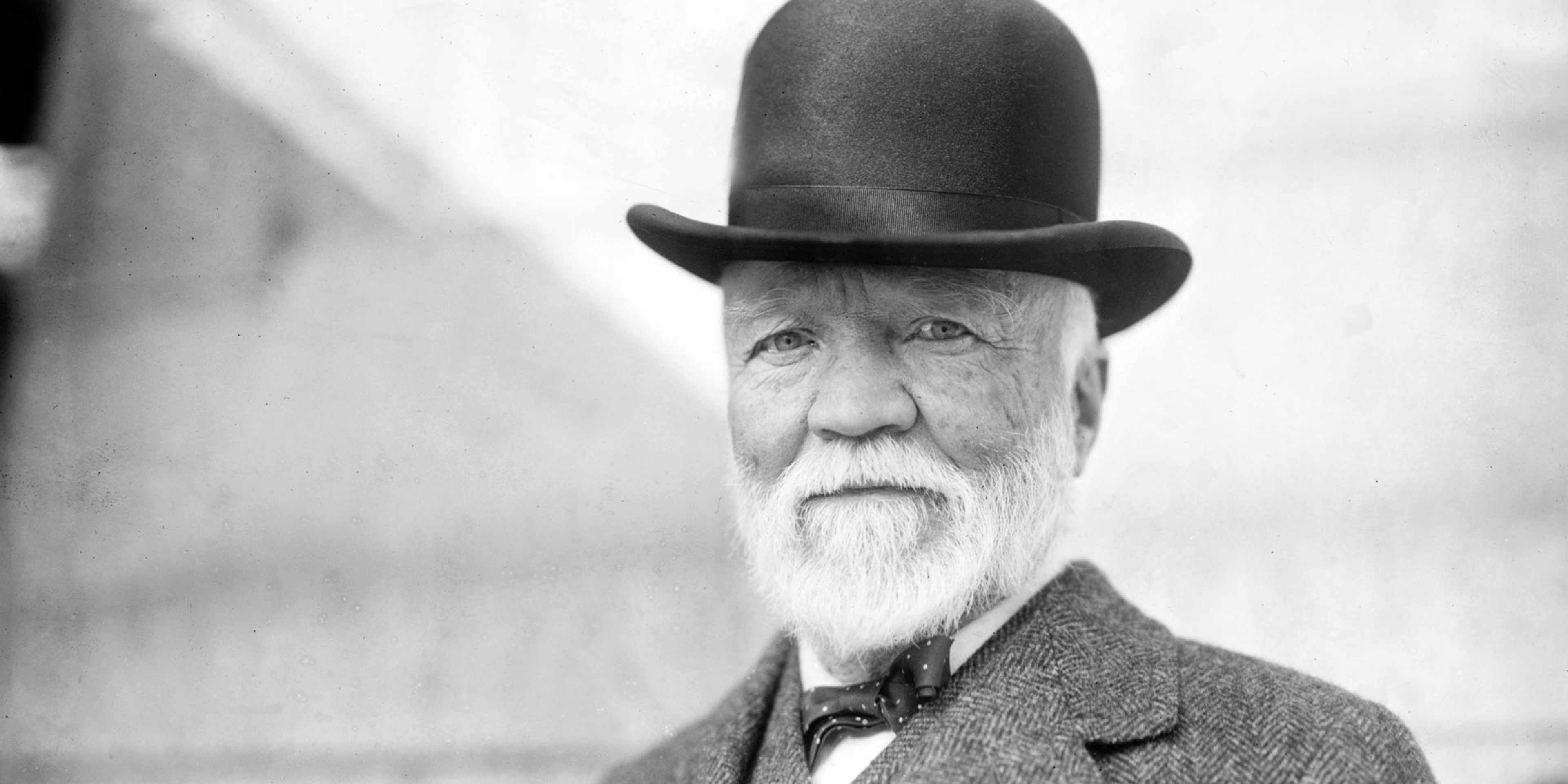
Andrew Carnegie’s journey began in modest circumstances in Dunfermline, where he was born in 1835 to a family of handloom weavers. Economic hardship forced the family to emigrate to Pittsburgh, where Carnegie entered the workforce at a young age. Formal education was limited, but his intellectual curiosity found expression in self-directed reading. He borrowed books from a local benefactor’s personal library, studying literature, history, and economics. These early experiences cultivated his belief that knowledge should be accessible, a principle that later shaped his philanthropic efforts.
Carnegie’s career beginnings were rooted in telegraphy and railroad work. He taught himself financial analysis, management techniques, and industrial engineering principles. His breakthrough came through investments in the steel industry, where he applied efficiency strategies learned through observation and reading. Carnegie’s self-learning allowed him to understand emerging industrial technologies, positioning him to build one of the largest steel enterprises in the world.
By the 1990s, Carnegie’s philosophy of self-learning experienced renewed attention in leadership and business education. His essay “The Gospel of Wealth” became central to discussions about corporate responsibility and lifelong education. Entrepreneurs and management scholars revisited his model of continuous learning as foundational to innovation-driven capitalism.
Carnegie’s legacy rests on the transformation of industry and philanthropy. His funding of libraries across the world reflected his conviction that self-education empowers social mobility. Through industrial leadership and educational philanthropy, Carnegie demonstrated how independent learning could shape both economic growth and societal advancement.
Key Facts
- Full name of the subject: Andrew Carnegie
- Date of birth: November 25, 1835
- Place of birth: Dunfermline, Scotland
- Family background: Son of a handloom weaver and domestic worker
- Early childhood experiences: Immigrated to United States; child labor
- Education history: Limited formal schooling; self-educated through libraries
- Influences and mentors: Colonel James Anderson; business associates
- Career beginnings: Telegraph messenger; railroad clerk
- Major achievements: Built Carnegie Steel; major philanthropist
- Challenges and obstacles faced: Poverty; labor conflicts
- Turning points in life: Steel industry investments
- Contributions to society: Library funding; educational philanthropy
- Personal life (marriage, children, relationships): Married Louise Whitfield; one daughter
- Awards and recognitions: International honors for philanthropy
- Beliefs, values, or philosophy: Wealth redistribution; self-education
- Legacy and impact: Global library system
- Historical or cultural significance: Industrial revolution leader
Notable Works:
Carnegie Steel; funding of public libraries; “The Gospel of Wealth”
Controversies:
The Homestead Strike remains the most significant controversy associated with Carnegie’s legacy. The dispute arose at the Homestead Steel Works, where workers protested wage reductions imposed by management under Henry Clay Frick. Critics argued that Carnegie, though abroad during the strike, approved aggressive tactics including the hiring of Pinkerton agents, leading to violent clashes. Supporters contend Carnegie favored compromise and was not directly involved in operational decisions. Historical records confirm the conflict resulted in fatalities and a weakened labor union. The controversy shaped perceptions of Carnegie as both philanthropist and industrialist, influencing ongoing debates about labor relations and corporate responsibility.
Other notable controversies include debates over monopolistic practices in the steel industry.
5. Henry Ford
Henry Ford was born in rural Dearborn in 1863, where farm life shaped his early mechanical curiosity. Formal schooling was minimal, but Ford demonstrated an early fascination with machinery, disassembling watches and experimenting with engines. He pursued self-learning through observation, apprenticeship, and reading technical manuals. These experiences cultivated practical engineering knowledge that would later revolutionize manufacturing.
Ford’s career began as an apprentice machinist before joining the Edison Illuminating Company. He taught himself engine design and experimented with gasoline-powered vehicles in his spare time. His breakthrough arrived with the development of the Model T, which combined affordability with durability. Ford’s self-directed engineering approach allowed him to challenge conventional production methods, leading to the moving assembly line.
The 1990s saw Ford’s production philosophy reexamined in global manufacturing. Lean production models and supply chain optimization drew comparisons to Ford’s innovations. Scholars analyzed his self-learning approach to engineering as foundational to modern industrial efficiency.
Ford’s legacy is rooted in democratizing automobile ownership and transforming labor practices. His career demonstrated that practical self-education could drive technological and economic change. Ford’s influence remains embedded in manufacturing, logistics, and workforce development.
Key Facts
- Full name of the subject: Henry Ford
- Date of birth: July 30, 1863
- Place of birth: Dearborn, Michigan, United States
- Family background: Son of Irish immigrant farmers
- Early childhood experiences: Mechanical experimentation on farm
- Education history: Limited formal schooling; self-taught engineer
- Influences and mentors: Thomas Edison; mechanical engineers
- Career beginnings: Machinist and engineer
- Major achievements: Model T; assembly line production
- Challenges and obstacles faced: Business failures; labor disputes
- Turning points in life: Founding of Ford Motor Company
- Contributions to society: Mass automobile production
- Personal life (marriage, children, relationships): Married Clara Bryant; one son
- Awards and recognitions: Industrial honors
- Beliefs, values, or philosophy: Efficiency and affordability
- Legacy and impact: Mass production model
- Historical or cultural significance: Automotive revolution
Notable Works:
Model T automobile; assembly line manufacturing
Controversies:
Ford’s publication of antisemitic content in his newspaper, The Dearborn Independent, generated significant controversy. The issue arose when the paper serialized articles later compiled as “The International Jew,” which critics argued promoted harmful stereotypes. Jewish organizations, public figures, and media outlets condemned the publication. Ford initially defended editorial independence but later issued a public apology in 1927 and ceased publication. Historical documentation confirms the apology, though debate persists regarding its sincerity. The controversy affected Ford’s reputation and remains a critical element in evaluating his legacy, influencing corporate accountability discussions.
Other notable controversies include labor relations conflicts with unions.
6. Bill Gates
Born in Seattle in 1955, Bill Gates exhibited early intellectual curiosity and access to computing technology during adolescence. While he attended preparatory school, much of his expertise in programming came from self-directed experimentation. Gates spent extensive hours learning coding languages independently, developing software applications before formal university training. His self-learning was accelerated by access to early computing systems, where he refined logic and algorithmic thinking.
Gates’ career began when he co-founded Microsoft with Paul Allen. Though briefly enrolled at Harvard University, Gates left to pursue software development full-time. His breakthrough came with licensing the MS-DOS operating system, establishing Microsoft’s presence in personal computing. Gates’ self-learning in programming and business strategy enabled rapid expansion.
During the 1990s, Gates reached peak influence as Microsoft dominated global software markets. His leadership shaped the digital revolution, while his self-taught coding background became emblematic of entrepreneurial learning. Technology education programs in the 1990s frequently cited Gates as a model for independent skill development.
Gates’ legacy extends into philanthropy and global health through the Bill & Melinda Gates Foundation. His career demonstrates the power of self-learning in emerging technological fields, influencing generations of innovators.
Key Facts
- Full name of the subject: William Henry Gates III
- Date of birth: October 28, 1955
- Place of birth: Seattle, Washington, United States
- Family background: Professional middle-class family
- Early childhood experiences: Early exposure to computers
- Education history: Harvard University (did not complete)
- Influences and mentors: Paul Allen; technology pioneers
- Career beginnings: Software development
- Major achievements: Microsoft; Windows operating system
- Challenges and obstacles faced: Antitrust litigation
- Turning points in life: MS-DOS licensing
- Contributions to society: Philanthropy and global health
- Personal life (marriage, children, relationships): Married Melinda French (divorced); three children
- Awards and recognitions: Presidential Medal of Freedom
- Beliefs, values, or philosophy: Innovation and philanthropy
- Legacy and impact: Personal computing revolution
- Historical or cultural significance: Digital era architect
Notable Works:
Microsoft Windows; MS-DOS; global philanthropy initiatives
Controversies:
The United States antitrust case against Microsoft in the late 1990s marked a defining controversy. The United States Department of Justice alleged Microsoft used anti-competitive practices to maintain operating system dominance. Competitors, including software developers, argued bundling Internet Explorer limited market competition. Microsoft defended its integration strategy as technological innovation. Court rulings initially ordered structural remedies, though later settlements modified penalties. The case reshaped technology regulation and influenced Gates’ transition from CEO to philanthropic leadership, marking a turning point in public perception.
Other notable controversies include debates over intellectual property and competitive practices.
7. Steve Jobs
Steve Jobs was born in San Francisco in 1955 and adopted shortly after birth. Although he briefly attended Reed College, Jobs dropped out but continued auditing classes that interested him, including calligraphy. This self-directed educational approach shaped his aesthetic sensibilities and design philosophy. Jobs’ early exposure to electronics and countercultural creativity fostered interdisciplinary thinking.
Jobs’ career began when he co-founded Apple with Steve Wozniak. His breakthrough came with the Apple II and later the Macintosh, integrating design with computing. Jobs’ self-learning in typography, product design, and marketing distinguished Apple’s identity. After leaving Apple, he founded NeXT and acquired Pixar, further expanding his influence.
The 1990s marked Jobs’ return to Apple and the beginning of a transformative period. His leadership led to innovative products and brand revitalization. His self-taught design principles became foundational to modern consumer technology.
Jobs’ legacy centers on design-driven innovation and interdisciplinary learning. His career demonstrated how self-learning across art and technology could reshape industries.
Key Facts
- Full name of the subject: Steven Paul Jobs
- Date of birth: February 24, 1955
- Place of birth: San Francisco, California, United States
- Family background: Adopted by Paul and Clara Jobs
- Early childhood experiences: Electronics experimentation
- Education history: Reed College (dropped out)
- Influences and mentors: Steve Wozniak; design thinkers
- Career beginnings: Apple co-founder
- Major achievements: Macintosh; iPhone; Pixar leadership
- Challenges and obstacles faced: Removal from Apple
- Turning points in life: Return to Apple in 1997
- Contributions to society: Consumer technology design
- Personal life (marriage, children, relationships): Married Laurene Powell; four children
- Awards and recognitions: National Medal of Technology
- Beliefs, values, or philosophy: Simplicity and design
- Legacy and impact: Digital design revolution
- Historical or cultural significance: Modern tech visionary
Notable Works:
Apple Macintosh; iMac; iPod; iPhone; Pixar animation
Controversies:
Jobs’ management style and leadership practices generated ongoing debate. Former employees described a demanding environment characterized by intense criticism, while supporters argued such rigor produced groundbreaking innovation. Stakeholders included Apple employees, industry observers, and media commentators. Jobs defended his approach as necessary for excellence. No formal sanctions resulted, but the narrative influenced perceptions of leadership in technology firms. The controversy shaped discussions about workplace culture and innovation-driven management.
Other notable controversies include product pricing debates and corporate secrecy policies.
8. Walt Disney
Walt Disney was born in Chicago in 1901 into a modest household where financial constraints shaped his early independence. With limited formal training in the arts, Disney developed his creative foundation through observation, sketching, and relentless self-practice. His childhood was marked by frequent relocation and early work responsibilities, but it was during these formative years that he began cultivating a visual imagination fueled by storytelling and experimentation. Disney’s self-learning journey was deeply tied to his habit of studying cartoons, film techniques, and narrative structures independently, long before he entered professional animation.
Disney’s career began with small illustration jobs and commercial art assignments, where he taught himself animation techniques frame by frame. His early ventures, including Laugh-O-Gram Studios, failed financially, yet provided critical technical learning. His breakthrough came with the creation of Mickey Mouse after relocating to Hollywood, where he pioneered synchronized sound animation with “Steamboat Willie.” Disney’s self-directed mastery of storytelling, business strategy, and technological innovation allowed him to redefine the animation industry.
The 1990s marked a global renaissance of Disney’s influence through the Disney Renaissance era, with animated classics reinforcing his legacy as a pioneer of narrative-driven animation. His earlier self-learning principles particularly experimentation and iterative storytelling became foundational to modern animation studios and creative industries worldwide.
Disney’s legacy extends beyond entertainment into cultural identity formation. He demonstrated how self-taught creativity, combined with entrepreneurial discipline, could evolve into a global entertainment empire that reshaped childhood storytelling and media consumption.
Key Facts
- Full name of the subject: Walter Elias Disney
- Date of birth: December 5, 1901
- Place of birth: Chicago, Illinois, United States
- Family background: Son of Elias Disney and Flora Disney
- Early childhood experiences: Frequent relocation; early labor roles
- Education history: Limited formal art training; largely self-taught
- Influences and mentors: Cartoonists; early film innovators
- Career beginnings: Commercial illustrator and animator
- Major achievements: Mickey Mouse; Disneyland; animated film empire
- Challenges and obstacles faced: Early business failures; financial struggles
- Turning points in life: Creation of Mickey Mouse
- Contributions to society: Animation and entertainment innovation
- Personal life (marriage, children, relationships): Married Lillian Bounds; two daughters
- Awards and recognitions: Academy Awards; Presidential Medal of Freedom
- Beliefs, values, or philosophy: Imagination and storytelling innovation
- Legacy and impact: Global animation industry transformation
- Historical or cultural significance: Pioneer of modern animation
Notable Works:
Steamboat Willie; Snow White and the Seven Dwarfs; Disneyland; The Lion King legacy studio system
Controversies:
Disney’s studio labor practices during the mid-twentieth century generated significant debate. The controversy centered on allegations of anti-union sentiment during strikes involving animation staff in Burbank. Critics argued that the company resisted unionization efforts, leading to tensions and public demonstrations. Disney and studio executives maintained that operational restructuring was necessary for efficiency and creative control. Historical records confirm labor unrest occurred, though interpretations vary regarding intent and severity. The controversy influenced later labor policies within the animation industry and shaped discussions about creative labor rights in Hollywood.
Other notable controversies include debates over cultural representation in early animated works.
9. Ray Kroc
Ray Kroc was born in Oak Park in 1902 and spent much of his early life working various modest jobs. He did not follow a traditional academic path, instead leaving school early to pursue employment opportunities. Kroc’s self-learning began through sales experience, where he developed persuasive communication skills and business intuition. His early years were defined by experimentation in multiple industries, including paper cup sales and real estate, all of which contributed to his understanding of scalable business models.
Kroc’s career transformation began when he encountered a small restaurant operated by the McDonald brothers in San Bernardino. Observing their efficient food preparation system, he independently studied how to replicate and expand the model. His breakthrough came when he acquired franchising rights and transformed McDonald’s into a global fast-food empire. Kroc’s self-taught business strategy emphasized standardization, consistency, and operational discipline.
During the 1990s, McDonald’s global dominance was often cited in business schools as a case study in franchising scalability. Kroc’s learning-through-experience model influenced corporate expansion strategies worldwide, particularly in service industries. His methods became foundational in discussions of brand replication and global supply chain efficiency.
Kroc’s legacy is complex: he built one of the most recognizable brands in the world while redefining modern franchising. His self-directed business education demonstrated how observational learning and operational discipline could scale local concepts into global institutions.
Key Facts
- Full name of the subject: Raymond Albert Kroc
- Date of birth: October 5, 1902
- Place of birth: Oak Park, Illinois, United States
- Family background: Working-class family
- Early childhood experiences: Early workforce entry
- Education history: Limited formal education; self-taught businessman
- Influences and mentors: McDonald brothers; sales industry leaders
- Career beginnings: Paper cup salesman
- Major achievements: Global expansion of McDonald’s
- Challenges and obstacles faced: Financial instability; business skepticism
- Turning points in life: Acquisition of McDonald’s franchise rights
- Contributions to society: Franchise business model innovation
- Personal life (marriage, children, relationships): Married multiple times; one son
- Awards and recognitions: Business leadership honors
- Beliefs, values, or philosophy: Standardization and efficiency
- Legacy and impact: Global fast-food franchise system
- Historical or cultural significance: Modern franchising pioneer
Notable Works:
McDonald’s global expansion; franchise system development
Controversies:
The acquisition dispute between Ray Kroc and the McDonald brothers represents a major business controversy. The issue arose when Kroc took control of the McDonald’s brand, leading to allegations that the original founders were marginalized in financial outcomes. Critics argue Kroc’s business maneuvers prioritized expansion over equitable partnership, while supporters contend he provided the vision necessary for global scaling. Historical accounts confirm tension between the parties, though legal agreements governed the final structure. The controversy continues to shape debates on entrepreneurship ethics and franchising fairness.
Other notable controversies include labor practice criticisms linked to early fast-food industry expansion.
10. Elon Musk
Elon Musk was born in Pretoria in 1971, where his early fascination with technology emerged through self-driven exploration of computers and programming. Largely self-taught in coding, Musk created and sold his first software Blastar at a young age. His educational journey combined formal studies with extensive independent reading in physics, engineering, and economics. These formative experiences shaped a multidisciplinary approach to problem-solving.
Musk’s career began in software entrepreneurship, co-founding Zip2 and later X.com, which evolved into PayPal. His breakthrough came from applying self-learned engineering and physics concepts to aerospace and automotive industries through SpaceX and Tesla. Musk’s ability to independently study rocket science and battery systems positioned him as a disruptive force across industries.
The 1990s represented Musk’s formative entrepreneurial period, where he developed his foundational approach to technology and systems thinking. His self-learning methodology combining first-principles reasoning with rapid iteration became influential in Silicon Valley innovation culture.
Musk’s legacy lies in redefining modern engineering entrepreneurship. His career illustrates how self-directed study across multiple disciplines can drive advancements in space exploration, energy systems, and artificial intelligence.
Key Facts
- Full name of the subject: Elon Reeve Musk
- Date of birth: June 28, 1971
- Place of birth: Pretoria, South Africa
- Family background: Engineering and professional family background
- Early childhood experiences: Early interest in computing and reading
- Education history: University of Pennsylvania (studied physics and economics)
- Influences and mentors: Physics literature; engineering pioneers
- Career beginnings: Software entrepreneurship
- Major achievements: PayPal, SpaceX, Tesla expansion
- Challenges and obstacles faced: Financial risk; production setbacks
- Turning points in life: Sale of PayPal; founding of SpaceX
- Contributions to society: Space technology; renewable energy
- Personal life (marriage, children, relationships): Multiple marriages; children
- Awards and recognitions: Innovation and technology awards
- Beliefs, values, or philosophy: First-principles thinking
- Legacy and impact: Multi-industry disruption
- Historical or cultural significance: Modern technological visionary
Notable Works:
PayPal; SpaceX Falcon rockets; Tesla electric vehicles; Starlink satellite network
Controversies:
Musk’s acquisition and restructuring of Twitter (later rebranded as X) generated significant global debate. Critics raised concerns about content moderation changes, workforce reductions, and platform governance. Musk defended the changes as necessary for free speech and operational efficiency. Regulatory bodies in multiple jurisdictions examined compliance with digital communication standards. While supporters praised increased openness, critics argued the changes increased misinformation risks. The controversy remains ongoing, reflecting broader debates about technology governance, platform responsibility, and digital public discourse.
Other notable controversies include labor practice disputes and public communications affecting market valuations.
Notable Mentions:
Nikola Tesla
Leonardo da Vinci
Ada Lovelace
Marie Curie
Mark Zuckerberg