
Top 10 People Who Took Bold Risks
Top 10 People Who Took Bold Risks
In This Content
1. Elon Musk
Elon Musk’s story is defined by a willingness to gamble not just capital, but reputation, credibility, and personal security. Born in Pretoria, South Africa, Musk grew up as an introverted child fascinated by science fiction and computing. His early life was marked by intellectual curiosity and social isolation, shaping a mindset that prioritized bold experimentation over conventional stability. By his teenage years, he had already begun coding software, selling a self-developed game before leaving home to pursue opportunities abroad an early sign of risk-taking that would define his career.
After relocating to North America, Musk entered the technology sector during the volatile internet boom. He co-founded Zip2, taking the considerable risk of leaving academia and embracing entrepreneurship during an uncertain economic moment. The breakthrough came with the sale of PayPal to eBay, which transformed him into a wealthy young entrepreneur. Yet rather than consolidate his wealth safely, Musk reinvested nearly all of his earnings into ventures widely considered unrealistic private space travel and electric vehicles industries dominated by established giants.
The 1990s represented Musk’s formative risk period, where his early technology ventures positioned him as a daring disruptor. He rejected incremental growth models and instead pursued ambitious visions, including reusable rockets and mass-market electric vehicles. These choices led to near-bankruptcy multiple times, but his persistence during financial crises defined his leadership style. His willingness to publicly stake his credibility on futuristic goals created both admiration and skepticism.
By the early 21st century, Musk’s influence reshaped multiple industries. His risk-taking redefined entrepreneurship, encouraging founders to pursue high-impact innovation rather than incremental change. His legacy lies in normalizing audacious thinking demonstrating that calculated risk, even at extreme personal cost, can transform global industries.
Key Facts Full name of the subject: Elon Reeve Musk Date of birth: 28 June 1971 Place of birth: Pretoria, South Africa Family background: Born into a middle-class family with engineering and business exposure Early childhood experiences: Passion for computing and science fiction; socially introverted upbringing Education history: University of Pennsylvania (Physics and Economics) Influences and mentors: Science fiction writers, Silicon Valley entrepreneurs Career beginnings: Co-founder of Zip2 during the internet boom Major achievements: PayPal success, Tesla and SpaceX development Challenges and obstacles faced: Multiple financial crises, near bankruptcy Turning points in life: Sale of PayPal and investment into space and electric vehicle industries Contributions to society: Innovation in clean energy and private space exploration Personal life (marriage, children, relationships): Multiple marriages and several children Awards and recognitions: Numerous technology and innovation awards Beliefs, values, or philosophy: Long-term human survival and technological advancement Legacy and impact: Redefined entrepreneurial risk-taking Historical or cultural significance: Symbol of high-stakes innovation culture Notable Works: Tesla, SpaceX, PayPal, Neuralink, SolarCity Controversies: Public criticism over management style, labor issues, social media statements, market influence debates, and misinformation accusations.
2. Oprah Winfrey
Oprah Winfrey’s journey reflects the courage to redefine identity in the face of systemic barriers. Born into poverty in rural Mississippi, her early life was shaped by instability, hardship, and trauma. Despite these challenges, Winfrey developed a strong voice through education and public speaking competitions. Her childhood experiences instilled resilience and empathy qualities that later influenced her storytelling approach and leadership style.
Winfrey began her career in local broadcasting, a field that offered limited opportunities for African-American women at the time. Her early assignments included news reporting, but her emotional authenticity diverged from traditional journalism norms. This difference initially led to professional setbacks. However, she embraced her unique communication style, transitioning into daytime talk television. This decision risking credibility in a less prestigious format became her breakthrough moment.
The 1990s marked Winfrey’s peak as she transformed The Oprah Winfrey Show into a cultural phenomenon. She took bold editorial risks, addressing controversial social issues, mental health, abuse, and spirituality. Her willingness to deviate from entertainment-focused programming reshaped daytime television into a platform for social dialogue. During this period, she also launched Harpo Productions, taking ownership of her content an unprecedented move that altered power dynamics in media.
Winfrey’s legacy extends beyond broadcasting. She became a symbol of empowerment, demonstrating that personal vulnerability could coexist with corporate leadership. Her influence transformed media ownership for women and minorities, while her philanthropic initiatives expanded her global impact.
Key Facts Full name of the subject: Oprah Gail Winfrey Date of birth: 29 January 1954 Place of birth: Kosciusko, Mississippi, USA Family background: Raised in poverty by single mother Early childhood experiences: Experienced hardship and instability Education history: Tennessee State University (Communication) Influences and mentors: Maya Angelou and broadcast mentors Career beginnings: Local television news anchor Major achievements: Creation of The Oprah Winfrey Show Challenges and obstacles faced: Gender and racial barriers in media Turning points in life: Transition from news to talk show format Contributions to society: Philanthropy and media empowerment Personal life (marriage, children, relationships): Long-term partnership, no children Awards and recognitions: Presidential Medal of Freedom, multiple Emmys Beliefs, values, or philosophy: Empowerment through storytelling Legacy and impact: Transformed daytime television Historical or cultural significance: Pioneer in media ownership Notable Works: The Oprah Winfrey Show, OWN Network, Harpo Productions, Oprah’s Book Club, The Color Purple Controversies: Criticism over endorsements, public backlash on interviews, debates over influence in politics, cultural appropriation discussions, and media bias claims
3. Nelson Mandela
Nelson Mandela’s life embodied political risk at the highest stakes freedom versus imprisonment. Born in rural South Africa, Mandela grew up within traditional leadership structures while witnessing systemic racial inequality. His early education exposed him to both African heritage and Western legal frameworks, shaping his commitment to justice. These formative experiences nurtured a willingness to challenge entrenched systems.
Mandela began his career as a lawyer, defending victims of apartheid. Initially advocating nonviolent protest, he later supported armed resistance an extraordinary risk that led to his arrest and imprisonment. His decision reflected a strategic shift during escalating oppression. This period marked his breakthrough as a global symbol of resistance, even while incarcerated.
During the 1990s, Mandela emerged from prison to lead South Africa’s transition to democracy. His willingness to embrace reconciliation rather than revenge represented another bold risk. He negotiated with former adversaries, prioritizing national unity over political dominance. This approach stabilized a volatile nation and redefined leadership in post-conflict societies.
Mandela’s legacy lies in moral courage. His risks were not merely political but philosophical, choosing forgiveness over retaliation. His influence continues to shape discussions on leadership, justice, and reconciliation worldwide.
Key Facts
- Full name of the subject: Nelson Rolihlahla Mandela
- Date of birth: 18 July 1918
- Place of birth: Mvezo, South Africa Family background: Thembu royal lineage
- Early childhood experiences: Traditional leadership upbringing
- Education history: University of Fort Hare; University of Witwatersrand
- Influences and mentors: African nationalist leaders
- Career beginnings: Lawyer and activist
- Major achievements: Ending apartheid and becoming president
- Challenges and obstacles faced: 27 years imprisonment
- Turning points in life: Release from prison in 1990
- Contributions to society: Democracy and reconciliation
- Personal life (marriage, children, relationships): Three marriages, six children
- Awards and recognitions: Nobel Peace Prize Beliefs, values, or philosophy: Equality and reconciliation
- Legacy and impact: Global symbol of peaceful transition
- Historical or cultural significance: Architect of post-apartheid democracy
Notable Works: Long Walk to Freedom, ANC leadership, Negotiated settlement, Truth and Reconciliation support, Presidency of South Africa
Controversies: Debate over early armed resistance strategy, political criticism from radical groups, economic policy disputes, leadership decisions post-presidency, ideological disagreements within liberation movements
4. Richard Branson
Richard Branson’s rise was shaped by a willingness to challenge established industries through unconventional thinking. Born in Surrey, England, Branson struggled academically due to dyslexia, an obstacle that influenced his early rejection of traditional educational pathways. Rather than conform, he embraced entrepreneurship at a young age, launching a student magazine that reflected his instinct to create opportunity outside conventional structures. His early experiences cultivated resilience and a readiness to risk failure publicly.
Branson’s career beginnings emerged through mail-order record sales, a modest venture that evolved into Virgin Records. The decision to open a physical music store and later a recording label represented bold financial risks, particularly given the dominance of established companies. His breakthrough came when Virgin signed controversial and unconventional artists, challenging industry norms. These calculated risks helped Virgin become synonymous with innovation and disruption.
The 1990s marked Branson’s expansion into aviation with Virgin Atlantic. Entering an industry dominated by global giants required enormous capital and personal commitment. Branson leveraged brand identity and customer-focused innovation, positioning Virgin as a challenger airline. His public persona combining adventurous marketing stunts with corporate leadership reinforced his image as a risk-taking entrepreneur willing to place reputation on the line.
Branson’s legacy lies in redefining brand-driven entrepreneurship. His willingness to diversify into sectors such as telecommunications, travel, and space tourism demonstrated that bold risk-taking could reshape multiple industries. His influence persists in encouraging entrepreneurs to view audacity as a strategic advantage.
Key Facts
- Full name of the subject: Sir Richard Charles Nicholas Branson
- Date of birth: 18 July 1950
- Place of birth: Surrey, England
- Family background: Middle-class family with supportive parents
- Early childhood experiences: Struggled academically due to dyslexia
- Education history: Dropped out of Stowe School at age 16
- Influences and mentors: Entrepreneurial role models and family encouragement
- Career beginnings: Student magazine and mail-order record business
- Major achievements: Founder of Virgin Group and Virgin Atlantic
- Challenges and obstacles faced: Financial risks and industry competition
- Turning points in life: Launch of Virgin Records and Virgin Atlantic
- Contributions to society: Entrepreneurial inspiration and philanthropy
- Personal life (marriage, children, relationships): Married with children
- Awards and recognitions: Knighted for services to entrepreneurship
- Beliefs, values, or philosophy: Innovation through bold experimentation
- Legacy and impact: Pioneer of challenger-brand entrepreneurship
- Historical or cultural significance: Redefined multi-industry branding
Notable Works: Virgin Records, Virgin Atlantic, Virgin Group, Virgin Mobile, Virgin Galactic
Controversies: Business expansion failures, labor disputes, financial risk criticism, branding overreach debates, and public scrutiny over promotional stunts
5. Steve Jobs
Steve Jobs’ life illustrates the power of creative risk within technology and design. Born in San Francisco and adopted shortly after birth, Jobs developed an early fascination with electronics through exposure to Silicon Valley’s engineering culture. His unconventional personality and curiosity led him to reject traditional academic pathways, leaving college to pursue creative and technological experimentation. These formative decisions reflected his willingness to risk stability for innovation.
Jobs began his career by co-founding Apple in a garage, an environment that symbolized grassroots innovation. The introduction of the Apple II marked his early breakthrough, but his most daring decisions involved aesthetic-driven product design prioritizing simplicity and user experience over technical conventions. His removal from Apple in the mid-1980s forced him into entrepreneurial reinvention, where he founded NeXT and acquired Pixar, taking significant financial risks.
The 1990s represented a pivotal period of risk and redemption. Jobs returned to Apple when the company was struggling, simplifying product lines and launching bold innovations such as the iMac. These moves reversed declining fortunes and repositioned Apple as a design-centric technology leader. His insistence on controlling both hardware and software was considered risky but ultimately transformative.
Jobs’ legacy is rooted in visionary leadership and calculated risk-taking. His approach redefined consumer technology, merging art and engineering. His influence continues to shape innovation culture, emphasizing that bold design choices can alter global markets.
Key Facts
- Full name of the subject: Steven Paul Jobs Date of birth: 24 February 1955
- Place of birth: San Francisco, California, USA
- Family background: Adopted by working-class parents
- Early childhood experiences: Exposure to electronics in Silicon Valley
- Education history: Reed College (dropped out)
- Influences and mentors: Tech pioneers and design thinkers
- Career beginnings: Co-founder of Apple Computer
- Major achievements: Development of Apple ecosystem
- Challenges and obstacles faced: Removal from Apple and financial risks
- Turning points in life: Return to Apple in the late 1990s
- Contributions to society: Revolutionized consumer technology design
- Personal life (marriage, children, relationships): Married with children
- Awards and recognitions: National Medal of Technology (posthumous) Beliefs, values, or philosophy: Simplicity and user-focused design
- Legacy and impact: Redefined digital innovation
- Historical or cultural significance: Icon of technology entrepreneurship
Notable Works: Macintosh, iMac, iPod, Pixar leadership, iPhone foundation
Controversies: Management style criticism, labor concerns in supply chains, product pricing debates, corporate secrecy issues, and personality-related conflicts
6. J.K. Rowling
J.K. Rowling’s journey reflects personal risk in the creative arts. Born in Gloucestershire, England, Rowling’s early life was marked by financial instability and personal challenges. Her childhood passion for storytelling developed into a lifelong ambition, though adulthood brought hardship, including unemployment and single parenthood. These experiences shaped her determination to pursue writing despite uncertainty.
Rowling began writing the Harry Potter manuscript while living on government assistance. Choosing to invest time in a fictional universe with no guarantee of publication represented a significant personal gamble. Her breakthrough came when Bloomsbury accepted the manuscript, transforming her from an unknown writer into a literary phenomenon. The success of the series challenged publishing conventions, particularly the assumption that children’s literature had limited global reach.
The 1990s marked her peak emergence, as subsequent books achieved unprecedented sales. Rowling’s willingness to maintain narrative complexity and darker themes rather than simplify for younger audiences was a bold creative risk. This decision expanded the series’ appeal to adults and redefined cross-generational literature.
Rowling’s legacy lies in revitalizing reading culture and expanding literary markets. Her success demonstrated that imaginative storytelling, supported by bold persistence, could reshape global publishing.
Key Facts
- Full name of the subject: Joanne Kathleen Rowling Date of birth: 31 July 1965
- Place of birth: Gloucestershire, England
- Family background: Middle-class upbringing
- Early childhood experiences: Passion for reading and storytelling
- Education history: University of Exeter (French and Classics)
- Influences and mentors: Classic fantasy authors
- Career beginnings: Writing while unemployed
- Major achievements: Harry Potter global success
- Challenges and obstacles faced: Financial hardship and rejection letters
- Turning points in life: Publication of first Harry Potter book
- Contributions to society: Literacy promotion and philanthropy
- Personal life (marriage, children, relationships): Married with children
- Awards and recognitions: Multiple literary awards
- Beliefs, values, or philosophy: Imagination and resilience
- Legacy and impact: Revitalized global reading culture
- Historical or cultural significance: Expanded children’s literature market
Notable Works: Harry Potter series, The Casual Vacancy, Fantastic Beasts, Cormoran Strike series, The Ickabog
Controversies: Public debates over social commentary, criticism from advocacy groups, online backlash, political discussions, and cultural interpretation disputes
7. Jeff Bezos
Jeff Bezos’ career exemplifies strategic risk-taking within business transformation. Born in Albuquerque, New Mexico, Bezos displayed early interest in science and engineering. His upbringing emphasized discipline and curiosity, encouraging experimentation. After graduating from Princeton University, he entered finance, securing a stable and lucrative career yet he chose to leave it, embracing uncertainty.
Bezos founded Amazon in 1994, initially as an online bookstore. The decision to leave Wall Street for a startup in an emerging internet market was widely viewed as risky. His breakthrough came with Amazon’s rapid expansion into diverse product categories, redefining e-commerce. Bezos prioritized long-term growth over short-term profits, a strategy that required sustained investor confidence.
The 1990s represented Amazon’s formative period. Bezos invested heavily in logistics infrastructure, a bold move that strained finances but positioned the company for dominance. His willingness to endure losses for future scalability demonstrated unconventional leadership. These risks transformed Amazon into a global marketplace.
Bezos’ legacy centers on redefining retail and digital services. His influence extends to cloud computing and logistics innovation, demonstrating how long-term risk can reshape economic systems.
Key Facts
- Full name of the subject: Jeffrey Preston Bezos
- Date of birth: 12 January 1964
- Place of birth: Albuquerque, New Mexico, USA
- Family background: Middle-class family with technical interests
- Early childhood experiences: Interest in engineering and science
- Education history: Princeton University (Electrical Engineering and Computer Science)
- Influences and mentors: Technology and business leaders
- Career beginnings: Wall Street finance career Major achievements: Founder of Amazon
- Challenges and obstacles faced: Early financial losses
- Turning points in life: Launch of Amazon in 1994
- Contributions to society: E-commerce and cloud computing innovation Personal life (marriage, children, relationships): Divorced, with children
- Awards and recognitions: Business leadership awards Beliefs, values, or philosophy: Long-term thinking
- Legacy and impact: Transformed global retail
- Historical or cultural significance: Pioneer of digital commerce
Notable Works: Amazon, AWS, Blue Origin, Kindle, Prime
Controversies: Labor condition criticism, antitrust investigations, tax policy debates, market dominance concerns, and privacy issues
8. Michael Jordan

Michael Jordan’s career represents a calculated willingness to embrace uncertainty at the height of success. Born in Brooklyn and raised in North Carolina, Jordan’s early life was shaped by competitive family dynamics that encouraged perseverance. His childhood included setbacks, most notably being cut from his high school varsity basketball team an experience that instilled a relentless drive to prove himself. This early disappointment became foundational to his risk-oriented mindset.
Jordan’s career beginnings at the University of North Carolina showcased his clutch performance style, culminating in a championship-winning shot that announced his arrival on the national stage. Entering the NBA, he joined the Chicago Bulls, a franchise without championship pedigree. His breakthrough came not just through scoring dominance but through redefining the commercial potential of athletes. His partnership with Nike and the creation of the Air Jordan brand represented a bold risk, transforming sports marketing.
The 1990s marked Jordan’s peak, where he led the Bulls to six NBA championships. However, his most daring decision came in 1993 when he retired at the pinnacle of his career to pursue professional baseball. This unexpected move shocked the sports world and risked his legacy. His return to basketball and subsequent championships reinforced his mythic status, demonstrating resilience after stepping away.
Jordan’s legacy extends beyond sport. His willingness to redefine athlete branding and challenge expectations influenced global sports economics. He remains a symbol of competitive risk-taking and reinvention.
Key Facts
Full name of the subject: Michael Jeffrey Jordan
Date of birth: 17 February 1963
Place of birth: Brooklyn, New York, USA Family background: Middle-class family emphasizing discipline
Early childhood experiences: Competitive upbringing with siblings
Education history: University of North Carolina
Influences and mentors: Dean Smith and early basketball coaches
Career beginnings: Chicago Bulls NBA debut
Major achievements: Six NBA championships
Challenges and obstacles faced: Early playoff losses and retirement decision
Turning points in life: First retirement and return to basketball
Contributions to society: Sports philanthropy and youth programs
Personal life (marriage, children, relationships): Married with children
Awards and recognitions: Multiple MVP awards
Beliefs, values, or philosophy: Competitive excellence
Legacy and impact: Redefined global sports branding
Historical or cultural significance: Icon of modern athletic marketing
Notable Works: Chicago Bulls championships, Air Jordan brand, Olympic Dream Team, Washington Wizards return, Charlotte Hornets ownership
Controversies: Gambling rumors, retirement speculation, management criticism, labor relations debates, and competitive behavior scrutiny.
9. Malala Yousafzai
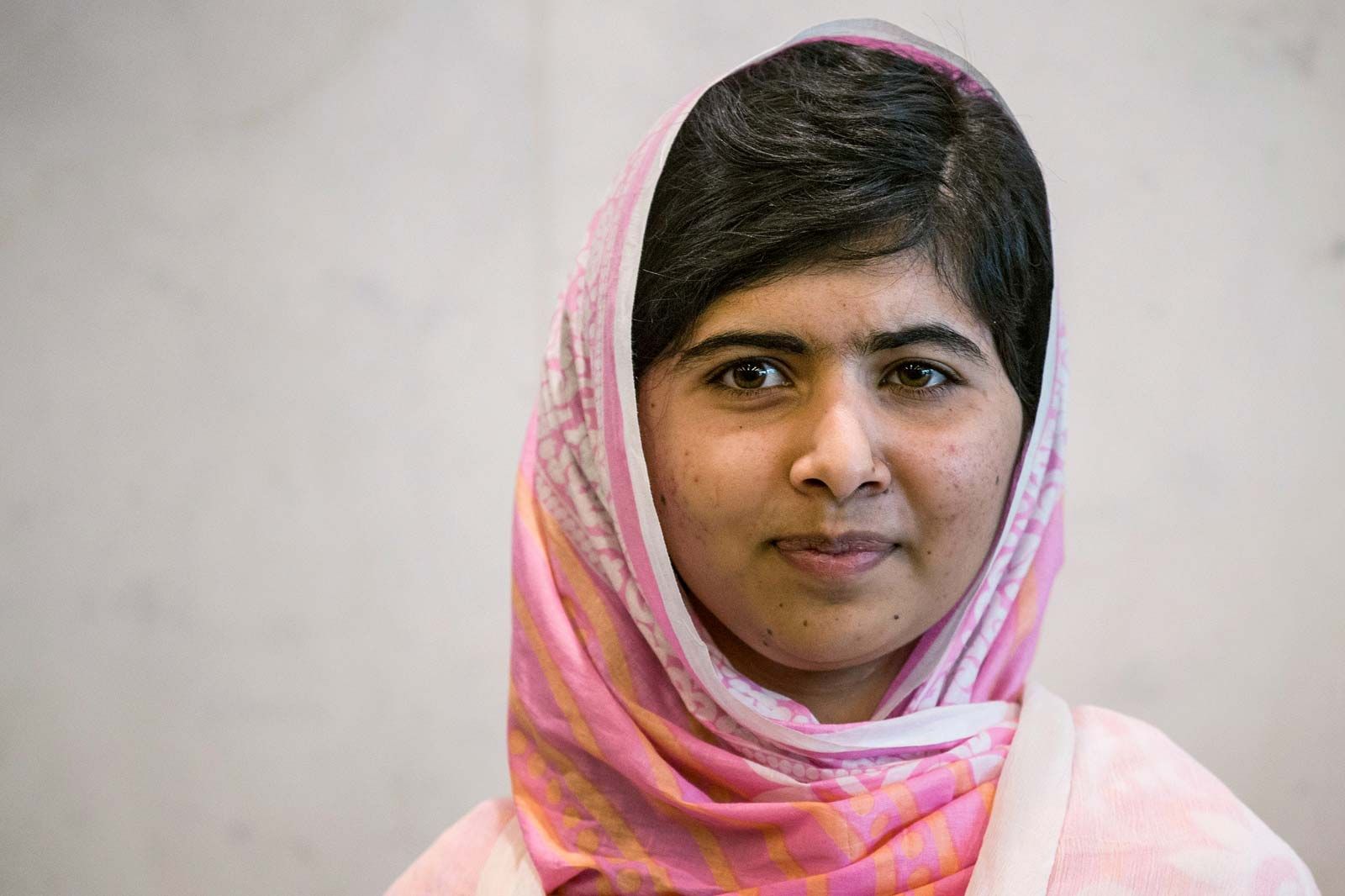
Malala Yousafzai’s story illustrates moral courage in the face of personal danger. Born in Mingora, Pakistan, she grew up in a family that valued education, particularly through her father’s advocacy for schooling. Her early childhood was shaped by the rise of extremist control in her region, where girls’ education became restricted. These conditions formed the backdrop for her decision to speak publicly, a risk that carried life-threatening consequences.
Malala began her activism as a teenager, blogging anonymously about her experiences under Taliban rule. Her willingness to attach her name to her advocacy marked a turning point. The breakthrough came when she survived an assassination attempt in 2012, transforming her into a global symbol of educational rights. Her recovery and continued activism represented extraordinary personal bravery.
During the 1990s though she was born later her peak influence aligns with modern global activism shaped by post-Cold War humanitarian discourse. Her advocacy redefined youth leadership, demonstrating that age does not limit political influence. She addressed world leaders and co-founded initiatives supporting girls’ education worldwide.
Malala’s legacy lies in inspiring global educational reform. Her risks reshaped conversations about gender equality and access to schooling. She continues to symbolize the transformative power of individual courage.
Key Facts
- Full name of the subject: Malala Yousafzai
- Date of birth: 12 July 1997
- Place of birth: Mingora, Pakistan
- Family background: Education-focused household
- Early childhood experiences: Exposure to educational activism
- Education history: University of Oxford Influences and mentors: Her father and education advocates
- Career beginnings: Blogging about education rights
- Major achievements: Nobel Peace Prize
- Challenges and obstacles faced: Assassination attempt
- Turning points in life: Global recognition after recovery
- Contributions to society: Advocacy for girls’ education
- Personal life (marriage, children, relationships): Married Awards and recognitions: Nobel Peace Prize
- Beliefs, values, or philosophy: Education for all
- Legacy and impact: Global youth activism symbol
- Historical or cultural significance: Champion of girls’ education
Notable Works: Malala Fund, I Am Malala, UN speeches, global advocacy tours, education initiatives
Controversies: Political criticism in home country, debates over Western media portrayal, ideological disputes, security funding questions, and activism narrative disagreements.
10. Walt Disney
Walt Disney’s career reflects creative risk-taking that reshaped global entertainment. Born in Chicago and raised in Missouri, Disney’s early life involved financial instability and manual labor. His childhood fascination with drawing developed despite limited resources. Early failures, including the bankruptcy of his first animation studio, tested his resilience and forced him to rebuild from scratch.
Disney’s career beginnings included short animated films, but his boldest decision came with the creation of synchronized sound cartoons. The introduction of Mickey Mouse marked his breakthrough, demonstrating technological and narrative innovation. He continued taking risks by investing heavily in feature-length animation, despite industry skepticism.
The 1990s decades after his lifetime saw the full realization of Disney’s legacy through the renaissance of animation built on his foundational risk-taking. During his active years, his decision to produce Snow White and the Seven Dwarfs was widely considered reckless due to high costs. The film’s success validated his vision and established animation as a major cinematic form.
Disney’s legacy transformed storytelling, theme parks, and multimedia entertainment. His willingness to invest in untested creative formats reshaped global culture and business models.
Key Facts
- Full name of the subject: Walter Elias Disney
- Date of birth: 5 December 1901
- Place of birth: Chicago, Illinois, USA Family background: Working-class family
- Early childhood experiences: Interest in drawing and storytelling
- Education history: Kansas City Art Institute Influences and mentors: Early animators and artists
- Career beginnings: Short animation films Major achievements: Creation of Disney Studios
- Challenges and obstacles faced: Studio bankruptcy
- Turning points in life: Success of Snow White
- Contributions to society: Entertainment innovation
- Personal life (marriage, children, relationships): Married with children
- Awards and recognitions: Multiple Academy Awards
- Beliefs, values, or philosophy: Imagination and innovation
- Legacy and impact: Global entertainment transformation
- Historical or cultural significance: Founder of modern animation industry
Notable Works: Mickey Mouse, Snow White and the Seven Dwarfs, Disneyland, Fantasia, Disney Studios
Controversies: Labor disputes, political criticism, workplace culture debates, historical interpretation discussions, and corporate expansion concerns
Notable Mentions:
Muhammad Ali
Amelia Earhart
Howard Hughes
Rosa Parks
Serena Williams