[People Profile] All We Know About Eleanor Roosevelt Biography, Networth, Family, Career, Life
Eleanor Roosevelt Biography, Networth, Family, Career, Life.
In This Content
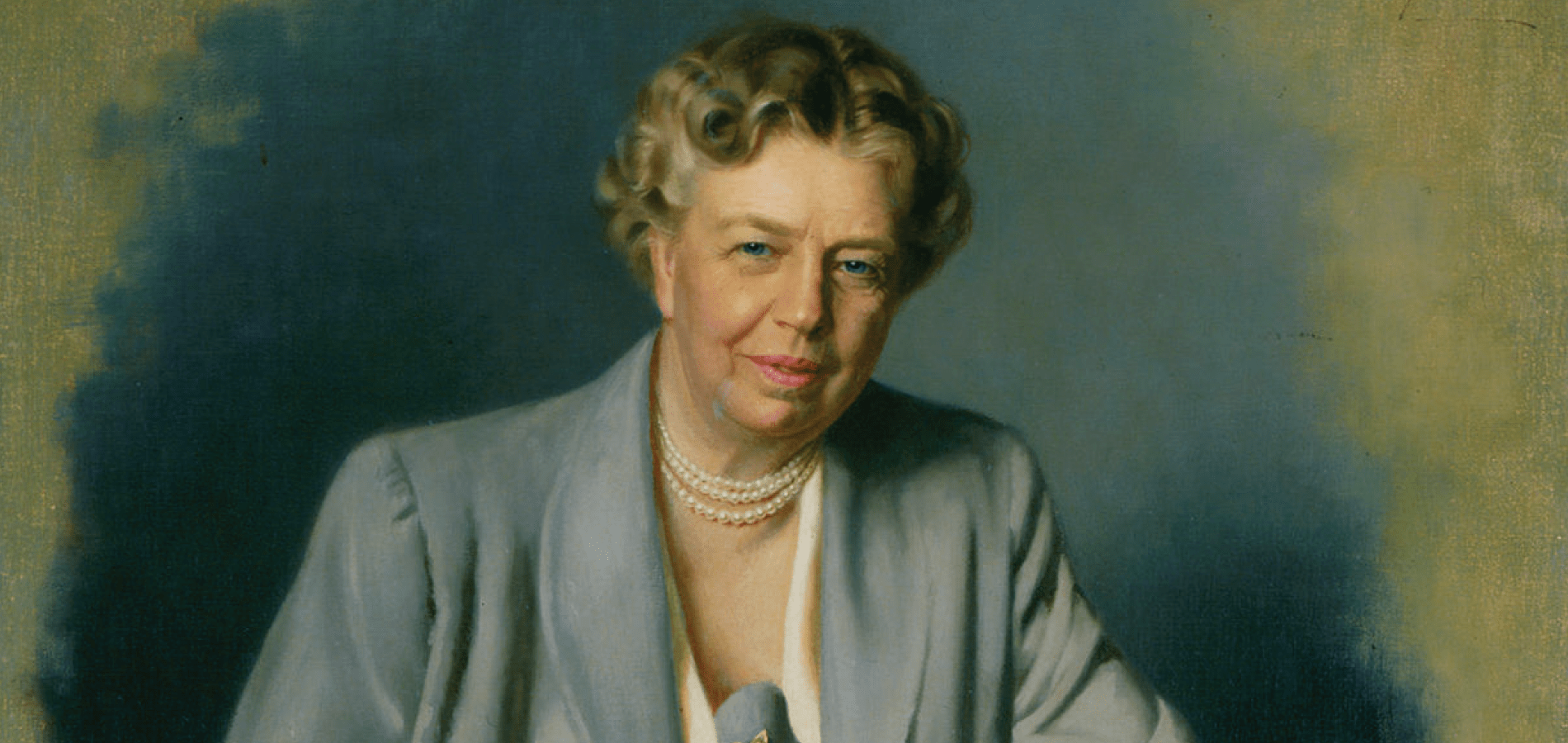
Eleanor Roosevelt
Early Life
- Full name: Anna Eleanor Roosevelt
- Born: October 11, 1884 — New York City
- Came from a prominent but troubled family; orphaned at a young age
- Educated in the United States and later in England, where she gained confidence and a sense of independence
Her early hardships shaped her empathy for others and her lifelong commitment to social causes.
Marriage and Entry into Public Life
- Married Franklin D. Roosevelt in 1905
- They had six children
- As her husband’s political career grew, she became increasingly active in public service and advocacy
When Franklin Roosevelt was stricken with polio, Eleanor played a crucial role in sustaining his political career and expanding her own public presence.
First Lady of the United States (1933–1945)
- Served as First Lady during the presidency of Franklin D. Roosevelt
- Redefined the role by becoming an active political figure rather than a ceremonial one
Key actions:
- Held press conferences, including women-only events for female journalists
- Traveled extensively to inspect living conditions during the Great Depression
- Advocated for civil rights, workers’ rights, and women’s equality
She often voiced opinions that differed from her husband’s administration, particularly on racial justice.
Role in Human Rights and the United Nations
After World War II, she became a leading international figure:
- Appointed to the United Nations by President Harry Truman
- Served as chair of the committee that drafted the Universal Declaration of Human Rights
Her leadership was instrumental in shaping the document, which remains a cornerstone of global human rights law.
Advocacy and Political Influence
Eleanor Roosevelt championed a wide range of causes:
- Civil rights for African Americans
- Rights of refugees and displaced persons
- Women’s participation in politics and the workforce
- Youth and education programs
She also wrote extensively, including a daily newspaper column titled “My Day,” which connected her directly with the public.
Controversies and Criticism
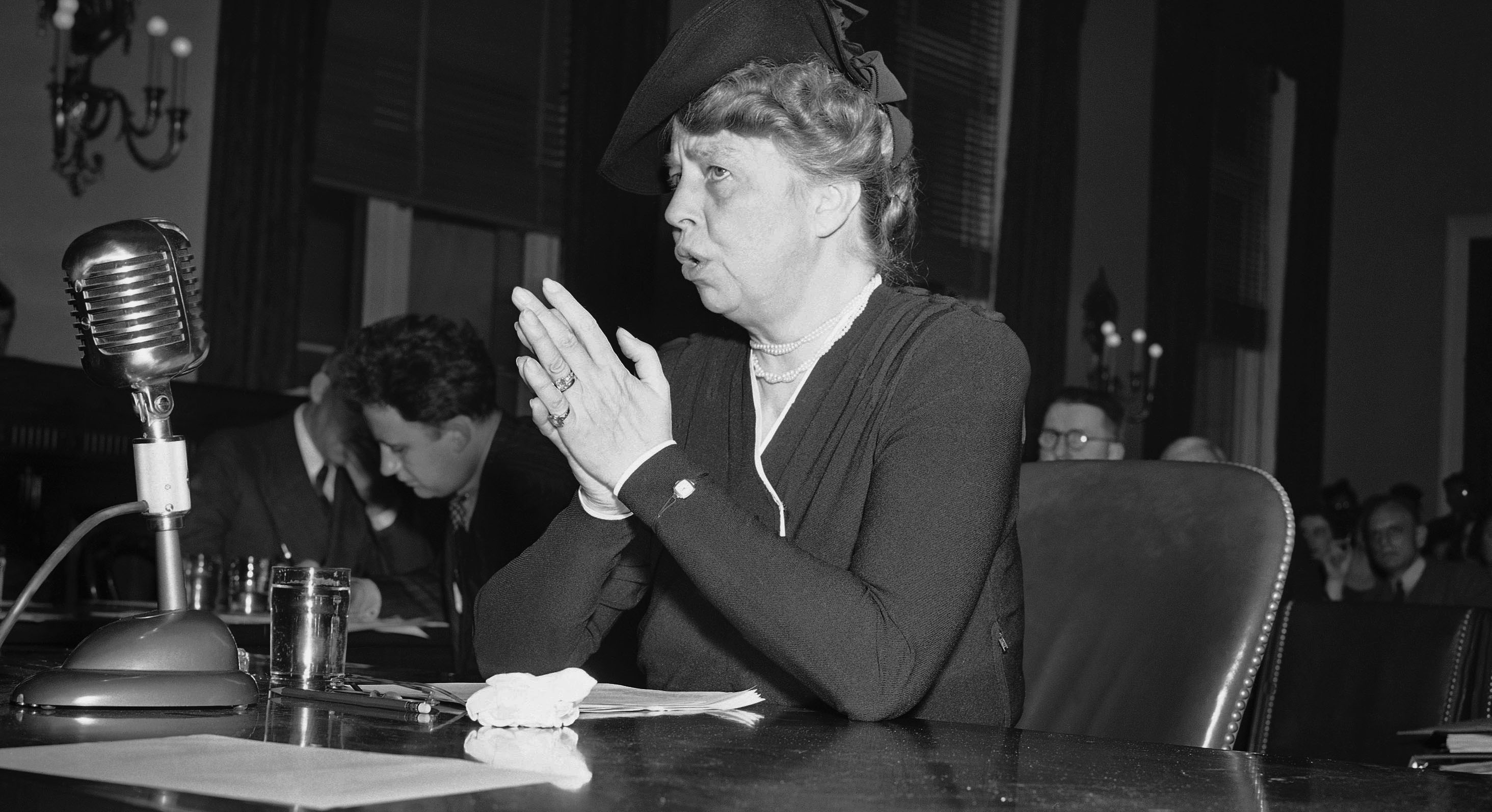
- Her outspoken views on racial equality and social justice drew criticism, especially in the segregated United States
- Some political opponents considered her too influential and unconventional for a First Lady
- She faced scrutiny for her close relationships with certain friends and associates, which sparked public speculation
Despite criticism, she maintained a strong public presence and continued advocating for her beliefs.
Later Life and Death
- Continued working in public service after leaving the White House
- Remained active in politics, writing, and international diplomacy
- Died: November 7, 1962 — New York City
Legacy
Eleanor Roosevelt is widely regarded as one of the most influential women of the 20th century.
She:
- Transformed the role of First Lady into one of active leadership
- Helped establish modern human rights standards
- Served as a bridge between domestic policy and global humanitarian efforts
Her work on the Universal Declaration of Human Rights continues to shape international law and advocacy today.
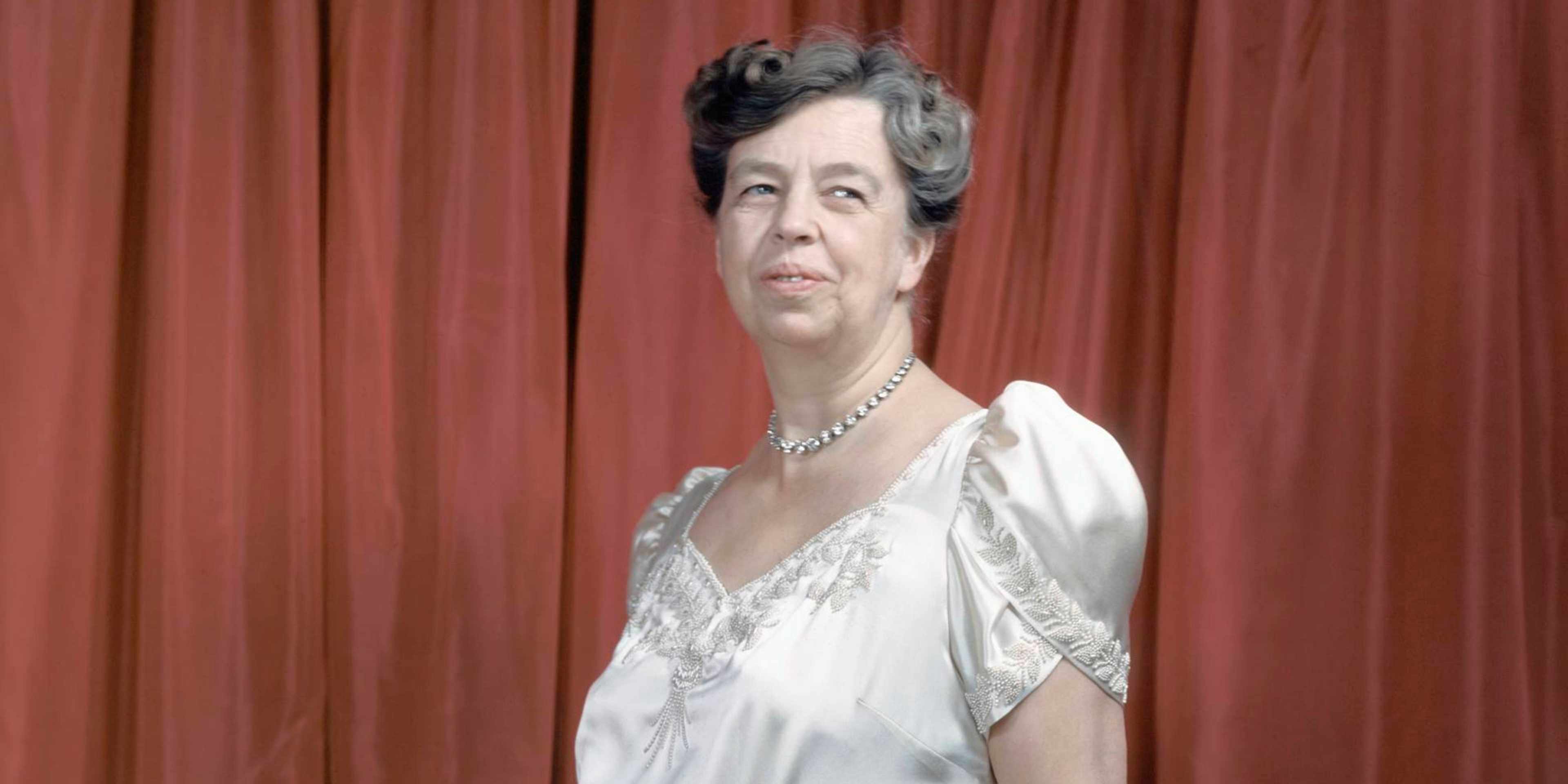
About Eleanor Roosevelt
Eleanor Roosevelt’s life unfolds like a long, steady act of courage—quiet at first, almost fragile, and then gradually, unmistakably powerful. She did not begin as a commanding figure. In many ways, she became one.
Born on October 11, 1884, in New York City, Eleanor Roosevelt entered a world of privilege shadowed by loss. Her father, Elliott Roosevelt, struggled with alcoholism, and her mother, Anna Hall Roosevelt, was distant and critical. By the age of ten, Eleanor had lost both parents, a childhood marked by loneliness that shaped her inward nature and deep sensitivity to the suffering of others.
She was sent to school in England, where a headmistress recognized something in her that others had overlooked: intelligence, empathy, and quiet determination. It was there that Eleanor began to emerge from the self-doubt that had defined her early years.
Her life took a decisive turn when she married Franklin D. Roosevelt in 1905. The marriage drew her into the centre of American political life, though not without difficulty. Franklin’s rising career, and later his struggle with polio, would shape both of their lives. Eleanor, once reserved and uncertain, found herself stepping into roles she had never imagined—first reluctantly, then with growing confidence.
When Franklin became President of the United States in 1933, during the depths of the Great Depression, Eleanor redefined what it meant to be First Lady. She refused to remain a ceremonial figure. Instead, she travelled extensively, visited coal mines and impoverished communities, held press conferences, and wrote a widely read newspaper column. She used her position not to reflect power, but to challenge it—advocating for workers, women, African Americans, and the poor.
She was, in many ways, ahead of her time. She publicly supported civil rights at a moment when such positions were politically risky, and she often disagreed openly with prevailing norms—even within her own administration.
After Franklin’s death in 1945, many assumed Eleanor would retreat from public life. Instead, she entered a new chapter—one that would define her global legacy.
She was appointed by President Harry Truman to the newly formed United Nations, where she became a central figure in shaping the postwar world. As chair of the committee that drafted the Universal Declaration of Human Rights, Eleanor Roosevelt helped articulate a vision of dignity and equality that extended beyond borders, politics, and culture.
The document, adopted in 1948, remains one of the most significant statements of human rights ever written. It was not merely legal language—it was a moral declaration, and Eleanor was its driving force. She navigated ideological divides, cultural differences, and political tensions with remarkable persistence, earning the respect of leaders worldwide.
Throughout her life, Eleanor Roosevelt continued to write, speak, and advocate. She remained a tireless voice for justice, insisting that human rights were not abstract ideals, but lived realities that began in “small places, close to home.”
She died on November 7, 1962, leaving behind a legacy that cannot be measured by titles or positions alone. She transformed the role of First Lady, helped shape international human rights, and proved that influence does not require loudness—it requires conviction.
Eleanor Roosevelt did not seek power in the traditional sense.
She reshaped it—turning it into a tool for compassion, dignity, and change.