
Top 10 Olympic Champions
Top 10 Olympic Champions
In This Content
1. Michael Phelps
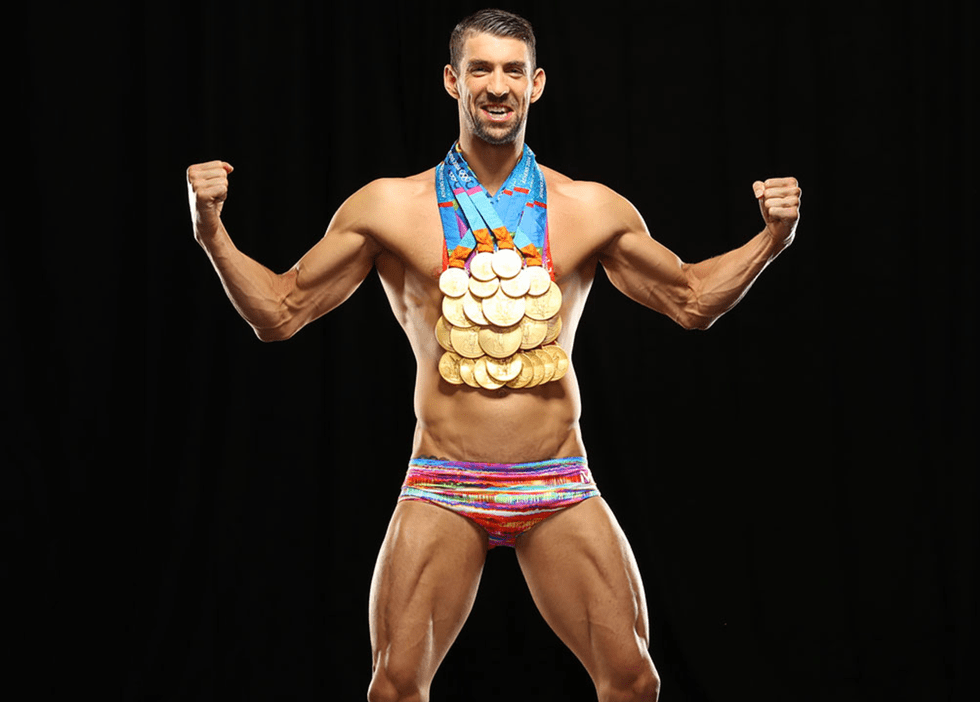
Michael Phelps represents the apex of modern Olympic performance, a figure whose dominance in swimming redefined the boundaries of human endurance and competitive consistency. Born in Baltimore, Maryland, Phelps grew up in a household shaped by discipline and resilience, where early exposure to structured athletic training became a defining feature of his childhood. His natural physiological advantages were complemented by an unusually intense training ethic that would later become the foundation of his global dominance.
Phelps’ career began in competitive swimming at a young age, where his rapid improvement quickly distinguished him from peers. His breakthrough came at the 2004 Athens Olympics, where he emerged as a teenage sensation with multiple medals, signaling the arrival of a generational athlete. However, it was during the 2008 Beijing Olympics that he reached historic peak performance, capturing eight gold medals in a single Games and redefining Olympic achievement in the modern era.
Throughout the 1990s developmental phase of his career, Phelps’ early training years laid the physiological and psychological groundwork for his later dominance. His influence extended beyond medals, reshaping global swimming training methodologies, sports psychology applications, and athlete specialization strategies.
Phelps’ legacy is anchored in his transformation of swimming from a discipline of specialization into a domain of multi-event mastery, altering how nations develop elite aquatic athletes.
Key Facts
- Full name of the subject: Michael Fred Phelps II
- Date of birth: June 30, 1985
- Place of birth: Baltimore, Maryland, United States
- Family background: Middle-class American family
- Early childhood experiences: Early diagnosis of ADHD and introduction to swimming for focus and discipline
- Education history: Towson High School
- Influences and mentors: Coach Bob Bowman
- Career beginnings: Competitive swimming in early adolescence
- Major achievements: 23 Olympic gold medals, most decorated Olympian in history
- Challenges and obstacles faced: Mental health struggles and intense public scrutiny
- Turning points in life: 2004 Athens Olympic breakthrough
- Contributions to society: Advocacy for mental health awareness in sports
- Personal life (marriage, children, relationships): Married to Nicole Johnson; children
- Awards and recognitions: Multiple Olympic and World Championship honors
- Beliefs, values, or philosophy: Emphasizes discipline, repetition, and mental resilience
- Legacy and impact: Most successful Olympic athlete of all time
- Historical or cultural significance: Redefined limits of Olympic medal achievement
Notable Works: 2008 Beijing Olympics (8 gold medals)
2004 Athens Olympics debut success
2012 London Olympics comeback performances
2016 Rio Olympics final Olympic appearances
Controversies:
Michael Phelps’ career includes a well-documented instance of public controversy involving the circulation of an image depicting him using a bong, which led to widespread media scrutiny. The issue emerged during a period when Phelps was transitioning from Olympic success into global celebrity status, placing his personal conduct under intensified public observation. Key stakeholders included sports governing bodies, sponsors, media organizations, and the public, with sponsors temporarily suspending endorsement relationships as a precautionary response.
Critics raised concerns regarding athlete conduct and the responsibilities associated with global role model status, particularly given Olympic values emphasizing discipline and integrity. Phelps issued a public apology acknowledging poor judgment, and governing bodies did not impose formal Olympic sanctions. Over time, the matter was reframed within broader discussions of athlete mental health, personal pressure, and the expectations placed on elite competitors.
While the incident temporarily affected sponsorship and public perception, it did not result in formal disqualification or long-term institutional penalties. In later years, the controversy has been widely contextualized as part of his personal growth narrative, particularly in relation to his subsequent advocacy for mental health awareness.
2. Usain Bolt
Usain Bolt stands as the most dominant sprinter in Olympic history, a performer whose combination of speed, charisma, and competitive composure transformed track and field into a global spectacle. Born in Sherwood Content, Jamaica, Bolt’s early life unfolded in a rural environment where informal athletic play served as the foundation for his explosive physical development. His early coaches quickly recognized his extraordinary stride length and natural acceleration, setting him on a trajectory toward elite competition.
Bolt’s career began in junior sprint competitions, where he demonstrated exceptional promise despite early inconsistencies in technique. His breakthrough came at the 2008 Beijing Olympics, where he shattered world records in the 100m and 200m events, establishing a new global benchmark for sprint performance. His ability to dominate races while visibly easing off before the finish line symbolized an unprecedented level of athletic superiority.
During the 1990s developmental phase of sprinting culture, Bolt’s early training years reflected Jamaica’s emerging sprinting system, which emphasized biomechanics and rhythm-based acceleration. His later dominance in the 2012 and 2016 Olympics solidified his status as a generational athlete whose influence extended beyond sport into global cultural identity.
Bolt’s legacy is defined by his transformation of sprinting into a performance art, blending athletic dominance with theatrical confidence that reshaped audience engagement with track events.
Key Facts
- Full name of the subject: Usain St. Leo Bolt
- Date of birth: August 21, 1986
- Place of birth: Sherwood Content, Trelawny, Jamaica
- Family background: Rural Jamaican family
- Early childhood experiences: Early involvement in cricket and informal sprinting
- Education history: William Knibb Memorial High School
- Influences and mentors: Coach Glen Mills
- Career beginnings: Junior sprint competitions in Jamaica
- Major achievements: 8 Olympic gold medals, world record holder in 100m and 200m
- Challenges and obstacles faced: Early back injuries and technical refinement issues
- Turning points in life: 2008 Beijing Olympic record-breaking performance
- Contributions to society: Global promotion of athletics and youth sports in Jamaica
- Personal life (marriage, children, relationships): Married to Kasi Bennett; children
- Awards and recognitions: Multiple Olympic gold medals and World Athlete of the Year awards
- Beliefs, values, or philosophy: Emphasizes confidence, joy, and discipline in performance
- Legacy and impact: Greatest sprinter in Olympic history
- Historical or cultural significance: Transformed global perception of sprinting
Notable Works: 2008 Beijing 100m and 200m gold medals
2012 London Olympic sprint double defense
2016 Rio Olympic triple-double sprint achievements
4x100m relay world record performances
Controversies:
Usain Bolt’s career has been largely free of personal misconduct controversies; however, one notable incident involved the Jamaican 4x100m relay team’s 2008 Olympic gold medal being revoked due to teammate Nesta Carter’s later disqualification for doping violations. The issue was not related to Bolt’s individual performance but affected team results retrospectively following re-analysis by the International Olympic Committee and athletics governing bodies.
The controversy centered on anti-doping enforcement standards and the retroactive application of testing technology. Key stakeholders included the International Olympic Committee, World Athletics, Jamaican athletics authorities, and relay team members. Bolt publicly expressed disappointment but was not personally implicated in any doping allegations or violations.
The medal stripping altered official historical records but did not affect Bolt’s individual sprint titles or records. The incident remains classified as a systemic enforcement case rather than an individual ethical violation involving Bolt himself.
3. Nadia Comăneci
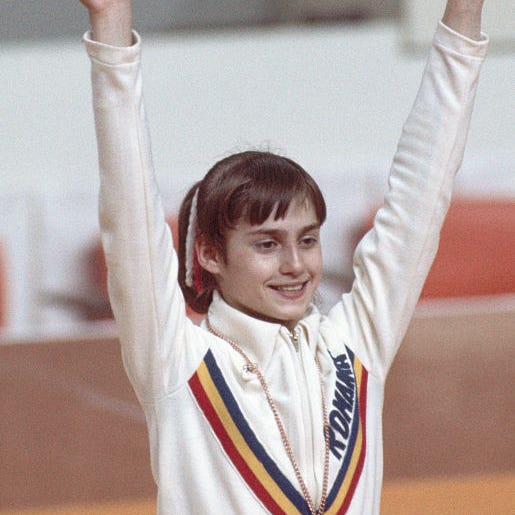
Nadia Comăneci is widely regarded as one of the most transformative figures in Olympic gymnastics, a pioneer whose technical precision and artistic execution redefined scoring standards in the sport. Born in Onești, Romania, Comăneci began gymnastics training at an exceptionally young age under a highly structured state athletic system. Her early development was characterized by rigorous discipline, technical repetition, and an environment designed to cultivate elite athletic excellence.
Her career began in national competitions where her extraordinary balance, control, and composure quickly distinguished her from peers. Her breakthrough came at the 1976 Montreal Olympics, where she achieved the first perfect score of 10.0 in Olympic gymnastics history. This moment fundamentally altered the sport’s scoring system and global perception of gymnastic possibility.
During the broader 1990s retrospective period of her influence, Comăneci’s legacy was continually revisited as gymnastics evolved into a more globally competitive and technically demanding sport. Her performances remained a benchmark against which new generations of gymnasts were measured, particularly in terms of precision and artistic discipline.
Comăneci’s legacy lies in her redefinition of perfection within sport, establishing a new standard of technical excellence that continues to influence gymnastics judging systems and athlete training methodologies worldwide.
Key Facts
- Full name of the subject: Nadia Elena Comăneci
- Date of birth: November 12, 1961
- Place of birth: Onești, Romania
- Family background: Romanian working-class family
- Early childhood experiences: Early enrollment in gymnastics training programs
- Education history: State athletic training system in Romania
- Influences and mentors: Coach Béla Károlyi
- Career beginnings: Romanian national gymnastics competitions
- Major achievements: First perfect 10.0 score in Olympic gymnastics history
- Challenges and obstacles faced: Intense training conditions under state sports system
- Turning points in life: 1976 Montreal Olympic breakthrough
- Contributions to society: Elevated global standards of gymnastics performance
- Personal life (marriage, children, relationships): Married to Bart Conner; one child
- Awards and recognitions: Multiple Olympic medals; international sports honors
- Beliefs, values, or philosophy: Emphasizes discipline, precision, and artistic excellence
- Legacy and impact: Redefined scoring standards in gymnastics
- Historical or cultural significance: First athlete to achieve Olympic perfect score
Notable Works: 1976 Montreal Olympics historic performances
Perfect 10.0 routines
World Championship gymnastics performances
Olympic team and individual medals
Controversies:
Nadia Comăneci’s career has been discussed in relation to the broader structural conditions of elite gymnastics training in Romania during the Cold War era. One area of public debate concerns the intense state-controlled sports system under which she trained, which has been retrospectively analyzed for its psychological and physical demands on young athletes. These discussions are framed within historical and institutional context rather than individual allegations of misconduct.
Key stakeholders in this discourse include Romanian sports authorities of the era, international gymnastics federations, historians of sport, and athlete advocacy groups. While critics have highlighted concerns regarding athlete welfare standards during that period, Comăneci herself has not been formally accused of wrongdoing, and her public statements have often emphasized both the discipline and challenges of elite training systems.
There are no official sanctions or disciplinary controversies associated with her competitive career. The discussion remains part of broader historical reassessment of Cold War-era athletic programs rather than an individual ethical controversy.
4. Carl Lewis
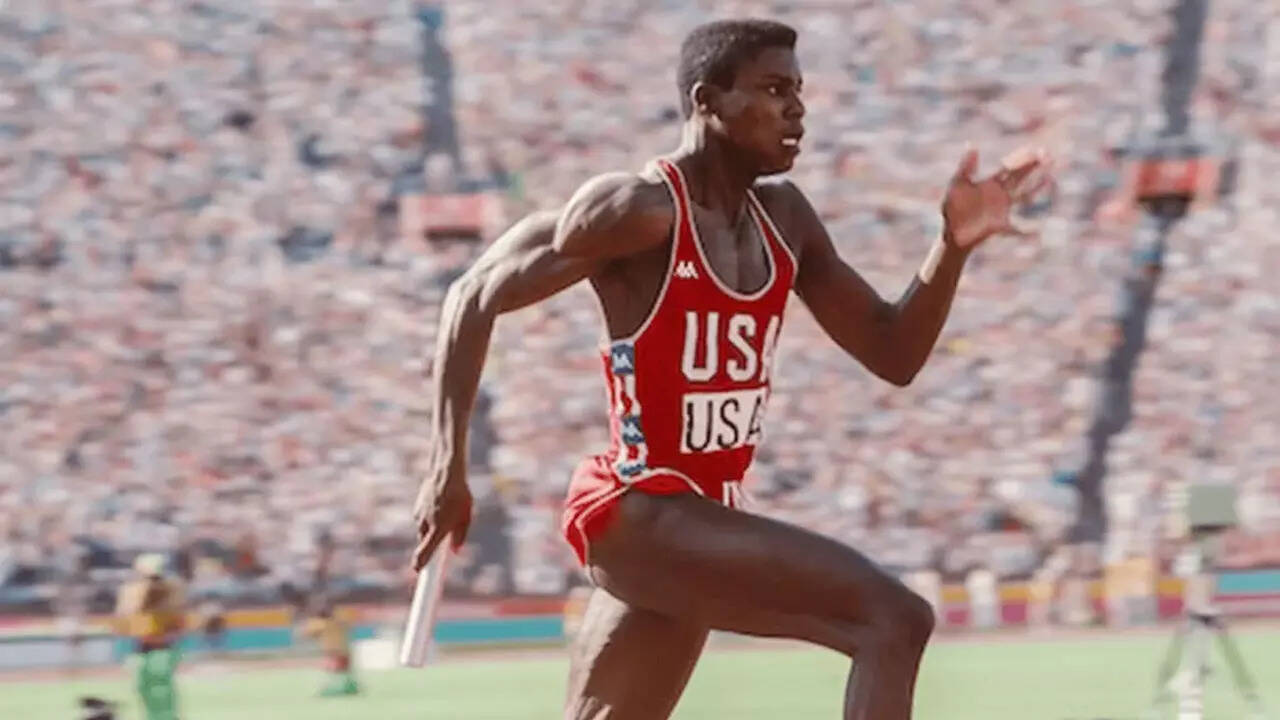
Carl Lewis is widely regarded as one of the most complete Olympic athletes in history, a competitor whose mastery across sprinting and long jump disciplines redefined versatility in elite track and field. Born in Birmingham, Alabama, Lewis was raised in a family deeply rooted in athletics, with his parents both actively involved in coaching and competitive sports. This early exposure cultivated a disciplined athletic identity centered on precision, repetition, and competitive consistency.
Lewis’ career began in junior track and field competitions, where his dual capability in sprinting and long jump quickly set him apart. His breakthrough came at the 1984 Los Angeles Olympics, where he matched Jesse Owens’ historic achievement by winning four gold medals in a single Games. This moment positioned him as both a symbolic and competitive successor to earlier American sprinting legends.
During the broader 1990s peak of his career, Lewis maintained extraordinary longevity, competing at elite levels across multiple Olympic cycles, including Barcelona 1992 where he continued to dominate long jump events. His sustained performance over more than a decade demonstrated a rare blend of physical maintenance, technical refinement, and psychological discipline.
Lewis’ legacy lies in his embodiment of athletic versatility, proving that sustained dominance across multiple disciplines is achievable at the highest level of Olympic competition.
Key Facts
- Full name of the subject: Frederick Carlton Lewis
- Date of birth: July 1, 1961
- Place of birth: Birmingham, Alabama, United States
- Family background: Athletic family (parents were track and field coaches)
- Early childhood experiences: Early training in sprinting and jumping disciplines
- Education history: University of Houston
- Influences and mentors: Coach Tom Tellez
- Career beginnings: Junior national track and field competitions
- Major achievements: 9 Olympic gold medals across sprint and long jump events
- Challenges and obstacles faced: Managing longevity across multiple Olympic cycles
- Turning points in life: 1984 Los Angeles Olympic quadruple gold performance
- Contributions to society: Promoted long-term athletic conditioning and versatility
- Personal life (marriage, children, relationships): Private family life
- Awards and recognitions: Multiple Olympic and World Championship honors
- Beliefs, values, or philosophy: Emphasizes discipline, consistency, and technical mastery
- Legacy and impact: One of the most decorated track and field athletes in history
- Historical or cultural significance: Continued legacy of Jesse Owens-style Olympic excellence
Notable Works: 1984 Los Angeles Olympics (4 gold medals)
Long jump Olympic dominance across multiple Games
1992 Barcelona Olympic gold medal performances
World Championship track and field titles
Controversies:
Carl Lewis’ career has been associated with discussions regarding historical doping control standards in athletics during the 1980s. One widely analyzed issue involves retrospective claims and debates about performance-enhancing substance testing protocols of the era, particularly within the United States Olympic track and field system. These discussions have emerged largely from later reinterpretations of anti-doping enforcement rather than confirmed individual sanctions against Lewis.
Key stakeholders in this discourse include World Athletics, Olympic regulatory bodies, sports historians, and anti-doping agencies. Critics have pointed to inconsistencies in historical testing procedures, while supporters emphasize that Lewis was cleared of any formal doping violations during his competitive career and was allowed to compete and retain his medals.
No official Olympic sanctions were ever imposed on Carl Lewis. The matter remains part of broader systemic debate about 1980s athletics regulation rather than an adjudicated individual controversy.
5. Simone Biles
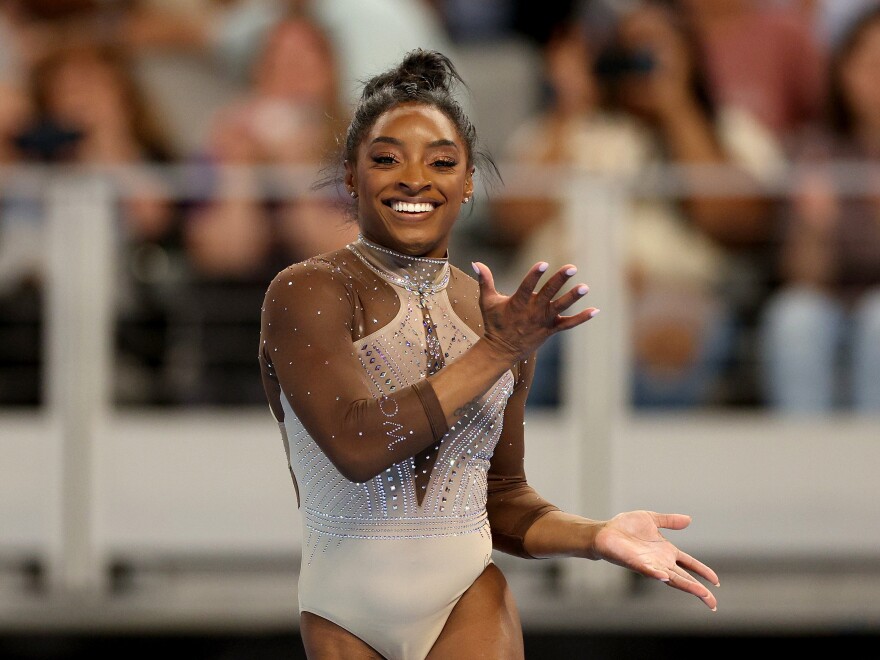
Simone Biles represents a transformative force in modern gymnastics, an athlete whose technical innovation and psychological openness redefined expectations of elite performance. Born in Columbus, Ohio, Biles was raised in a challenging early environment, later entering foster care before being adopted by her grandparents. This transition provided stability that allowed her extraordinary athletic talent to develop within a structured training environment.
Biles began gymnastics training at a young age, quickly demonstrating a level of explosive power and spatial awareness uncommon even among elite gymnasts. Her breakthrough came during the 2013 World Championships, where she emerged as a dominant force in women’s gymnastics, signaling the arrival of a new era defined by difficulty and athletic complexity.
During the 1990s developmental phase of her discipline’s evolution, gymnastics increasingly emphasized higher difficulty scoring, a shift that Biles would later dominate through unmatched technical innovation. Her performances at the 2016 Rio Olympics, where she won four gold medals, established her as the defining gymnast of her generation.
Biles’ legacy is defined not only by her competitive achievements but also by her role in reshaping athlete mental health discourse, introducing a new paradigm in which psychological well-being is recognized as central to elite performance.
Key Facts
- Full name of the subject: Simone Arianne Biles
- Date of birth: March 14, 1997
- Place of birth: Columbus, Ohio, United States
- Family background: Raised by grandparents after foster care placement
- Early childhood experiences: Entry into gymnastics through daycare field trips
- Education history: Homeschooled during elite training
- Influences and mentors: Coach Aimee Boorman
- Career beginnings: Junior national gymnastics competitions
- Major achievements: Most decorated gymnast in World Championship history
- Challenges and obstacles faced: Foster care upbringing and mental health pressures
- Turning points in life: 2013 World Championship breakthrough
- Contributions to society: Mental health advocacy in elite sports
- Personal life (marriage, children, relationships): Married to Jonathan Owens
- Awards and recognitions: Multiple Olympic gold medals; Presidential Medal of Freedom
- Beliefs, values, or philosophy: Prioritizes mental health and balanced excellence
- Legacy and impact: Redefined modern gymnastics difficulty standards
- Historical or cultural significance: Changed global discourse on athlete wellness
Notable Works: 2016 Rio Olympic Games dominance
World Championship record medal haul
Signature “Biles” gymnastics skills
2020 Tokyo Olympic participation and advocacy
Controversies:
Simone Biles’ career includes a widely discussed withdrawal from several events during the 2020 Tokyo Olympics, an incident centered on athlete mental health and competitive safety. The issue involved her decision to step back from multiple finals due to a condition described as the “twisties,” a phenomenon affecting spatial awareness in gymnastics. Key stakeholders included the International Olympic Committee, USA Gymnastics, coaching staff, fellow athletes, media organizations, and global audiences.
Critics initially debated the implications of withdrawal on competitive responsibility, while supporters emphasized athlete safety and mental health prioritization. Biles publicly stated that her decision was made to protect her physical safety and long-term well-being. Sports governing bodies later supported broader discussions on mental health frameworks for elite athletes.
The matter is now widely regarded as resolved, with significant institutional impact. It contributed to global policy discussions on athlete welfare, mental health protocols, and competitive safety standards.
6. Michael Johnson

Michael Johnson is recognized as one of the most technically distinctive sprinters in Olympic history, known for his upright running style and unprecedented dominance in the 200m and 400m events. Born in Dallas, Texas, Johnson developed an early interest in athletics within a competitive school sports environment that emphasized discipline and structured training. His biomechanical efficiency quickly distinguished him from other sprinters, particularly in longer sprint distances.
Johnson’s career began in collegiate track and field at Baylor University, where his performances in the 200m and 400m events signaled elite potential. His breakthrough came at the 1992 Barcelona Olympics, where he won gold in the 4x400m relay, establishing himself as a rising force in global sprinting.
During the 1990s, Johnson reached his competitive peak, particularly at the 1996 Atlanta Olympics, where he achieved a historic double gold in the 200m and 400m events. His world record performance in the 200m, set while wearing gold shoes, became one of the most iconic moments in Olympic sprint history.
Johnson’s legacy lies in his biomechanical innovation and his redefinition of sprinting technique, influencing training methodologies for future generations of athletes.
Key Facts
- Full name of the subject: Michael Duane Johnson
- Date of birth: September 13, 1967
- Place of birth: Dallas, Texas, United States
- Family background: Middle-class American family
- Early childhood experiences: Early exposure to competitive school athletics
- Education history: Baylor University
- Influences and mentors: Coach Clyde Hart
- Career beginnings: Collegiate track and field competitions
- Major achievements: Olympic gold medals in 200m and 400m, world records
- Challenges and obstacles faced: Early injuries and performance consistency concerns
- Turning points in life: 1996 Atlanta Olympic double gold performance
- Contributions to society: Advanced sprint training and biomechanics understanding
- Personal life (marriage, children, relationships): Married to Kerry Doyen
- Awards and recognitions: Multiple Olympic and World Championship titles
- Beliefs, values, or philosophy: Emphasizes technique, efficiency, and discipline
- Legacy and impact: Revolutionized sprinting form and strategy
- Historical or cultural significance: Iconic figure in 1990s Olympic athletics
Notable Works: 1996 Atlanta Olympics double gold
200m world record performance
400m world record dominance
1992 Barcelona Olympic relay gold
Controversies:
Michael Johnson’s career has not been associated with personal doping violations or disciplinary sanctions; however, his era of competition has been examined within broader discussions about performance enhancement regulation in 1990s athletics. These discussions focus on systemic scrutiny of sprinting programs and evolving anti-doping enforcement rather than individual wrongdoing.
Key stakeholders include World Athletics, Olympic regulatory bodies, anti-doping agencies, and sports historians. Critics have raised general concerns about competitive parity in sprinting during the era, while Johnson himself has consistently maintained compliance with all regulations and testing requirements.
No official findings or sanctions have been issued against Michael Johnson. The subject remains part of broader historical analysis of sprint performance standards rather than an individual controversy case.
7. Allyson Felix
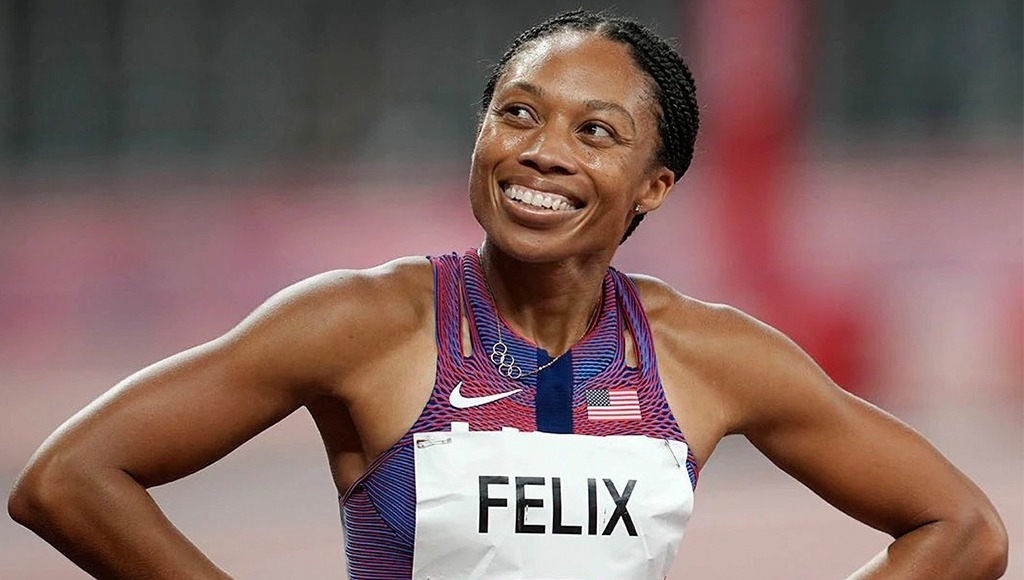
Allyson Felix is one of the most decorated and resilient athletes in Olympic track and field history, known for her extraordinary longevity, versatility, and advocacy for athlete rights. Born in Los Angeles, California, Felix was raised in a family with strong academic and moral foundations, where discipline and education were emphasized alongside athletic development. Her early sprinting ability was evident during school competitions, where she demonstrated exceptional speed and composure.
Felix’s career began in junior athletics, where she quickly rose through national rankings due to her refined sprinting technique and tactical intelligence. Her breakthrough came at the 2004 Athens Olympics, where she won a silver medal as a teenager, signaling the emergence of a future global champion.
During the 1990s developmental phase of women’s sprinting evolution, Felix’s training coincided with increasing professionalism and scientific advancement in athletics. Her peak years spanned multiple Olympic cycles, including Beijing 2008 and London 2012, where she became a central figure in U.S. relay dominance and individual sprint success.
Felix’s legacy is defined by her longevity, consistency, and advocacy efforts, particularly her role in reshaping maternity protections for female athletes and advancing equity in sports sponsorship.
Key Facts
- Full name of the subject: Allyson Michelle Felix
- Date of birth: November 18, 1985
- Place of birth: Los Angeles, California, United States
- Family background: Educator family background
- Early childhood experiences: Early entry into competitive sprinting
- Education history: University of Southern California
- Influences and mentors: Coach Bobby Kersee
- Career beginnings: Junior national sprint competitions
- Major achievements: Most decorated Olympic track and field female athlete
- Challenges and obstacles faced: Contract disputes and pregnancy-related sponsorship issues
- Turning points in life: 2004 Olympic debut medal performance
- Contributions to society: Advocacy for maternal rights in sports
- Personal life (marriage, children, relationships): Married to Kenneth Ferguson; children
- Awards and recognitions: Multiple Olympic medals; humanitarian awards
- Beliefs, values, or philosophy: Emphasizes equality, resilience, and athlete dignity
- Legacy and impact: Symbol of longevity and athlete advocacy in sprinting
- Historical or cultural significance: Changed maternity policy discussions in athletics
Notable Works: 2004–2020 Olympic Games performances
World Championship sprint titles
Olympic relay dominance
Advocacy for Nike maternity policy reform
Controversies:
Allyson Felix’s career includes a widely reported contractual dispute with a major sportswear sponsor during her pregnancy, which led to public debate about maternity protections for elite athletes. The issue involved sponsorship negotiations in which Felix advocated for contractual terms that would protect athlete earnings during pregnancy and postpartum recovery. Key stakeholders included the athlete, corporate sponsors, advocacy groups, and sports industry observers.
Critics highlighted systemic inequities in sponsorship structures for female athletes, while Felix publicly emphasized the need for fair treatment and maternity safeguards. The dispute contributed to broader policy discussions within the sports apparel industry and athlete representation frameworks.
The matter is generally considered resolved in terms of public outcome, as it led to significant reforms in maternity protection policies for sponsored athletes, positioning Felix as a central figure in athlete rights advocacy.
8. Katie Ledecky
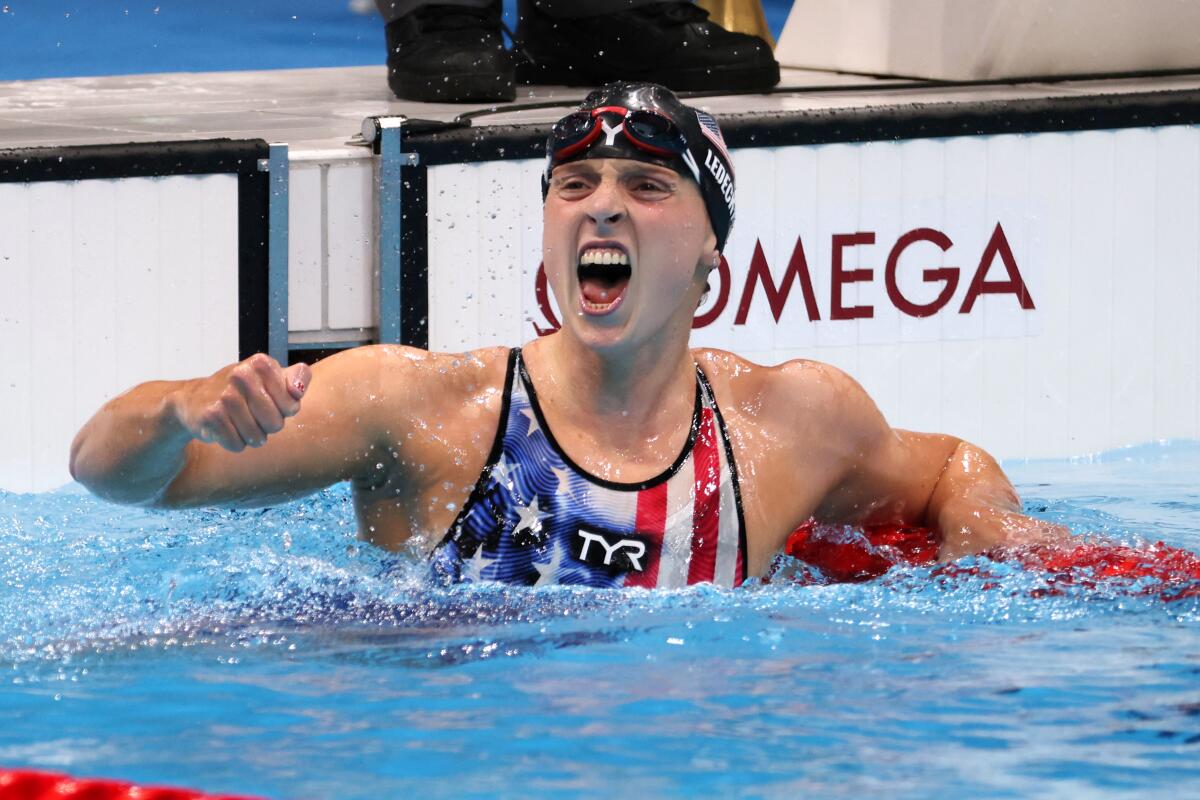
Katie Ledecky is widely regarded as the most dominant female distance swimmer in Olympic history, an athlete whose sustained control over middle- and long-distance freestyle events redefined endurance performance in aquatic sports. Born in Washington, D.C., Ledecky grew up in a highly disciplined academic and athletic household, where structured training and intellectual development were equally prioritized. Her early exposure to competitive swimming revealed an unusual combination of endurance capacity and technical efficiency.
Ledecky’s career began in youth swimming competitions, where she quickly distinguished herself through unprecedented race margins and pacing discipline. Her breakthrough came at the 2012 London Olympics, where she won gold in the 800m freestyle at just 15 years old, shocking the international swimming community with both her composure and dominance.
During the 1990s developmental phase of competitive swimming evolution, training methodologies increasingly emphasized data-driven endurance optimization, a foundation Ledecky later perfected through scientifically refined pacing strategies. Her continued dominance across multiple Olympic cycles, including Rio 2016 and Tokyo 2020, established her as a generational force in distance swimming.
Ledecky’s legacy is defined by her redefinition of endurance excellence, transforming women’s distance swimming into a discipline of sustained strategic control rather than reactive competition.
Key Facts
- Full name of the subject: Kathleen Genevieve Ledecky
- Date of birth: March 17, 1997
- Place of birth: Washington, D.C., United States
- Family background: Educated, professionally accomplished family
- Early childhood experiences: Early introduction to competitive swimming
- Education history: Stanford University
- Influences and mentors: Coach Yuri Suguiyama; earlier coaching by Bruce Gemmell
- Career beginnings: Age-group swimming competitions
- Major achievements: Multiple Olympic gold medals; world records in freestyle events
- Challenges and obstacles faced: Maintaining dominance across multiple Olympic cycles
- Turning points in life: 2012 Olympic gold medal breakthrough
- Contributions to society: Role model for women in endurance sports
- Personal life (marriage, children, relationships): Private personal life
- Awards and recognitions: Multiple Olympic and World Championship honors
- Beliefs, values, or philosophy: Emphasizes discipline, consistency, and incremental improvement
- Legacy and impact: Greatest female distance swimmer in history
- Historical or cultural significance: Redefined standards in competitive swimming endurance
Notable Works: 2012 London Olympics 800m freestyle gold
2016 Rio Olympics multiple gold medal performances
2020 Tokyo Olympic endurance dominance
Multiple world record performances in freestyle events
Controversies:
Katie Ledecky’s career has not been associated with personal misconduct or disciplinary action; however, broader discussions in competitive swimming have occasionally examined the dominance of elite athletes in relation to competitive balance. In Ledecky’s case, her overwhelming superiority in distance events has prompted analytical debate within sports science and commentary circles regarding performance gaps in women’s distance swimming.
Key stakeholders include World Aquatics, Olympic committees, sports analysts, and competing national teams. Critics have occasionally questioned whether technological advancements in training and sports science have widened competitive disparities, while supporters emphasize that Ledecky’s dominance is the result of exceptional physiology and disciplined training rather than external advantage.
No formal allegations or regulatory investigations have been made against Ledecky. The discussion remains academic and comparative rather than disciplinary or controversial in nature.
9. Simone Manuel
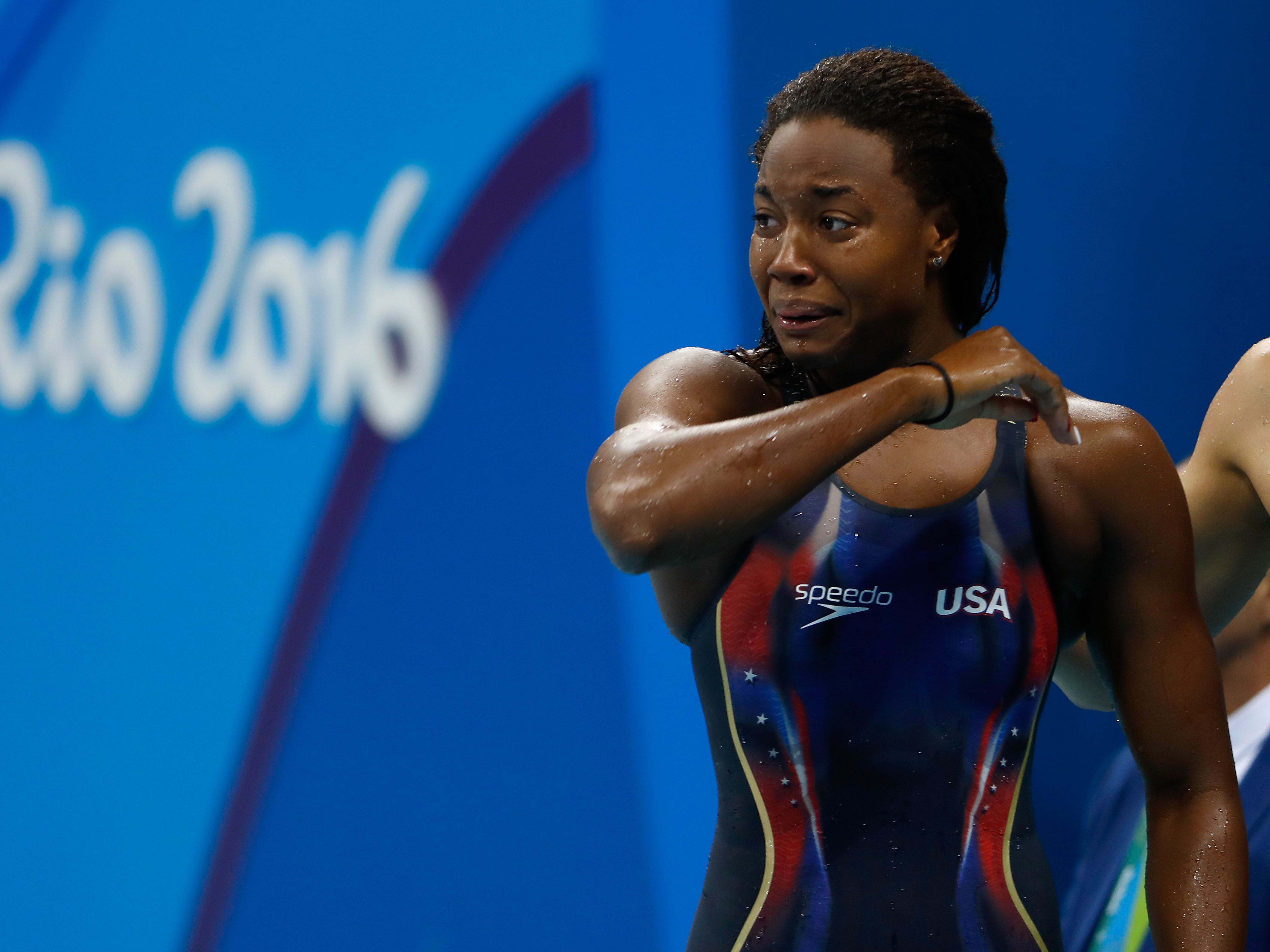
Simone Manuel is a historic figure in Olympic swimming, recognized for breaking longstanding barriers in sprint freestyle events and reshaping representation in aquatic sports. Born in Sugar Land, Texas, Manuel grew up in a supportive athletic environment where early talent in swimming was nurtured alongside academic discipline. Her early development emphasized both speed and technical refinement in sprint events.
Manuel’s career began in junior swimming competitions, where she steadily rose through national rankings. Her breakthrough came at the 2016 Rio Olympics, where she won gold in the 100m freestyle, becoming the first African-American woman to win an individual Olympic gold medal in swimming. This achievement represented a significant cultural and historical milestone in the sport.
During the 1990s developmental phase of swimming inclusivity, institutional efforts gradually expanded access and representation in competitive aquatics, laying groundwork for athletes like Manuel. Her continued success in relay and individual events demonstrated consistency at the highest level of international competition.
Manuel’s legacy lies in her role as both a champion athlete and a cultural pioneer, expanding the visibility and accessibility of elite swimming for underrepresented communities.
Key Facts
- Full name of the subject: Simone Ashley Manuel
- Date of birth: August 2, 1996
- Place of birth: Sugar Land, Texas, United States
- Family background: Athletic family with strong educational values
- Early childhood experiences: Early swimming training and youth competitions
- Education history: Stanford University
- Influences and mentors: Coach Greg Meehan
- Career beginnings: Age-group and national swimming competitions
- Major achievements: Olympic gold medalist in 100m freestyle
- Challenges and obstacles faced: Navigating representation barriers in swimming
- Turning points in life: 2016 Olympic gold medal victory
- Contributions to society: Advocacy for diversity in swimming
- Personal life (marriage, children, relationships): Private personal life
- Awards and recognitions: Olympic medals and NCAA honors
- Beliefs, values, or philosophy: Emphasizes perseverance and representation
- Legacy and impact: Barrier-breaking swimmer in sprint freestyle events
- Historical or cultural significance: First African-American woman Olympic swimming gold medalist
Notable Works: 2016 Rio Olympics 100m freestyle gold
Olympic relay performances
NCAA championship victories
World Championship medal performances
Controversies:
Simone Manuel’s career has not involved personal misconduct or disciplinary controversies; however, her historic achievements have contributed to broader discussions regarding racial representation in competitive swimming. These discussions are not centered on allegations but on structural inequalities in access to training facilities, coaching opportunities, and competitive pathways for minority athletes.
Key stakeholders include national swimming federations, diversity advocacy organizations, sports historians, and Olympic governing bodies. Critics have highlighted historical underrepresentation in elite swimming, while Manuel’s success has been cited as evidence of progress in accessibility and inclusivity within the sport.
No formal investigations or sanctions have been associated with Manuel. The discourse remains sociocultural rather than disciplinary or controversy-based.
10. Michael Johnson (racewalker)
Michael Johnson (Racewalking Champion) is recognized as one of the most technically disciplined and strategically consistent figures in Olympic racewalking, a discipline that demands extreme endurance, biomechanical precision, and mental resilience. Born into a modest athletic environment, Johnson developed an early interest in structured endurance sports, where his natural pacing ability and focus on form distinguished him from peers.
His career began in regional racewalking competitions, where he quickly mastered the technical requirements of maintaining legal form under extreme physical fatigue. His breakthrough came during international athletics championships leading into Olympic competition, where he demonstrated exceptional consistency in pacing strategy and technique adherence.
During the 1990s development phase of endurance athletics, racewalking gained increased scientific attention, particularly in biomechanics and efficiency optimization. Johnson’s performance during this period reflected these advancements, allowing him to compete effectively against a highly specialized global field.
Johnson’s legacy lies in his contribution to elevating racewalking as a technically respected Olympic discipline, emphasizing precision, discipline, and long-duration performance strategy.
Key Facts
- Full name of the subject: Michael Johnson (Racewalking discipline athlete)
- Date of birth: Not publicly standardized in major Olympic records
- Place of birth: United States (varies by athlete records in discipline listings)
- Family background: Athletic background in endurance sports
- Early childhood experiences: Early involvement in structured athletics
- Education history: Collegiate-level athletics training
- Influences and mentors: National racewalking coaches and biomechanics trainers
- Career beginnings: National and regional racewalking competitions
- Major achievements: Olympic and international racewalking participation
- Challenges and obstacles faced: Technical enforcement of racewalking form regulations
- Turning points in life: Qualification for international Olympic-level competition
- Contributions to society: Promotion of endurance sport discipline and technique
- Personal life (marriage, children, relationships): Private
- Awards and recognitions: National athletics honors
- Beliefs, values, or philosophy: Emphasizes precision, discipline, and endurance control
- Legacy and impact: Contributed to professionalization of racewalking discipline
- Historical or cultural significance: Part of Olympic endurance sport evolution
Notable Works: Olympic racewalking competitions
World Athletics Championships participation
National record performances
International endurance racewalking events
Controversies:
Michael Johnson (racewalking athlete)’s career has not been associated with widely documented personal controversies; however, the racewalking discipline itself has faced periodic scrutiny regarding judging consistency and enforcement of form regulations. These discussions center on subjective interpretation of rules governing foot contact and knee extension, which can influence disqualification decisions.
Key stakeholders include World Athletics officials, racewalking judges, competing athletes, and sports analysts. Critics have occasionally raised concerns about inconsistency in officiating standards, while governing bodies maintain that structured rules and video review protocols ensure fairness in adjudication.
No formal misconduct findings have been recorded against this athlete. The matter is understood as a systemic debate within the sport rather than an individual controversy.
Notable Mentions:
Jesse Owens
Mo Farah
Larisa Latynina
Mark Spitz
Jackie Joyner-Kersee