
Top 10 People Who Became Successful Without Formal Education
Top 10 People Who Became Successful Without Formal Education
In This Content
1. Henry Ford
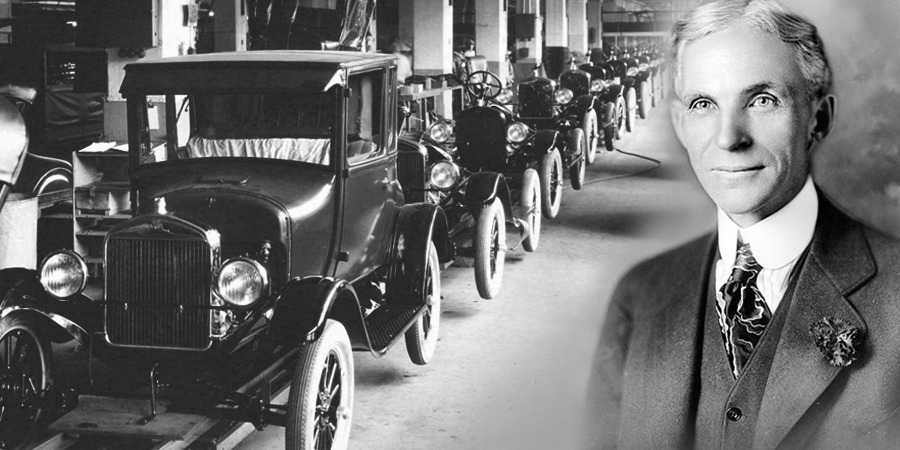
Henry Ford’s rise is one of the defining industrial narratives of the modern era, shaped by mechanical intuition, relentless experimentation, and a rejection of traditional academic pathways in favor of practical engineering experience. Born on a farm in Michigan, Ford grew up in an environment that demanded mechanical problem-solving from an early age. His fascination with machinery replaced formal academic ambition, and he left traditional schooling behind to pursue hands-on engineering work. This early immersion in mechanical systems shaped a worldview centered on efficiency, repeatability, and mass-scale production.
Ford’s career began as an apprentice machinist and later as an engineer at Edison Illuminating Company, where his exposure to industrial-scale electricity systems sharpened his understanding of scalable engineering. His breakthrough came with the founding of Ford Motor Company and the introduction of assembly line production for automobiles, a method that fundamentally transformed industrial manufacturing. The early 1900s marked his peak influence, as the Model T revolutionized transportation and established the foundation of mass consumer mobility.
Ford’s legacy lies in redefining production systems rather than merely building automobiles. He introduced the concept that industrial goods could be standardized, affordable, and accessible to the broader public, reshaping global manufacturing philosophy and modern capitalism.
Key Facts
- Full name of the subject: Henry Ford
- Date of birth: July 30, 1863
- Place of birth: Dearborn, Michigan, United States
- Family background: Rural farming family of modest means
- Early childhood experiences: Mechanical tinkering and exposure to farm machinery
- Education history: Limited formal schooling; largely self-educated
- Influences and mentors: Thomas Edison, industrial engineering principles, mechanization theory
- Career beginnings: Machinist apprentice; engineer at Edison Illuminating Company
- Major achievements: Ford Motor Company founding; Model T production; assembly line innovation
- Challenges and obstacles faced: Early business failures; production inefficiencies; labor disputes
- Turning points in life: Development of Model T; implementation of assembly line manufacturing
- Contributions to society: Mass industrial production model; affordable automobile access
- Personal life (marriage, children, relationships): Married Clara Bryant; one son
- Awards and recognitions: Widely recognized as pioneer of industrial mass production
- Beliefs, values, or philosophy: Efficiency, standardization, industrial accessibility
- Legacy and impact: Revolutionized global manufacturing systems
- Historical or cultural significance: Symbol of industrial modernization
Notable Works: Model T automobile, assembly line production system, Ford Motor Company expansion
Controversies: A major controversy surrounding Henry Ford involves allegations of discriminatory practices and the dissemination of antisemitic publications through his newspaper, The Dearborn Independent. The issue emerged within the broader context of early 20th-century industrial America, where influential business leaders often extended their influence into media and public discourse. Key stakeholders included Ford’s corporate empire, readership communities, civil rights observers, and international critics.
Critics argue that Ford’s publication of antisemitic material contributed to the spread of harmful ideological narratives during a period of rising global tensions. Ford’s representatives later distanced the company from these publications, and legal settlements and public pressure led to the cessation of the newspaper’s circulation. Historical records confirm his involvement, though interpretations of intent and influence remain widely debated among scholars.
The impact of this controversy continues to influence discussions on corporate responsibility, media influence, and the ethical accountability of industrial leaders.
2. Walt Disney
Walt Disney’s creative identity emerged from a blend of artistic imagination, entrepreneurial persistence, and a deep belief in storytelling as a universal language. Born in Chicago and raised in rural Missouri, Disney experienced early financial instability, which shaped his resilience and determination. Without formal higher education in animation or film, he relied on self-directed learning and experimentation in drawing, illustration, and early cinematic techniques.
Disney’s career began with small advertising and animation ventures, including Laugh-O-Gram Studio, which ultimately failed but provided critical technical and narrative experience. His breakthrough came with the creation of Mickey Mouse and synchronized sound animation in Steamboat Willie, which transformed the animation industry. The mid-20th century marked his peak influence, as he expanded into feature-length animation and eventually built Disneyland, redefining entertainment infrastructure.
Disney’s legacy lies in constructing a global storytelling empire that merged animation, theme parks, and multimedia branding into a unified cultural experience, reshaping global entertainment consumption.
Key Facts
- Full name of the subject: Walter Elias Disney
- Date of birth: December 5, 1901
- Place of birth: Chicago, Illinois, United States
- Family background: Working-class family with frequent relocations
- Early childhood experiences: Early drawing interest and newspaper delivery work
- Education history: No formal higher education in arts or film
- Influences and mentors: Animation pioneers, European fairy tales, early film innovators
- Career beginnings: Commercial illustrator and small animation studio founder
- Major achievements: Creation of Mickey Mouse; founding Disney Studios; Disneyland development
- Challenges and obstacles faced: Business failures; financial instability; production setbacks
- Turning points in life: Mickey Mouse creation; introduction of sound animation; Disneyland launch
- Contributions to society: Modern animation industry development; family entertainment systems
- Personal life (marriage, children, relationships): Married Lillian Bounds; two daughters
- Awards and recognitions: Multiple Academy Awards; global cultural recognition
- Beliefs, values, or philosophy: Imagination-driven storytelling, innovation in entertainment
- Legacy and impact: Redefined global animation and entertainment industries
- Historical or cultural significance: Architect of modern popular entertainment culture
Notable Works: Mickey Mouse creation, Snow White and the Seven Dwarfs, Disneyland, Disney Studios expansion
Controversies: A significant controversy surrounding Walt Disney involves allegations related to labor conditions and political associations during the expansion of his studio empire. The issue is framed within the broader context of early Hollywood studio systems, where production schedules were intense and labor rights regulations were still developing. Key stakeholders included studio animators, labor unions, entertainment industry executives, and media commentators.
Critics argued that Disney Studios faced tensions with animators over wages, working conditions, and unionization efforts, particularly during labor disputes in the 1940s. Disney management maintained that production demands required strict scheduling and organizational discipline to sustain large-scale animation output. Historical accounts confirm the existence of labor strikes, though interpretations vary regarding responsibility and labor standards of the period.
The impact of these events contributed to broader labor reforms in the American animation industry and shaped modern studio unionization frameworks.
3. Oprah Winfrey
Oprah Winfrey’s rise represents a profound narrative of personal resilience, emotional intelligence, and mastery of communication without the benefit of traditional academic advancement in media or broadcasting. Born in rural Mississippi under conditions of poverty and instability, her early life was marked by hardship, displacement, and emotional trauma. These experiences, however, later became foundational to her empathetic communication style and ability to connect deeply with audiences.
Winfrey’s career began in local radio and television broadcasting, where her natural ability to engage emotionally with audiences quickly distinguished her from conventional presenters. Her breakthrough came with The Oprah Winfrey Show, which redefined daytime television through emotionally driven storytelling, audience participation, and deeply personal interviews. The 1990s marked her peak influence, as she became one of the most powerful media figures in the world, shaping cultural conversations around psychology, relationships, and personal development.
Winfrey’s legacy is defined by transformational media influence. She redefined television as a platform for emotional discourse and personal empowerment, expanding into publishing, film production, and global philanthropy.
Key Facts
- Full name of the subject: Oprah Gail Winfrey
- Date of birth: January 29, 1954
- Place of birth: Kosciusko, Mississippi, United States
- Family background: Low-income rural family background
- Early childhood experiences: Poverty, instability, and early media exposure
- Education history: Nashville State University (no traditional degree completion emphasis in media career)
- Influences and mentors: Broadcast journalism mentors, personal life experiences, media pioneers
- Career beginnings: Local radio and television reporter
- Major achievements: Oprah Winfrey Show; Harpo Productions; global media empire
- Challenges and obstacles faced: Early life trauma; industry bias; media skepticism
- Turning points in life: Transition to talk show hosting; national syndication success
- Contributions to society: Media-based emotional literacy and public discourse transformation
- Personal life (marriage, children, relationships): Long-term partnership with Stedman Graham; no children
- Awards and recognitions: Presidential Medal of Freedom; numerous media honors
- Beliefs, values, or philosophy: Self-empowerment, emotional truth, personal growth
- Legacy and impact: Revolutionized global talk show and media culture
- Historical or cultural significance: Symbol of self-made media influence and emotional storytelling
Notable Works: The Oprah Winfrey Show, Harpo Productions, OWN Network, Book Club cultural influence
Controversies: A notable controversy surrounding Oprah Winfrey involves public criticism of certain book endorsements and media influence decisions through her book club selections. The issue is framed within the broader context of media power shaping literary markets and cultural consumption patterns. Key stakeholders included authors, publishing companies, audiences, and literary critics.
Critics argue that Oprah’s endorsements could significantly influence book sales and cultural narratives, raising concerns about market distortion and media-driven popularity effects. Winfrey and her media organization have maintained that book selections are based on personal endorsement and cultural relevance rather than commercial manipulation. No regulatory findings suggest wrongdoing, and the matter remains primarily a subject of media analysis rather than formal dispute.
The impact of this controversy has highlighted the influence of celebrity-driven media platforms on publishing industries and cultural discourse.
Top 10 People Who Became Successful Without Formal Education
4. Thomas Edison
Thomas Edison’s life reflects the archetype of industrial self-education, where curiosity and relentless experimentation replaced formal schooling as the foundation of intellectual development. Born in Ohio and raised in a modest household, Edison experienced early learning difficulties in traditional classrooms and was largely educated at home by his mother. This shift away from structured education became a defining factor in his intellectual independence, allowing him to develop unconventional approaches to problem-solving.
Edison’s career began with early employment as a telegraph operator, where he gained hands-on exposure to electrical systems and communication technologies. His breakthrough came with the invention of the phonograph and later the practical electric light bulb, innovations that fundamentally transformed industrial and domestic life. The late 19th century marked his peak influence, as his laboratory in Menlo Park became a model for industrial-scale innovation and research-driven invention.
Edison’s legacy is defined by systematic invention and commercial scalability. He institutionalized innovation as a repeatable process rather than a solitary act, shaping the foundation of modern research and development industries.
Key Facts
- Full name of the subject: Thomas Alva Edison
- Date of birth: February 11, 1847
- Place of birth: Milan, Ohio, United States
- Family background: Middle-class family with limited formal educational resources
- Early childhood experiences: Home-based learning and early experimentation in chemistry and mechanics
- Education history: Minimal formal schooling; largely self-taught
- Influences and mentors: Telegraph industry mentors, mechanical experimentation culture
- Career beginnings: Telegraph operator and early inventor
- Major achievements: Phonograph invention; practical electric light bulb development; industrial R&D model creation
- Challenges and obstacles faced: Repeated experimental failures; financial constraints; patent disputes
- Turning points in life: Menlo Park laboratory establishment; commercialization of electric lighting
- Contributions to society: Modern electrical infrastructure; recorded sound technology
- Personal life (marriage, children, relationships): Married Mary Stilwell and later Mina Miller; multiple children
- Awards and recognitions: National recognition as leading inventor of the industrial era
- Beliefs, values, or philosophy: Practical experimentation, iterative invention, industrial scalability
- Legacy and impact: Shaped modern innovation systems and industrial research models
- Historical or cultural significance: Symbol of industrial-age invention and applied science
Notable Works: Light bulb refinement, phonograph invention, Menlo Park research lab, motion picture camera development
Controversies: A major controversy surrounding Thomas Edison involves allegations of aggressive patent disputes and competition practices during the early electrical industry. The issue is framed within the broader context of the “War of Currents,” a period of intense rivalry over electrical standards between alternating current (AC) and direct current (DC) systems. Key stakeholders included Edison Electric Company, George Westinghouse, Nikola Tesla, regulatory bodies, and industrial investors.
Critics argue that Edison engaged in public campaigns that misrepresented competing electrical systems, contributing to reputational attacks against rival technologies. Edison and his company maintained that direct current systems were safer and more reliable, emphasizing technical limitations of early alternating current systems. Historical and engineering analyses have since recognized AC as more efficient for long-distance transmission, while acknowledging the technological constraints of the period.
The impact of this controversy continues to influence discussions on patent ethics, corporate competition, and technological standardization in emerging industries.
5. Ray Kroc
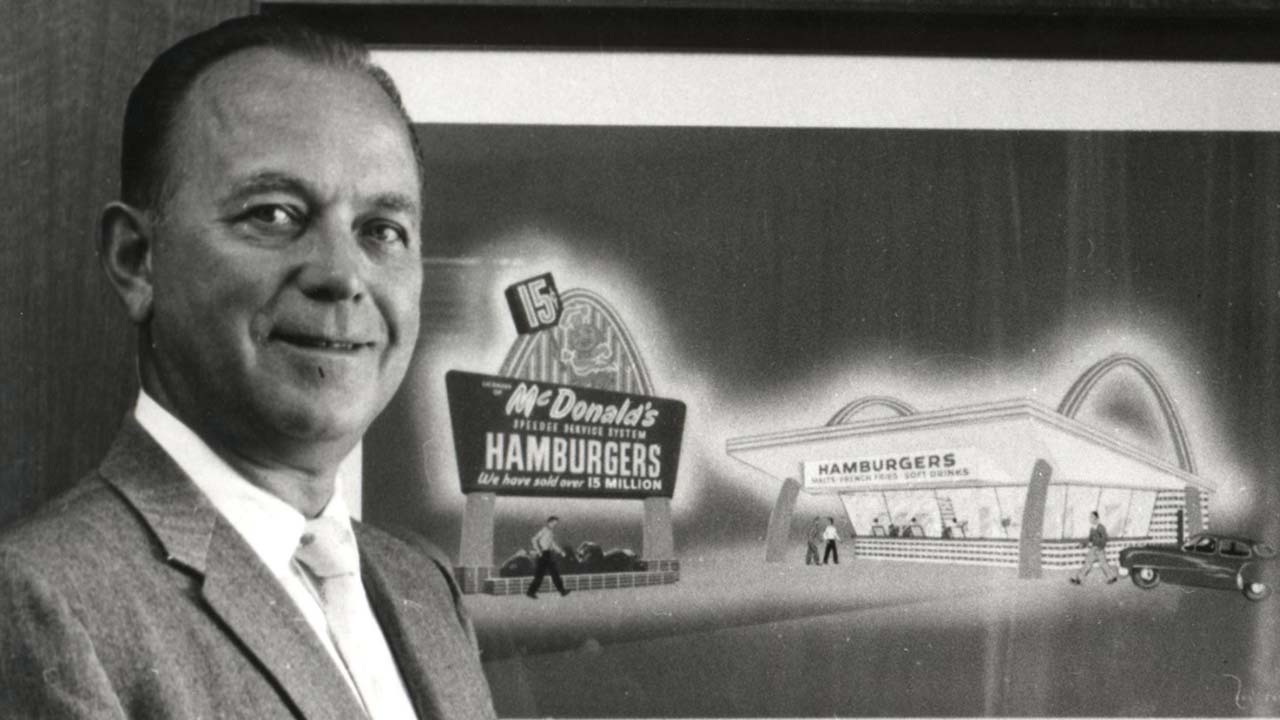
Ray Kroc’s rise reflects a late-bloom entrepreneurial transformation defined by persistence, salesmanship, and a systems-driven approach to business expansion. Born in Illinois to a working-class family, Kroc did not complete formal higher education, instead entering the workforce early and developing skills in sales, negotiation, and operational management. His early life was marked by a series of modest jobs, which collectively shaped his understanding of scalable service systems.
Kroc’s career began as a milkshake machine salesman, a role that eventually led him to the McDonald brothers’ small but highly efficient restaurant operation in California. His breakthrough came when he recognized the scalability of their fast-food model and transformed it into a global franchise system. The 1950s and 1960s marked his peak influence, as McDonald’s expanded rapidly across the United States and internationally, redefining food service logistics and franchising models.
Kroc’s legacy is defined by operational replication at scale. He transformed a single restaurant concept into one of the most recognizable global brands, shaping modern fast-food economics and franchise business structures.
Key Facts
- Full name of the subject: Raymond Albert Kroc
- Date of birth: October 5, 1902
- Place of birth: Oak Park, Illinois, United States
- Family background: Working-class Czech-American family
- Early childhood experiences: Early employment and exposure to sales environments
- Education history: Limited formal education; no college degree
- Influences and mentors: McDonald brothers, franchise business models, sales industry mentors
- Career beginnings: Milkshake machine salesman (Prince Castle sales)
- Major achievements: Global expansion of McDonald’s franchise system
- Challenges and obstacles faced: Early financial instability; business disagreements with founders
- Turning points in life: Discovery of McDonald’s system; acquisition and franchising expansion
- Contributions to society: Modern fast-food industry structure; franchising model globalization
- Personal life (marriage, children, relationships): Married Ethel Fleming and later Joan Kroc
- Awards and recognitions: Recognized as key figure in global business expansion
- Beliefs, values, or philosophy: Standardization, scalability, operational consistency
- Legacy and impact: Redefined global food service and franchise economics
- Historical or cultural significance: Architect of modern fast-food globalization
Notable Works: McDonald’s global franchise expansion, standardized fast-food service model, real estate franchise integration
Controversies: A significant controversy surrounding Ray Kroc involves disputes over the original McDonald brothers’ role and compensation during the expansion of the McDonald’s franchise system. The issue is framed within the broader context of business acquisition practices and franchising ethics in mid-20th-century America. Key stakeholders included Ray Kroc, Richard and Maurice McDonald, franchise investors, and corporate legal teams.
Critics argue that the McDonald brothers did not receive proportional long-term financial benefit or recognition after the company’s rapid expansion under Kroc’s leadership. Kroc and McDonald’s corporate structure maintained that contractual agreements governed the terms of acquisition and franchise rights. Historical records confirm that the business was legally acquired, though debates persist regarding fairness and ethical dimensions.
The impact of this controversy continues to shape discussions on franchise ethics, founder equity, and corporate acquisition morality.
6. Coco Chanel
Coco Chanel’s rise represents a radical redefinition of fashion identity, built on intuition, aesthetic rebellion, and self-directed mastery of design rather than formal fashion education. Born into poverty in rural France and raised in an orphanage after the death of her mother, Chanel’s early life was marked by hardship and institutional discipline. These experiences later influenced her minimalist design philosophy, rejecting the ornate fashion norms of early 20th-century Europe.
Chanel’s career began as a hat maker, designing simple yet elegant pieces that contrasted sharply with the elaborate styles of the time. Her breakthrough came with the expansion into couture fashion, where she introduced revolutionary concepts such as the little black dress and relaxed silhouettes for women. The early-to-mid 20th century marked her peak influence, as Chanel No. 5 perfume and her fashion house redefined global luxury aesthetics.
Chanel’s legacy lies in transforming women’s fashion into a language of independence and simplicity, reshaping global luxury branding and modern style identity.
Key Facts
- Full name of the subject: Gabrielle Bonheur “Coco” Chanel
- Date of birth: August 19, 1883
- Place of birth: Saumur, France
- Family background: Low-income family; raised in an orphanage
- Early childhood experiences: Institutional upbringing and early exposure to sewing
- Education history: No formal fashion education
- Influences and mentors: French couture culture, aristocratic patrons, wartime simplicity trends
- Career beginnings: Hat-making boutique in Paris
- Major achievements: Chanel fashion house; Chanel No. 5 perfume; modern women’s fashion redesign
- Challenges and obstacles faced: Poverty, gender barriers, wartime disruptions
- Turning points in life: Opening of millinery shop; launch of couture brand; post-war revival
- Contributions to society: Revolutionized women’s fashion freedom and simplicity
- Personal life (marriage, children, relationships): Never married; no children
- Awards and recognitions: Global recognition as fashion icon
- Beliefs, values, or philosophy: Simplicity, elegance, functional luxury
- Legacy and impact: Redefined global fashion aesthetics
- Historical or cultural significance: Symbol of modern fashion liberation
Notable Works: Chanel No. 5, little black dress, Chanel couture house, modern women’s fashion innovation
Controversies: A major controversy surrounding Coco Chanel involves allegations regarding her associations during World War II. The issue is framed within the broader context of Nazi-occupied France, where business operations and personal relationships were often scrutinized under wartime conditions. Key stakeholders included Chanel, French resistance narratives, Allied forces, and post-war investigative bodies.
Critics have raised questions about Chanel’s associations with German officials during the occupation, suggesting potential collaboration or strategic alignment for personal and business protection. Chanel and her representatives have denied wrongdoing, and historical records remain partially contested, with some documents indicating complex interactions typical of occupied Paris elite circles. No definitive legal conviction was established regarding collaboration.
The impact of this controversy continues to influence Chanel’s historical legacy, particularly in discussions about separating artistic innovation from political context.
7. Richard Branson
Richard Branson’s entrepreneurial identity reflects risk-taking instinct, branding intuition, and an unconventional approach to business expansion that bypassed traditional academic pathways. Born in England into a middle-class family, Branson struggled with dyslexia and left formal education early. His challenges in academic environments contributed to his preference for experiential learning and hands-on business experimentation.
Branson’s career began with a student magazine venture and record retail business, which evolved into Virgin Records. His breakthrough came in the music industry, where Virgin became a global label representing major artists and alternative cultural movements. The late 20th century marked his peak influence, as he expanded the Virgin brand into airlines, telecommunications, and space tourism ventures.
Branson’s legacy is defined by brand diversification and risk-driven entrepreneurship. He demonstrated that personality-led branding could become a global corporate identity spanning multiple industries.
Key Facts
- Full name of the subject: Richard Charles Nicholas Branson
- Date of birth: July 18, 1950
- Place of birth: Blackheath, London, England
- Family background: Middle-class family with entrepreneurial inclination
- Early childhood experiences: Dyslexia challenges and early business experimentation
- Education history: Dropped out of school at 16
- Influences and mentors: Entrepreneurial culture, youth counterculture movements
- Career beginnings: Student magazine and Virgin Records founding
- Major achievements: Virgin Group expansion across music, aviation, and telecom
- Challenges and obstacles faced: Early financial risk, industry competition, regulatory challenges
- Turning points in life: Virgin Records success; Virgin Atlantic launch; global brand expansion
- Contributions to society: Entrepreneurial diversification and consumer brand innovation
- Personal life (marriage, children, relationships): Married Joan Templeman; children
- Awards and recognitions: Knighted for services to entrepreneurship
- Beliefs, values, or philosophy: Risk-taking, customer experience focus, brand disruption
- Legacy and impact: Built one of the world’s most diversified brand empires
- Historical or cultural significance: Symbol of modern lifestyle entrepreneurship
Notable Works: Virgin Records, Virgin Atlantic, Virgin Mobile, Virgin Galactic
Controversies: A notable controversy surrounding Richard Branson involves regulatory scrutiny and operational challenges faced by Virgin companies, particularly in aviation and telecommunications sectors. The issue is framed within the broader context of highly competitive deregulated industries where safety standards, pricing structures, and market competition are closely monitored. Key stakeholders included regulatory agencies, Virgin Atlantic operations, competitors, and consumer advocacy groups.
Critics have raised concerns at various points about operational decisions and financial sustainability of certain Virgin ventures, particularly during expansion phases. Branson’s companies have maintained compliance with regulatory standards while emphasizing innovation and customer experience. Aviation regulators and industry watchdogs have periodically reviewed operations, with no singular unified finding of systemic misconduct.
The impact of these controversies has contributed to ongoing discussions about risk-driven branding and the sustainability of highly diversified entrepreneurial conglomerates.
8. Amancio Ortega
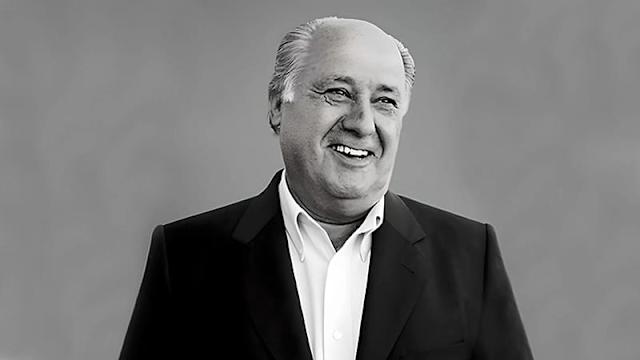
Amancio Ortega’s rise from a modest Spanish upbringing to global retail dominance reflects a career built on observation, discipline, and an almost engineering-like understanding of production systems rather than formal academic training. Born in rural Spain to a working-class railway employee, Ortega left school early due to financial hardship and entered the workforce in basic retail and garment distribution roles. This early exposure to clothing logistics and customer demand patterns became the foundation of his lifelong business philosophy.
Ortega’s career began in textile workshops, where he learned firsthand how garments were produced, priced, and distributed. His breakthrough came with the creation of Zara under the Inditex group, where he introduced a revolutionary “fast fashion” model that drastically shortened production cycles and aligned design directly with consumer demand. The late 20th century marked his peak influence as Zara expanded internationally, redefining global retail supply chains and fashion consumption speed.
Ortega’s legacy is defined by operational precision and supply chain acceleration. He transformed fashion from seasonal production cycles into a real-time consumer feedback system, reshaping global retail economics and manufacturing responsiveness.
Key Facts
- Full name of the subject: Amancio Ortega Gaona
- Date of birth: March 28, 1936
- Place of birth: Busdongo de Arbás, León, Spain
- Family background: Working-class railway family
- Early childhood experiences: Early economic hardship and entry into retail work
- Education history: No formal higher education; left school early
- Influences and mentors: Textile industry workers, retail distribution systems
- Career beginnings: Clothing store employee and textile assistant
- Major achievements: Founder of Zara and Inditex; global fast fashion system creation
- Challenges and obstacles faced: Financial limitations; early production scaling challenges
- Turning points in life: Founding of Zara; adoption of fast production model; international expansion
- Contributions to society: Revolutionized global fashion supply chains and retail responsiveness
- Personal life (marriage, children, relationships): Private personal life; children including Marta Ortega
- Awards and recognitions: Recognized as one of the world’s most influential business figures
- Beliefs, values, or philosophy: Speed, responsiveness, operational efficiency, market proximity
- Legacy and impact: Redefined global fashion manufacturing and retail cycles
- Historical or cultural significance: Architect of modern fast fashion industry
Notable Works: Zara founding, Inditex expansion, fast fashion logistics model
Controversies: A significant controversy surrounding Amancio Ortega involves labor conditions within global fast fashion supply chains associated with Inditex operations. The issue is framed within the broader context of globalization in textile manufacturing, where production is often outsourced to regions with lower labor costs. Key stakeholders included factory workers, subcontracted suppliers, labor rights organizations, and multinational regulatory bodies.
Critics argue that fast fashion production networks may contribute to labor exploitation risks, including low wages and challenging working conditions in outsourced facilities. Inditex has maintained that it enforces strict supplier codes of conduct and conducts regular audits to ensure compliance with labor standards. Independent investigations across the industry have produced mixed findings, with broader debates focusing on systemic supply chain complexity rather than isolated corporate behavior.
The impact of this controversy has shaped global discussions on ethical fashion, corporate responsibility, and transparency in international manufacturing systems.
9. Ingvar Kamprad

Ingvar Kamprad’s entrepreneurial identity was shaped by frugality, observational learning, and an early understanding of how small inefficiencies in retail could be transformed into large-scale economic advantages. Born in rural Sweden, Kamprad grew up in a modest farming environment where resourcefulness was essential. He demonstrated early business instincts by selling small goods such as matches and household items, long before formal business education became relevant to his trajectory.
Kamprad’s career began at a young age when he founded IKEA using savings from small-scale trading ventures. His breakthrough came with the development of flat-pack furniture, a radical innovation that reduced transportation costs and simplified logistics while making design accessible to a broader population. The late 20th century marked IKEA’s peak global expansion, as the company became synonymous with affordable, functional home design across continents.
Kamprad’s legacy is defined by cost efficiency and democratized design. He transformed furniture retail into a global system of self-assembly production and distribution, reshaping consumer expectations around affordability and design accessibility.
Key Facts
- Full name of the subject: Feodor Ingvar Kamprad
- Date of birth: March 30, 1926
- Place of birth: Pjätteryd (Agunnaryd), Sweden
- Family background: Rural farming family
- Early childhood experiences: Early entrepreneurial activity selling household goods
- Education history: Limited formal higher education
- Influences and mentors: Swedish rural economy, cost-efficiency principles
- Career beginnings: Founder of IKEA at a young age
- Major achievements: Creation and global expansion of IKEA furniture system
- Challenges and obstacles faced: Logistics scaling; international expansion complexities
- Turning points in life: Introduction of flat-pack furniture model; global retail expansion
- Contributions to society: Affordable home design and global retail accessibility
- Personal life (marriage, children, relationships): Married twice; children
- Awards and recognitions: Recognized globally as retail innovation pioneer
- Beliefs, values, or philosophy: Frugality, simplicity, efficiency, accessibility
- Legacy and impact: Revolutionized global furniture retail systems
- Historical or cultural significance: Symbol of democratic design and cost-efficient living
Notable Works: IKEA founding, flat-pack furniture system, global retail expansion model
Controversies: A notable controversy surrounding Ingvar Kamprad involves historical associations during his early adulthood with groups in Sweden linked to far-right political movements. The issue is framed within the broader historical context of post-war Europe, where political affiliations and ideological movements were subject to later reassessment and public scrutiny. Key stakeholders included Kamprad, historical researchers, IKEA leadership, and public advocacy groups.
Critics have raised concerns about Kamprad’s past associations, citing archived documents and biographical research that reference his involvement with controversial political circles during his youth. Kamprad publicly acknowledged aspects of his past and expressed regret, stating that such affiliations were a product of youthful misjudgment. IKEA has since maintained a corporate identity focused on inclusivity and global neutrality.
The impact of this controversy has influenced discussions on corporate legacy, founder history, and the separation of early personal beliefs from later institutional identity.
10. Jan Koum
Jan Koum’s rise reflects a deeply personal narrative of immigration, technological self-education, and resilience in the absence of formal academic privilege. Born in Ukraine and later immigrating to the United States, Koum grew up in economically constrained conditions that required adaptability and independence. His early exposure to limited resources shaped a strong focus on efficiency, communication, and technological self-learning.
Koum’s career began in infrastructure engineering roles after teaching himself programming skills, eventually leading to employment at Yahoo. His breakthrough came with the creation of WhatsApp, developed alongside Brian Acton, which introduced a radically simple, ad-free messaging system focused on reliability and global accessibility. The early 2010s marked its peak influence as WhatsApp became one of the most widely used communication platforms in the world.
Koum’s legacy is defined by simplicity-driven global communication design. He reshaped messaging infrastructure by prioritizing privacy, speed, and minimalism over advertising-based business models.
Key Facts
- Full name of the subject: Jan Koum
- Date of birth: February 24, 1976
- Place of birth: Fastiv, Ukraine (then Soviet Union)
- Family background: Low-income immigrant family
- Early childhood experiences: Immigration hardship and self-taught computing skills
- Education history: No completed formal university education
- Influences and mentors: Open-source software culture, early internet messaging systems
- Career beginnings: Yahoo infrastructure engineer; software developer
- Major achievements: Co-founding WhatsApp; global messaging transformation
- Challenges and obstacles faced: Immigration adaptation; early startup funding challenges
- Turning points in life: WhatsApp founding; Facebook acquisition
- Contributions to society: Global communication accessibility and encrypted messaging systems
- Personal life (marriage, children, relationships): Private personal life; limited public disclosure
- Awards and recognitions: Recognized globally as messaging innovation pioneer
- Beliefs, values, or philosophy: Simplicity, privacy, minimal advertising, user-first design
- Legacy and impact: Redefined global mobile communication infrastructure
- Historical or cultural significance: Key architect of modern messaging culture
Notable Works: WhatsApp founding, end-to-end messaging expansion, global communication infrastructure
Controversies: A notable controversy surrounding Jan Koum involves concerns raised after WhatsApp’s acquisition by Facebook regarding data privacy and integration policies. The issue is framed within the broader context of global debates on messaging encryption, data ownership, and platform consolidation in the tech industry. Key stakeholders included WhatsApp users, Facebook/Meta leadership, privacy regulators, and digital rights organizations.
Critics expressed concern that WhatsApp’s original privacy-focused philosophy could be compromised following acquisition, particularly regarding metadata usage and data-sharing policies. Koum and other WhatsApp founders publicly emphasized their commitment to end-to-end encryption and user privacy before and after the acquisition. Regulatory bodies in various regions have reviewed messaging platform practices, leading to ongoing discussions rather than definitive legal findings against Koum personally.
The impact of this controversy has influenced global encryption policy debates and reinforced public scrutiny of large-scale tech acquisitions.
Notable Mentions:
Larry Ellison
Ralph Lauren
Howard Schultz
Sam Walton
Sophia Amoruso