Top 10 Global Human Rights Activists
Top 10 Global Human Rights Activists
In This Content
1. Nelson Mandela
Born into the Thembu royal lineage in rural South Africa, Nelson Mandela’s early life was shaped by the coexistence of traditional African leadership and colonial racial hierarchy. Raised in the Eastern Cape, he observed firsthand the gradual tightening of segregation policies that would later solidify into apartheid. His education at missionary schools and later at the University of Fort Hare exposed him to African nationalism and political debate, while his relocation to Johannesburg introduced him to the stark economic disparities faced by Black South Africans. These formative experiences fostered both intellectual curiosity and a deep moral conviction about justice.
Mandela’s career beginnings were rooted in law and grassroots organizing. After qualifying as an attorney, he co-founded South Africa’s first Black law firm, providing legal assistance to those targeted by discriminatory policies. His involvement with the African National Congress (ANC) Youth League marked a shift from professional advocacy to organized political resistance. Initially embracing nonviolent protest, Mandela became instrumental in mass campaigns against pass laws and forced removals. The growing repression of the apartheid regime, however, led him to support more assertive resistance strategies, reflecting the evolving dynamics of liberation movements globally.
Mandela’s breakthrough came with his role in mobilizing international attention toward apartheid. His arrest and subsequent life sentence in 1964 transformed him into a global symbol of resistance. During his imprisonment on Robben Island, Mandela refined his philosophy of reconciliation, emphasizing unity rather than revenge. By the late 1980s and early 1990s, amid mounting international pressure and domestic unrest, he emerged as the central figure in negotiations that dismantled apartheid. His release in 1990 marked the beginning of a new phase, culminating in South Africa’s first democratic elections in 1994.
The 1990s represented Mandela’s peak influence as both a national leader and global human rights icon. As president, he prioritized institutional reforms, reconciliation efforts, and the establishment of the Truth and Reconciliation Commission. His leadership during this period emphasized healing societal divisions while strengthening democratic structures. Mandela’s approach became a model for post-conflict societies navigating transitions from authoritarian rule to democracy.
Mandela’s legacy extends beyond South Africa. He redefined moral leadership in politics, demonstrating how forgiveness and structural reform could coexist. His influence continues to shape global discussions on racial equality, transitional justice, and human dignity. His life story remains one of the most powerful narratives of resilience and principled leadership in modern history.
Key Facts
- Full name of the subject: Nelson Rolihlahla Mandela
- Date of birth: July 18, 1918
- Place of birth: Mvezo, Eastern Cape, South Africa
- Family background: Born into Thembu royal family, father was a local chief
- Early childhood experiences: Traditional leadership exposure and rural communal upbringing
- Education history: University of Fort Hare; University of Witwatersrand; law studies
- Influences and mentors: Walter Sisulu, Oliver Tambo, African nationalist thinkers
- Career beginnings: Lawyer and ANC Youth League activist
- Major achievements: Led anti-apartheid struggle; first Black president of South Africa
- Challenges and obstacles faced: 27 years imprisonment; political bans
- Turning points in life: Rivonia Trial conviction; release in 1990
- Contributions to society: Democratic transition; reconciliation initiatives
- Personal life (marriage, children, relationships): Married three times; six children
- Awards and recognitions: Nobel Peace Prize (1993)
- Beliefs, values, or philosophy: Reconciliation, equality, justice
- Legacy and impact: Symbol of peaceful democratic transition
- Historical or cultural significance: Central figure in ending apartheid
Notable Works:
Anti-apartheid leadership
Negotiation of democratic transition
Truth and Reconciliation Commission support
Presidential reforms in South Africa
Controversies:
Mandela’s association with armed resistance through Umkhonto we Sizwe became a significant point of debate. The issue centered on his endorsement of sabotage against apartheid infrastructure after nonviolent strategies failed. Critics, including some Western governments during the Cold War, labeled the organization as militant, while supporters argued it was a response to systemic oppression. Key stakeholders included the apartheid government, international diplomatic actors, liberation movements, and human rights organizations. Mandela defended the decision as a strategic shift aimed at minimizing loss of life while challenging unjust laws. Historical records confirm sabotage campaigns occurred, but also show Mandela advocated restraint and negotiation. The controversy affected perceptions during the 1980s yet later contributed to discussions about legitimacy in resistance movements.
Other notable controversies:
Criticism over economic policy compromises during presidency
2. Martin Luther King Jr.
Martin Luther King Jr. emerged from a deeply rooted religious and intellectual environment in Atlanta, Georgia. Born into a family of Baptist ministers, his early life was shaped by the Black church’s tradition of social activism and moral leadership. Experiences of racial segregation during childhood left a lasting impression, while his academic pursuits at Morehouse College, Crozer Theological Seminary, and Boston University exposed him to philosophical frameworks such as nonviolence and civil disobedience. Influenced by Mahatma Gandhi’s principles, King developed a moral philosophy grounded in peaceful resistance.
King’s career began in Montgomery, Alabama, where he was thrust into leadership during the Montgomery Bus Boycott. Initially a relatively unknown pastor, he demonstrated exceptional rhetorical skill and organizational leadership. His emphasis on disciplined nonviolence attracted national attention. Through the Southern Christian Leadership Conference, he coordinated campaigns targeting segregation in education, transportation, and voting rights. His ability to frame civil rights as a moral issue resonated across diverse audiences.
King’s breakthrough came with nationally televised protests and landmark speeches. The Birmingham Campaign and the March on Washington elevated him to international prominence. His “I Have a Dream” speech articulated a vision of racial equality that became central to the American civil rights narrative. Legislative achievements such as the Civil Rights Act of 1964 and Voting Rights Act of 1965 reflected the movement’s impact.
Although King’s influence peaked earlier, his ideas gained renewed prominence during the 1990s as scholars and policymakers revisited his philosophy in addressing racial inequality and global human rights. Educational institutions incorporated his teachings into civic discourse, and his approach to nonviolent activism influenced international movements. This retrospective peak reinforced his enduring relevance.
King’s legacy lies in redefining protest as moral persuasion. His commitment to nonviolence reshaped civil rights strategies worldwide. His speeches remain foundational texts in discussions on equality, justice, and democratic participation.
Key Facts
- Full name of the subject: Martin Luther King Jr.
- Date of birth: January 15, 1929
- Place of birth: Atlanta, Georgia, United States
- Family background: Son of Baptist minister Martin Luther King Sr.
- Early childhood experiences: Exposure to segregation in the American South
- Education history: Morehouse College; Crozer Theological Seminary; Boston University
- Influences and mentors: Mahatma Gandhi, Howard Thurman
- Career beginnings: Pastor and civil rights organizer
- Major achievements: Led civil rights movement; Nobel Peace Prize recipient
- Challenges and obstacles faced: Arrests, threats, surveillance
- Turning points in life: Montgomery Bus Boycott leadership
- Contributions to society: Nonviolent protest philosophy
- Personal life (marriage, children, relationships): Married to Coretta Scott King; four children
- Awards and recognitions: Nobel Peace Prize (1964)
- Beliefs, values, or philosophy: Nonviolence, equality, justice
- Legacy and impact: Influenced global civil rights movements
- Historical or cultural significance: Central figure in U.S. civil rights era
Notable Works:
Montgomery Bus Boycott leadership
March on Washington speech
Civil Rights Act advocacy
Voting Rights Act campaign
Controversies:
King’s opposition to the Vietnam War generated significant debate within political and civil rights circles. The controversy arose when he publicly criticized U.S. foreign policy in 1967, linking war spending to domestic inequality. Critics argued that his stance distracted from civil rights objectives, while supporters viewed it as a moral extension of his philosophy. Stakeholders included political leaders, civil rights organizations, media outlets, and activists. King defended his position by emphasizing interconnected justice issues. Historical records confirm his speech provoked backlash, including criticism from former allies. The controversy impacted his public approval ratings but strengthened his legacy as a comprehensive human rights advocate.
Other notable controversies:
FBI surveillance and allegations during his lifetime
3. Malala Yousafzai
Malala Yousafzai was born in Pakistan’s Swat Valley, where her father operated a school promoting girls’ education. Growing up amid rising extremism, she witnessed restrictions placed on female students. Encouraged by her family, she developed an early voice advocating educational access. Her blog for the BBC under a pseudonym documented life under militant control, highlighting systemic barriers to schooling.
Her activism gained traction as she appeared in interviews and documentaries. Despite threats, she continued advocating publicly. Her career beginnings were rooted in grassroots awareness rather than institutional leadership. She emphasized education as a universal right, resonating with global audiences.
Malala’s breakthrough occurred after she survived an assassination attempt in 2012. The incident drew international attention and transformed her into a global symbol of resilience. Her recovery and subsequent speeches at the United Nations positioned her as a leading advocate for girls’ education worldwide.
During the 1990s retrospective discussions on global rights movements, Malala’s activism was often compared to earlier leaders, highlighting continuity in youth-led advocacy. Although her activism belongs to a later era, her influence echoes historical patterns of human rights campaigns. Her foundation’s initiatives expanded educational opportunities globally.
Malala’s legacy centers on youth empowerment. Her advocacy reframed education as a human rights issue across geopolitical boundaries. She continues to influence policy discussions and inspire young activists.
Key Facts
- Full name of the subject: Malala Yousafzai
- Date of birth: July 12, 1997
- Place of birth: Mingora, Swat Valley, Pakistan
- Family background: Daughter of educator and activist Ziauddin Yousafzai
- Early childhood experiences: Exposure to restrictions on girls’ education
- Education history: Oxford University
- Influences and mentors: Her father; global education advocates
- Career beginnings: Blogging about education rights
- Major achievements: Nobel Peace Prize laureate
- Challenges and obstacles faced: Assassination attempt
- Turning points in life: Recovery and UN speech
- Contributions to society: Global education advocacy
- Personal life (marriage, children, relationships): Married to Asser Malik
- Awards and recognitions: Nobel Peace Prize (2014)
- Beliefs, values, or philosophy: Education as universal right
- Legacy and impact: Youth-led global advocacy
- Historical or cultural significance: Symbol of girls’ education movement
Notable Works:
Malala Fund
UN Youth Assembly speech
Global education campaigns
Controversies:
Malala faced criticism in Pakistan regarding perceived Western alignment. The issue emerged when some commentators argued her international recognition reflected geopolitical narratives. Stakeholders included local media, political commentators, and international organizations. Critics suggested her activism overshadowed local efforts, while supporters emphasized her global impact. Malala responded by reaffirming her commitment to Pakistani education reform. Verified facts confirm her continued investment in local initiatives, though debate persists. The controversy influenced public perception domestically but did not diminish global support.
Other notable controversies:
Debate over memoir authorship and representation
4. Desmond Tutu
Desmond Tutu was born in Klerksdorp, South Africa, into a modest family navigating the constraints of apartheid. His early exposure to racial discrimination shaped his moral outlook, while his parents emphasized education and resilience. Initially pursuing a career in teaching, Tutu experienced firsthand the inequalities imposed by the Bantu Education Act, which limited opportunities for Black South Africans. This environment influenced his decision to enter the Anglican priesthood, where he found a platform to address social injustice through faith-based leadership.
Tutu’s career beginnings were marked by pastoral work and academic study abroad, where he deepened his theological perspective on human dignity. Upon returning to South Africa, he became increasingly vocal against apartheid. His sermons combined moral clarity with political urgency, attracting both local and international attention. Through positions within the church, he advocated for economic sanctions and nonviolent resistance, framing apartheid as a moral and theological violation.
His breakthrough came during the late 1970s and 1980s when he emerged as one of the most visible anti-apartheid voices. Awarded the Nobel Peace Prize in 1984, Tutu amplified global pressure on the South African government. His leadership in mobilizing religious communities strengthened the legitimacy of resistance efforts. By the early 1990s, he transitioned into a reconciliation role, helping guide the country through political transformation.
The 1990s represented Tutu’s peak influence as chair of South Africa’s Truth and Reconciliation Commission. He oversaw hearings that documented human rights abuses, emphasizing restorative justice over retribution. His emotional yet principled leadership helped institutionalize forgiveness within national healing processes. The commission’s work became a global model for transitional justice.
Tutu’s legacy rests on moral courage and reconciliation. His advocacy extended beyond apartheid, addressing poverty, HIV/AIDS stigma, and global human rights issues. He remains a defining figure in faith-based activism.
Key Facts
- Full name of the subject: Desmond Mpilo Tutu
- Date of birth: October 7, 1931
- Place of birth: Klerksdorp, South Africa
- Family background: Son of a teacher and domestic worker
- Early childhood experiences: Grew up under apartheid restrictions
- Education history: University of South Africa; King’s College London
- Influences and mentors: Trevor Huddleston; Anglican theology
- Career beginnings: Teacher turned Anglican priest
- Major achievements: Nobel Peace Prize; TRC chairmanship
- Challenges and obstacles faced: Government harassment; political pressure
- Turning points in life: Nobel Prize recognition; TRC leadership
- Contributions to society: Reconciliation and justice advocacy
- Personal life (marriage, children, relationships): Married to Leah Tutu; four children
- Awards and recognitions: Nobel Peace Prize (1984)
- Beliefs, values, or philosophy: Forgiveness and restorative justice
- Legacy and impact: Model for transitional justice globally
- Historical or cultural significance: Key religious voice against apartheid
Notable Works:
Truth and Reconciliation Commission leadership
Anti-apartheid advocacy
Global human rights campaigns
Controversies:
Tutu’s advocacy for international sanctions against South Africa generated debate within business and political communities. The controversy centered on whether sanctions would harm Black South Africans economically. Critics, including business leaders and some political figures, argued sanctions would worsen poverty, while supporters believed economic pressure was necessary to dismantle apartheid. Tutu defended sanctions as a nonviolent tool to accelerate reform. Historical evidence shows sanctions contributed to increased pressure on the apartheid regime, though economic hardship did occur. The debate influenced perceptions of activist strategy but ultimately reinforced Tutu’s commitment to principled resistance.
Other notable controversies:
Criticism of positions on Middle East politics
5. Aung San Suu Kyi
Aung San Suu Kyi was born into Myanmar’s most prominent political family. Her father, independence hero Aung San, was assassinated when she was young, leaving her with a legacy tied to national leadership. Educated abroad in India and the United Kingdom, she developed exposure to democratic ideals. Her early life blended political heritage with academic exploration, shaping her commitment to governance reform.
Her career began unexpectedly when she returned to Myanmar in 1988 during pro-democracy protests. She emerged as a central figure advocating nonviolent resistance against military rule. Her speeches emphasized democratic reform, drawing parallels with global movements. Despite limited political experience, she became the leader of the National League for Democracy.
Her breakthrough came with her party’s electoral victory in 1990, though the military refused to recognize the results. Suu Kyi spent years under house arrest, becoming an international symbol of democratic resistance. Her perseverance attracted global attention, and she was awarded the Nobel Peace Prize in 1991.
During the 1990s, her influence peaked as international pressure mounted for her release. She represented the global struggle for democracy, inspiring movements worldwide. Her continued detention reinforced her symbolic role in human rights discourse.
Her legacy remains complex. While initially celebrated for democratic advocacy, later controversies influenced her reputation. Nonetheless, her early activism played a pivotal role in challenging authoritarian rule.
Key Facts
- Full name of the subject: Aung San Suu Kyi
- Date of birth: June 19, 1945
- Place of birth: Yangon, Myanmar
- Family background: Daughter of independence leader Aung San
- Early childhood experiences: Political family legacy
- Education history: University of Oxford
- Influences and mentors: Mahatma Gandhi; democratic thinkers
- Career beginnings: Pro-democracy activist
- Major achievements: Nobel Peace Prize recipient
- Challenges and obstacles faced: Years of house arrest
- Turning points in life: 1988 protests leadership
- Contributions to society: Democratic reform advocacy
- Personal life (marriage, children, relationships): Married to Michael Aris; two children
- Awards and recognitions: Nobel Peace Prize (1991)
- Beliefs, values, or philosophy: Democracy and nonviolence
- Legacy and impact: Symbol of democratic resistance
- Historical or cultural significance: Central figure in Myanmar politics
Notable Works:
Pro-democracy movement leadership
National League for Democracy
Nonviolent resistance advocacy
Controversies:
Suu Kyi’s response to the Rohingya crisis generated significant global criticism. The controversy arose when reports of military operations against the Rohingya minority prompted allegations of human rights violations. Stakeholders included the Myanmar military, international human rights organizations, the United Nations, and foreign governments. Critics argued she failed to condemn abuses, while her supporters contended her civilian government had limited authority over the military. Suu Kyi defended her position at international forums, emphasizing legal complexities and national sovereignty. Investigations confirmed widespread displacement and violence, though debate continues over her responsibility. The controversy affected her international reputation and led to revocation of some honors.
Other notable controversies:
Debate over constitutional limitations on civilian leadership
6. Eleanor Roosevelt
Eleanor Roosevelt’s early life was shaped by privilege and personal hardship. Born into a prominent American family, she faced emotional challenges following the death of her parents. Educated in England, she developed confidence and independence. Her exposure to social reform ideas during adolescence influenced her commitment to public service.
Her career began after marrying Franklin D. Roosevelt. Initially engaged in social welfare work, she gradually built an independent voice. As First Lady, she redefined the role by holding press conferences, writing columns, and advocating for civil rights. Her activism extended to labor rights and women’s equality.
Her breakthrough came during World War II, when she championed human dignity on a global stage. After her husband’s death, she became a delegate to the United Nations. She played a central role in drafting the Universal Declaration of Human Rights, shaping modern human rights frameworks.
The 1990s marked renewed appreciation of her contributions, as scholars recognized her foundational role in international rights discourse. Her work influenced institutions and policy debates worldwide.
Roosevelt’s legacy lies in institutionalizing human rights as global standards. Her diplomacy and advocacy continue to shape international law and humanitarian policy.
Key Facts
- Full name of the subject: Anna Eleanor Roosevelt
- Date of birth: October 11, 1884
- Place of birth: New York City, United States
- Family background: Prominent Roosevelt family
- Early childhood experiences: Orphaned at young age
- Education history: Allenswood Academy, England
- Influences and mentors: Marie Souvestre
- Career beginnings: Social reform activism
- Major achievements: Universal Declaration of Human Rights
- Challenges and obstacles faced: Political criticism
- Turning points in life: UN appointment
- Contributions to society: Human rights framework development
- Personal life (marriage, children, relationships): Married to Franklin D. Roosevelt; six children
- Awards and recognitions: UN Human Rights recognition
- Beliefs, values, or philosophy: Equality and dignity
- Legacy and impact: Architect of modern human rights
- Historical or cultural significance: Influential global diplomat
Notable Works:
Universal Declaration of Human Rights
UN Human Rights Commission
Civil rights advocacy
Controversies:
Roosevelt faced criticism for her outspoken support of civil rights during segregation. The controversy emerged when she publicly supported anti-lynching legislation and resigned from organizations that excluded Black members. Stakeholders included political leaders, civil rights groups, and conservative commentators. Critics argued she exceeded traditional First Lady roles, while supporters praised her advocacy. Roosevelt maintained her stance, emphasizing equality. Historical evidence confirms her actions influenced policy debates. The controversy strengthened her reputation as an independent reformer.
Other notable controversies:
Political disagreements with New Deal opponents
7. Rigoberta Menchú
Rigoberta Menchú was born into a Maya K’iche’ farming family in Guatemala. Her early life was shaped by poverty and political violence during the country’s civil conflict. She witnessed land disputes and repression affecting indigenous communities. These experiences fostered her commitment to indigenous rights and social justice.
Her career began through grassroots organizing. Menchú worked with peasant movements advocating land reform and labor rights. After her family members were killed during the conflict, she sought international attention for indigenous struggles. Her testimony highlighted systemic inequality and human rights abuses.
Her breakthrough came with the publication of her testimonial narrative, which brought global attention to Guatemala’s indigenous population. She became a leading voice for indigenous rights and received the Nobel Peace Prize in 1992.
During the 1990s, Menchú’s influence peaked as she promoted reconciliation and indigenous inclusion in peace processes. Her advocacy contributed to global recognition of indigenous rights.
Her legacy centers on amplifying marginalized voices. She continues to advocate for cultural preservation and social justice.
Key Facts
- Full name of the subject: Rigoberta Menchú Tum
- Date of birth: January 9, 1959
- Place of birth: Chimel, Guatemala
- Family background: Indigenous Maya K’iche’ farming family
- Early childhood experiences: Exposure to political violence
- Education history: Informal community education
- Influences and mentors: Indigenous leaders
- Career beginnings: Grassroots activism
- Major achievements: Nobel Peace Prize
- Challenges and obstacles faced: Family losses
- Turning points in life: International testimony
- Contributions to society: Indigenous rights advocacy
- Personal life (marriage, children, relationships): Private personal life
- Awards and recognitions: Nobel Peace Prize (1992)
- Beliefs, values, or philosophy: Indigenous equality
- Legacy and impact: Indigenous rights recognition
- Historical or cultural significance: Voice for indigenous communities
Notable Works:
Indigenous rights advocacy
Peace process participation
International awareness campaigns
Controversies:
Menchú’s testimonial narrative sparked debate over factual accuracy. The controversy arose when scholars questioned specific details in her account of events. Stakeholders included historians, journalists, and human rights organizations. Critics argued inconsistencies undermined credibility, while supporters emphasized broader truths about systemic oppression. Menchú maintained her narrative represented collective experiences. Investigations confirmed some discrepancies but validated broader human rights concerns. The debate influenced academic discussions but did not diminish her activism’s impact.
Other notable controversies:
Political candidacy debates
8. Ai Weiwei
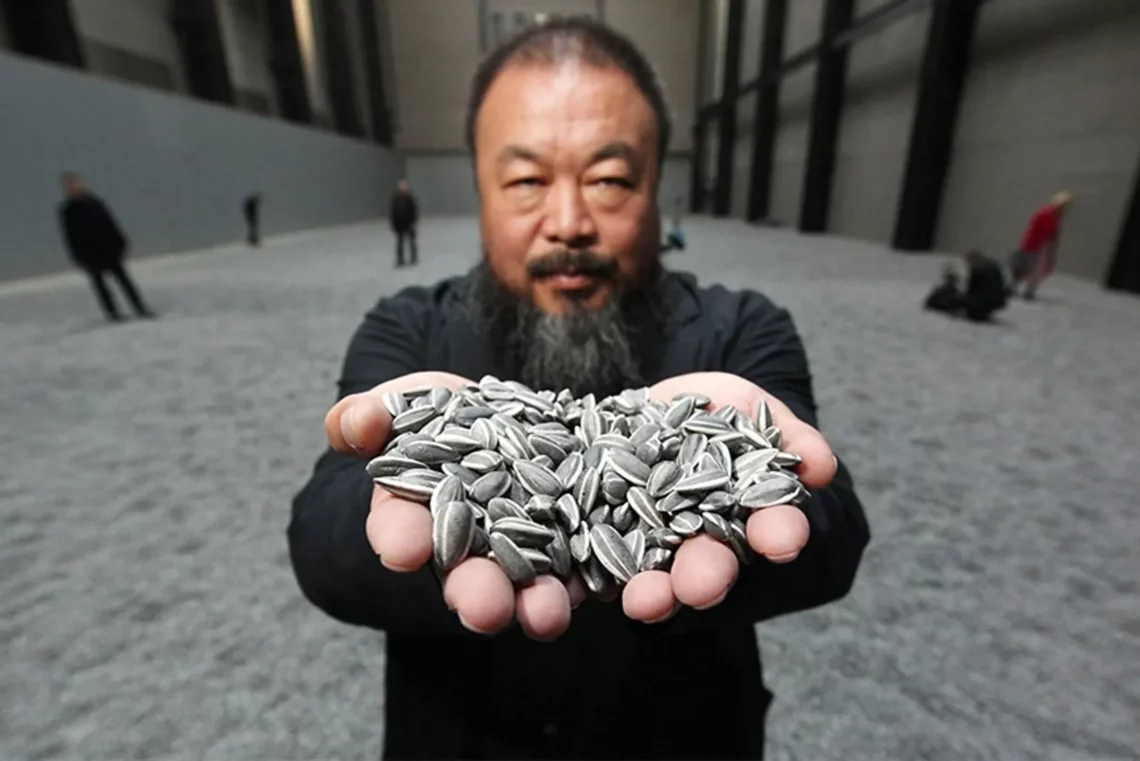
Ai Weiwei was born in Beijing into a politically sensitive environment shaped by his father’s status as a persecuted poet during China’s Cultural Revolution. His early childhood was marked by exile and hardship, experiences that instilled a lifelong skepticism toward authority. Returning to Beijing in his youth, he immersed himself in art and intellectual debate, later studying abroad in New York, where exposure to Western conceptual art and political discourse sharpened his critical voice.
His career began within China’s contemporary art scene, where he combined traditional craftsmanship with provocative conceptual installations. Initially recognized as an artist, Ai gradually integrated activism into his work, addressing themes of freedom of expression and government accountability. His blog posts and public commentary expanded his influence beyond the art world, drawing attention to social issues such as corruption and disaster response.
Ai’s breakthrough came after his investigation into the 2008 Sichuan earthquake, where he documented the names of thousands of schoolchildren who died due to allegedly substandard construction. His research challenged official narratives and elevated him as a prominent human rights advocate. Detentions, surveillance, and restrictions followed, further amplifying international awareness of his activism.
During the 1990s retrospective evaluation of global rights movements, Ai’s work was frequently analyzed as part of the broader evolution of artistic activism. His installations and public interventions were interpreted as bridging art and political discourse, influencing younger activists worldwide.
Ai Weiwei’s legacy lies in redefining art as a tool for accountability. His work continues to challenge censorship and advocate for transparency, positioning him as a leading figure in contemporary human rights advocacy.
Key Facts
- Full name of the subject: Ai Weiwei
- Date of birth: August 28, 1957
- Place of birth: Beijing, China
- Family background: Son of poet Ai Qing, persecuted during Cultural Revolution
- Early childhood experiences: Exile and political hardship
- Education history: Beijing Film Academy; studies in New York
- Influences and mentors: Marcel Duchamp; contemporary conceptual artists
- Career beginnings: Contemporary artist and cultural critic
- Major achievements: Global art exhibitions; human rights advocacy
- Challenges and obstacles faced: Detention; censorship
- Turning points in life: Sichuan earthquake investigation
- Contributions to society: Artistic activism and free expression advocacy
- Personal life (marriage, children, relationships): One son; private relationships
- Awards and recognitions: International art awards
- Beliefs, values, or philosophy: Transparency and freedom of expression
- Legacy and impact: Integration of art and activism
- Historical or cultural significance: Influential political artist
Notable Works:
Sichuan earthquake investigation
Sunflower Seeds installation
Human rights advocacy through art
Controversies:
Ai Weiwei’s detention by Chinese authorities in 2011 sparked international debate regarding freedom of expression. The issue arose when he was held on allegations related to tax irregularities, which critics interpreted as politically motivated. Stakeholders included Chinese government institutions, international human rights organizations, art communities, and foreign governments. Authorities maintained the detention was a legal matter, while supporters argued it was retaliation for his activism. Verified documentation confirmed his temporary detention and financial penalties, though interpretations of intent remained disputed. The incident elevated his global profile and intensified discussions about artistic freedom and political dissent.
Other notable controversies:
Debate over political symbolism in installations
9. Shirin Ebadi
Shirin Ebadi was born in Hamadan, Iran, into a family that valued education and public service. Her father, a law professor, influenced her early interest in justice and governance. Ebadi pursued legal studies at the University of Tehran, becoming one of Iran’s first female judges. However, after the 1979 Islamic Revolution, she was removed from the judiciary, an experience that reshaped her career trajectory.
Her career began anew as a lawyer and advocate for women and children. Ebadi took on sensitive cases involving domestic violence, press freedom, and political detainees. Her work expanded to include human rights organizations, where she emphasized legal reform and accountability within Iran’s judicial framework.
Her breakthrough came with international recognition for defending dissidents and advocating democratic reforms. Awarded the Nobel Peace Prize in 2003, she became the first Iranian and Muslim woman to receive the honor. Her speeches emphasized universal human rights within cultural contexts.
During the 1990s, Ebadi’s advocacy gained momentum as she challenged legal discrimination and supported civil society organizations. Her efforts contributed to global awareness of human rights issues within Iran.
Ebadi’s legacy centers on legal activism. Her work continues to influence debates on judicial independence and gender equality.
Key Facts
- Full name of the subject: Shirin Ebadi
- Date of birth: June 21, 1947
- Place of birth: Hamadan, Iran
- Family background: Daughter of law professor
- Early childhood experiences: Academic and civic environment
- Education history: University of Tehran, law degree
- Influences and mentors: Iranian legal scholars
- Career beginnings: Judge turned human rights lawyer
- Major achievements: Nobel Peace Prize
- Challenges and obstacles faced: Removal from judiciary; exile
- Turning points in life: Post-revolution career shift
- Contributions to society: Women’s and children’s rights advocacy
- Personal life (marriage, children, relationships): Married; two daughters
- Awards and recognitions: Nobel Peace Prize (2003)
- Beliefs, values, or philosophy: Rule of law and equality
- Legacy and impact: Legal reform advocacy
- Historical or cultural significance: Pioneer female legal activist
Notable Works:
Human rights legal defense cases
Children’s rights organizations
Democratic reform advocacy
Controversies:
Ebadi’s activism drew criticism from Iranian authorities, leading to legal and political disputes. The controversy emerged when her organizations were accused of undermining national security. Stakeholders included Iranian government institutions, civil society groups, and international human rights organizations. Critics alleged her work aligned with foreign agendas, while Ebadi maintained her advocacy was grounded in universal legal principles. Verified actions included closure of her offices and increased restrictions. The dispute affected her ability to operate within Iran and contributed to her eventual relocation abroad.
Other notable controversies:
Debate over international funding of advocacy groups
10. Wangari Maathai
![Wangari Muta Maathai - The woman of trees, symbol of the struggle to promote peace [biography]](https://glamcodemedia.com/wp-content/uploads/2026/04/201901030911_Wangari-Maathai-Muta.png)
Wangari Maathai was born in rural Kenya, where her early life was closely tied to agricultural traditions and environmental awareness. Growing up in a farming community, she witnessed the relationship between land, livelihoods, and community stability. Her education, including studies in the United States and later at the University of Nairobi, exposed her to environmental science and social activism.
Her career began in academia, but she soon shifted toward grassroots organizing. Maathai founded the Green Belt Movement, encouraging rural women to plant trees to combat deforestation and provide economic opportunities. The initiative expanded beyond environmentalism to address women’s empowerment and governance issues.
Her breakthrough came when the movement gained international recognition. Despite government resistance, Maathai organized peaceful protests against land misuse and political corruption. Her activism earned her the Nobel Peace Prize in 2004, acknowledging the link between environmental sustainability and human rights.
During the 1990s, Maathai’s activism intensified as she challenged land allocations and urban development projects. Her protests highlighted environmental governance as a human rights issue, influencing policy debates.
Maathai’s legacy lies in connecting environmental protection with democratic participation. Her work continues to inspire sustainability movements globally.
Key Facts
- Full name of the subject: Wangari Muta Maathai
- Date of birth: April 1, 1940
- Place of birth: Nyeri, Kenya
- Family background: Rural farming family
- Early childhood experiences: Agricultural community upbringing
- Education history: University of Pittsburgh; University of Nairobi
- Influences and mentors: Environmental scholars
- Career beginnings: Academic and environmental activist
- Major achievements: Green Belt Movement; Nobel Peace Prize
- Challenges and obstacles faced: Arrests; political opposition
- Turning points in life: Founding Green Belt Movement
- Contributions to society: Environmental and women’s rights advocacy
- Personal life (marriage, children, relationships): Married then divorced; three children
- Awards and recognitions: Nobel Peace Prize (2004)
- Beliefs, values, or philosophy: Environmental sustainability and democracy
- Legacy and impact: Global environmental human rights model
- Historical or cultural significance: Pioneer eco-human rights activism
Notable Works:
Green Belt Movement
Anti-deforestation campaigns
Women’s empowerment initiatives
Controversies:
Maathai’s opposition to government-backed development projects sparked political controversy. The issue arose when she protested construction plans in Nairobi’s Uhuru Park, arguing they threatened public land. Stakeholders included government officials, environmental groups, and local communities. Authorities accused her of obstructing development, while supporters viewed her stance as defending public resources. Verified outcomes included project suspension and broader environmental policy debate. The controversy strengthened her reputation as an environmental rights advocate.
Other notable controversies:
Political campaign disputes
Notable Mentions:
Mahatma Gandhi
Rosa Parks
Vaclav Havel
Leymah Gbowee
Cesar Chavez