
Top 10 Climate Change Activists
Top 10 Climate Change Activists
In This Content
1. Greta Thunberg

Greta Thunberg’s emergence as a global climate voice began in Stockholm, where her early life unfolded within a culturally engaged family deeply connected to the arts. Growing up in Sweden, she was exposed to conversations about environmental sustainability from a young age. Her awareness of climate science developed through school lessons and independent reading, but it was her realization of the gap between scientific consensus and political inaction that shaped her identity. This formative period cultivated a sense of urgency that would define her activism.
Her career beginnings were unconventional. In 2018, Thunberg initiated a solitary school strike outside the Swedish parliament, holding a sign demanding stronger climate policies. What began as a quiet protest quickly evolved into a symbolic act that resonated globally. Her communication style direct, uncompromising, and rooted in scientific evidence distinguished her from traditional activists. Social media amplified her message, transforming her individual protest into a collective youth movement.
The breakthrough came as the “Fridays for Future” movement spread across continents. Thunberg’s speeches at international forums, including major global climate conferences, positioned her as a generational spokesperson. Her presence during the late 2010s echoed the mobilization patterns of earlier environmental campaigns, drawing parallels to activism waves that intensified during the 1990s environmental policy expansions. She leveraged moral authority rather than institutional power, challenging world leaders with stark warnings grounded in climate science.
Thunberg’s legacy lies in reshaping youth participation in global policy discourse. Her activism catalyzed school strikes worldwide and influenced public debate on carbon emissions, intergenerational justice, and political accountability. By transforming personal concern into global mobilization, she redefined activism in the digital era and elevated climate change from a technical issue to a moral imperative.
Key Facts
- Full name of the subject: Greta Tintin Eleonora Ernman Thunberg
- Date of birth: 3 January 2003
- Place of birth: Stockholm, Sweden
- Family background: Artistic family with parents in opera and acting
- Early childhood experiences: Early awareness of environmental issues
- Education history: Swedish school system; climate self-study
- Influences and mentors: Climate scientists and environmental literature
- Career beginnings: School strike outside Swedish parliament
- Major achievements: Global youth climate movement
- Challenges and obstacles faced: Public criticism and political backlash
- Turning points in life: Launch of Fridays for Future
- Contributions to society: Youth climate mobilization
- Personal life (marriage, children, relationships): Private personal life
- Awards and recognitions: International environmental awards
- Beliefs, values, or philosophy: Climate justice and science-based policy
- Legacy and impact: Global youth activism movement
- Historical or cultural significance: Generational shift in climate advocacy
Notable Works: Fridays for Future movement; UN Climate speeches; youth climate mobilization
Controversies:
Thunberg’s confrontational rhetoric toward political leaders sparked debate about tone and influence in youth activism. Critics argued that her speeches, particularly at international summits, were overly accusatory and lacked policy nuance, while supporters emphasized that urgency was justified given scientific warnings. Stakeholders included political leaders, climate scientists, media commentators, and youth activists. Verified facts show that her speeches increased public engagement and media coverage, though perceptions varied regarding effectiveness. The impact included intensified public debate about communication strategies in climate advocacy.
2. Al Gore
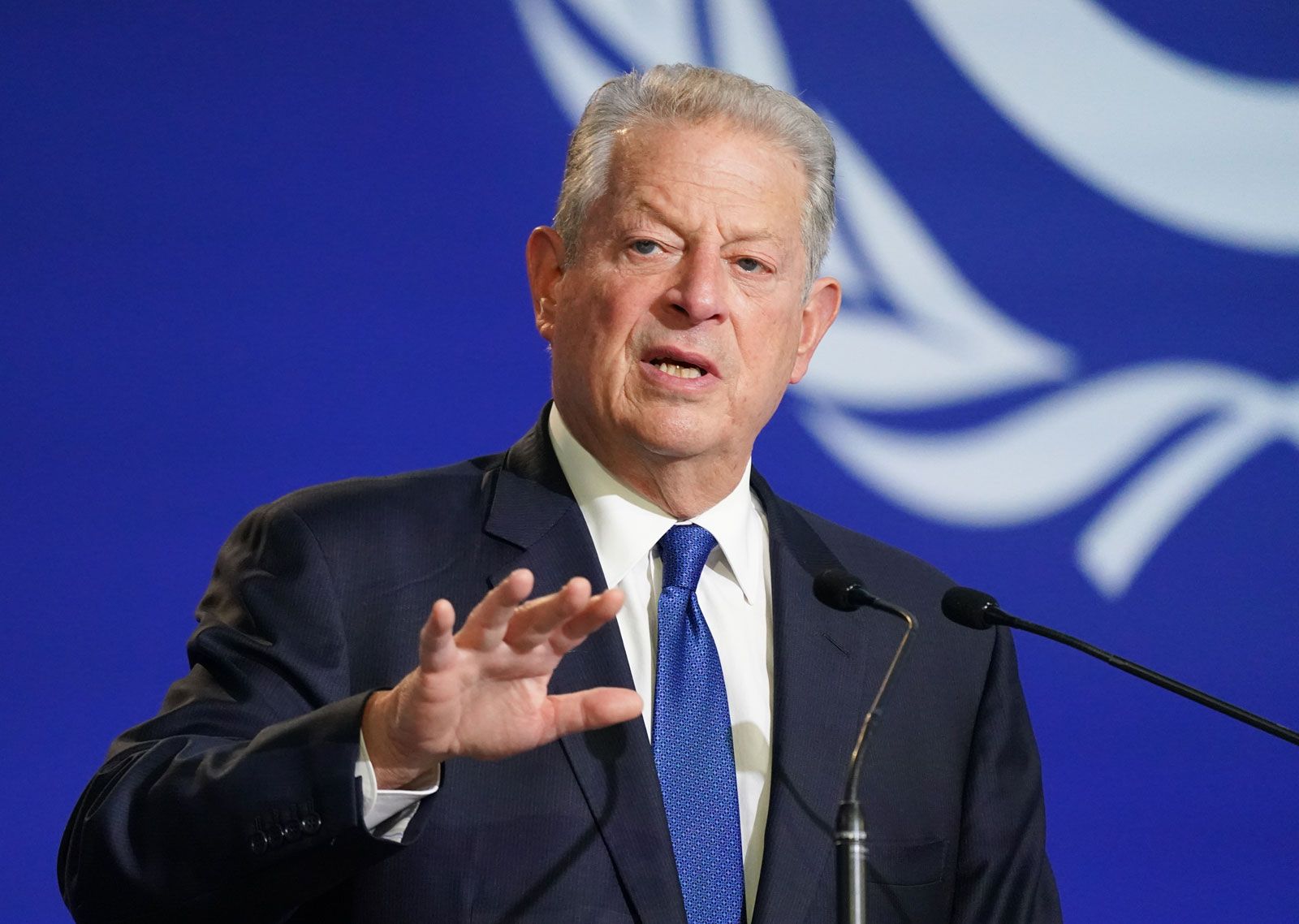
Al Gore’s climate activism traces back to his upbringing in Tennessee, where exposure to rural landscapes and agricultural life shaped his environmental consciousness. His early life combined academic rigor with political immersion, as he observed legislative processes through his family’s political connections. These formative experiences influenced his interest in environmental policy long before climate change became a mainstream concern.
Gore’s career beginnings unfolded within American politics. As a U.S. congressman and later senator, he engaged with environmental issues during a period when climate science was still emerging in public discourse. His early advocacy focused on technological innovation and emissions reduction. By the late 1980s, he had begun promoting climate awareness through legislative initiatives, positioning himself as one of the first high-profile policymakers to address global warming.
The breakthrough came after his vice presidency, when he transitioned from political office to public advocacy. The release of his documentary and lecture series dramatically increased public awareness. During the broader environmental policy momentum that followed the 1990s international climate negotiations, Gore’s influence expanded globally. His presentations combined scientific data with visual storytelling, reshaping how climate science was communicated to mass audiences.
Gore’s legacy lies in bridging science, politics, and public communication. He elevated climate change into mainstream political discourse and inspired a generation of policymakers and activists. His work contributed to international dialogue on emissions reduction and sustainability, reinforcing the role of leadership in addressing global environmental challenges.
Key Facts
- Full name of the subject: Albert Arnold Gore Jr.
- Date of birth: 31 March 1948
- Place of birth: Washington, D.C., United States
- Family background: Political family with congressional ties
- Early childhood experiences: Exposure to farming and policy debates
- Education history: Harvard University; Vanderbilt University
- Influences and mentors: Environmental scientists and policymakers
- Career beginnings: U.S. congressman advocating environmental issues
- Major achievements: Global climate awareness campaigns
- Challenges and obstacles faced: Political opposition and skepticism
- Turning points in life: Post-vice presidency climate advocacy
- Contributions to society: Climate education and policy advocacy
- Personal life (marriage, children, relationships): Married Tipper Gore; children
- Awards and recognitions: Nobel Peace Prize (shared)
- Beliefs, values, or philosophy: Environmental stewardship
- Legacy and impact: Mainstreaming climate discourse
- Historical or cultural significance: Political leadership in climate awareness
Notable Works: Climate documentary; global climate presentations; policy advocacy
Controversies:
Gore faced criticism regarding personal carbon footprint and perceived inconsistency between advocacy and lifestyle. Critics argued that his travel and property ownership contradicted emissions reduction messaging, while supporters countered that his role required global engagement and that he invested in offsets and sustainability initiatives. Stakeholders included political commentators, environmental groups, and media outlets. Verified facts confirm public scrutiny of energy use, though no regulatory violations were identified. The impact centered on broader discussions about personal accountability versus systemic policy change in climate leadership.
3. Wangari Maathai
Wangari Maathai’s early life in rural Kenya shaped her understanding of environmental sustainability through lived experience. Growing up in Nyeri, she witnessed the close relationship between communities and natural resources. Agricultural traditions and reliance on forests informed her appreciation of ecological balance. These early influences later shaped her approach to environmental activism, blending conservation with social empowerment.
Her career beginnings emerged through academic achievement. After studying abroad, she returned to Kenya and entered academia, where she became increasingly aware of deforestation’s social consequences. Observing women struggling to secure firewood and clean water, she recognized environmental degradation as both ecological and economic crisis. This realization led to the creation of a grassroots tree-planting initiative.
The breakthrough came with the Green Belt Movement, which mobilized rural women to plant millions of trees. During the global environmental awareness wave that expanded in the 1990s, Maathai’s initiative gained international recognition. Her activism linked environmental conservation with democracy, human rights, and economic empowerment. She confronted political authorities while advocating sustainable development.
Maathai’s legacy lies in integrating environmental protection with community empowerment. Her work demonstrated that climate and ecological challenges intersect with social justice. By mobilizing grassroots participation, she created a model for sustainable activism that influenced environmental movements worldwide.
Key Facts
- Full name of the subject: Wangari Muta Maathai
- Date of birth: 1 April 1940
- Place of birth: Nyeri, Kenya
- Family background: Rural agricultural family
- Early childhood experiences: Farming and environmental observation
- Education history: University studies in the United States and Kenya
- Influences and mentors: Community leaders and academics
- Career beginnings: Academic career and environmental research
- Major achievements: Green Belt Movement
- Challenges and obstacles faced: Political resistance and arrests
- Turning points in life: Launch of tree-planting initiative
- Contributions to society: Environmental conservation and women empowerment
- Personal life (marriage, children, relationships): Married; children
- Awards and recognitions: Nobel Peace Prize
- Beliefs, values, or philosophy: Sustainable development and democracy
- Legacy and impact: Grassroots environmental activism model
- Historical or cultural significance: First African woman Nobel laureate in peace category
Notable Works: Green Belt Movement; tree-planting campaigns; environmental policy advocacy
Controversies:
Maathai’s opposition to government-backed land development projects generated political conflict and public debate. Critics within government circles accused her of obstructing economic growth, while supporters argued she was protecting public land and ecosystems. Stakeholders included Kenyan authorities, environmental groups, and local communities. Verified facts confirm protests and legal disputes, though her concerns about land preservation later gained wider acceptance. The impact included heightened global attention on environmental governance and strengthened civil society activism in Kenya.
4. James Hansen
James Hansen’s early life in the rural American Midwest shaped his sensitivity to natural systems long before climate science became a global discipline. Growing up in Iowa, he developed an early fascination with planetary physics and atmospheric behavior, influenced by both agricultural landscapes and scientific curiosity. This foundation led him toward physics and astronomy, disciplines that would later become central to his climate modeling work.
Hansen’s career beginnings were rooted in NASA research, where he specialized in planetary atmospheres, particularly Venus. His transition into Earth’s climate system emerged from comparative planetary analysis, where he identified greenhouse gas effects as a critical factor influencing planetary temperature regulation. His early scientific work in the 1970s positioned him among the first researchers to translate complex atmospheric data into public policy relevance.
The breakthrough came in 1988 when Hansen testified before the United States Congress, publicly stating that human-induced climate change was already measurable. This moment marked a turning point in climate discourse, shifting it from theoretical science into political urgency. During the 1990s, Hansen’s influence expanded as climate models became more refined and international scientific consensus began forming through organizations such as the IPCC. His advocacy extended beyond academia into public warning campaigns.
Hansen’s legacy lies in redefining the role of scientists in public policy. He bridged the gap between technical research and civic responsibility, positioning climate science as an urgent global issue requiring immediate intervention. His work continues to influence climate modeling, policy frameworks, and environmental accountability discussions worldwide.
Key Facts
- Full name of the subject: James Edward Hansen
- Date of birth: 29 March 1941
- Place of birth: Denison, Iowa, United States
- Family background: Rural farming family
- Early childhood experiences: Interest in science and planetary systems
- Education history: University of Iowa; University of Washington
- Influences and mentors: Planetary scientists and physicists
- Career beginnings: NASA climate and planetary research
- Major achievements: Early warning on global climate change
- Challenges and obstacles faced: Political pushback on climate advocacy
- Turning points in life: 1988 Congressional testimony
- Contributions to society: Climate science communication
- Personal life (marriage, children, relationships): Married; children
- Awards and recognitions: International climate science awards
- Beliefs, values, or philosophy: Scientific responsibility and transparency
- Legacy and impact: Foundational climate change awareness figure
- Historical or cultural significance: Early scientific voice on global warming
Notable Works: NASA climate modeling research; Congressional climate testimony; public climate advocacy
Controversies:
Hansen’s outspoken criticism of government climate policy created debate regarding scientific neutrality in public advocacy. The issue centers on whether a federal scientist should engage in public protest against energy and environmental policies. The background includes his transition from strictly academic communication to direct activism, particularly in the late 2000s. Stakeholders included NASA administration, U.S. policymakers, climate scientists, and advocacy groups. Critics argued that his activism blurred institutional boundaries, while supporters viewed it as necessary scientific responsibility given urgent climate risks. Internal NASA discussions and public commentary confirmed tensions, though no formal disciplinary action altered his scientific standing. The impact contributed to broader debates about the role of scientists in activism versus policy neutrality.
5. Bill McKibben
Bill McKibben’s early life in the northeastern United States exposed him to forests, seasonal change, and rural environmental systems that shaped his ecological awareness. Raised in Massachusetts, he developed an early appreciation for literature and journalism, combining narrative skill with environmental curiosity. These influences positioned him uniquely at the intersection of writing and ecological advocacy.
McKibben’s career began in journalism, where he wrote extensively on environmental themes. His early work focused on translating scientific concerns into accessible narratives for the public. The publication of his landmark environmental book in the late 1980s marked a shift in public discourse, introducing climate change to mainstream readership in a comprehensible and urgent tone.
The breakthrough came as his writings gained international attention, particularly during the 1990s expansion of environmental movements. He transitioned from writer to organizer, founding grassroots climate campaigns. His ability to connect scientific urgency with moral language positioned him as a leading voice in climate activism. Through organized movements, he helped shape public resistance to fossil fuel dependency.
McKibben’s legacy lies in merging environmental journalism with activism. He transformed climate communication into a movement-driven discipline, influencing both public opinion and policy advocacy worldwide.
Key Facts
- Full name of the subject: William Ernest McKibben
- Date of birth: 8 December 1960
- Place of birth: Palo Alto, California, United States
- Family background: Academic and educated family
- Early childhood experiences: Exposure to nature and literature
- Education history: Harvard University
- Influences and mentors: Environmental writers and scientists
- Career beginnings: Journalism and environmental writing
- Major achievements: Founding climate advocacy organizations
- Challenges and obstacles faced: Climate policy resistance
- Turning points in life: Publication of major climate book
- Contributions to society: Climate awareness campaigns
- Personal life (marriage, children, relationships): Married; children
- Awards and recognitions: Environmental journalism awards
- Beliefs, values, or philosophy: Climate justice and ecological preservation
- Legacy and impact: Grassroots climate movement leadership
- Historical or cultural significance: Climate communication pioneer
Notable Works: Environmental books; 350.org climate movement; fossil fuel divestment campaigns
Controversies:
McKibben’s fossil fuel divestment campaigns generated debate over economic disruption versus environmental urgency. The issue centers on calls for institutions to withdraw investments from fossil fuel companies. The background includes growing climate activism in universities and pension funds during the 2010s. Stakeholders included academic institutions, investors, fossil fuel corporations, and environmental groups. Critics argued that divestment strategies could destabilize financial portfolios, while supporters emphasized moral responsibility and long-term climate risk mitigation. Verified outcomes include partial institutional divestments, though debate over financial impact continues. The broader consequence has been increased scrutiny of climate risk in investment strategies.
6. Christiana Figueres
Christiana Figueres’ early life in Costa Rica immersed her in a country deeply shaped by ecological awareness and renewable energy ambitions. Growing up in a politically active family, she developed a strong sense of public service and international cooperation. Her academic background in anthropology and international relations provided a foundation for understanding global negotiation systems.
Her career beginnings involved work in sustainable development and climate policy at national and international levels. She became deeply involved in early United Nations climate negotiations, where she observed the complexity of aligning global economic interests with environmental commitments. Her diplomatic skill set positioned her as a key figure in multilateral climate discussions.
The breakthrough came when she was appointed Executive Secretary of the UN Framework Convention on Climate Change. Her leadership was instrumental during the negotiations leading to the Paris Agreement. The 1990s climate negotiation frameworks provided historical context for her later success, as she built upon decades of incremental diplomatic progress. Her ability to bridge political divides was central to achieving global consensus.
Figueres’ legacy lies in demonstrating that international cooperation on climate change is possible. She transformed diplomatic negotiation into a vehicle for actionable environmental policy, influencing global governance structures.
Key Facts
- Full name of the subject: Christiana Figueres Olsen
- Date of birth: 7 August 1956
- Place of birth: San José, Costa Rica
- Family background: Political and diplomatic family
- Early childhood experiences: Exposure to governance and sustainability
- Education history: London School of Economics; American University
- Influences and mentors: Environmental diplomats
- Career beginnings: National and international climate policy roles
- Major achievements: Paris Agreement leadership
- Challenges and obstacles faced: Global political disagreements
- Turning points in life: UNFCCC executive leadership
- Contributions to society: International climate agreements
- Personal life (marriage, children, relationships): Private family life
- Awards and recognitions: Global climate leadership awards
- Beliefs, values, or philosophy: Multilateral cooperation
- Legacy and impact: Architect of global climate diplomacy
- Historical or cultural significance: Paris Agreement leadership figure
Notable Works: UNFCCC leadership; Paris Agreement negotiations
Controversies:
Figueres faced criticism over perceived compromises during climate negotiations, particularly regarding the balance between binding commitments and voluntary national targets. The issue centers on whether negotiated agreements were sufficiently stringent to limit global warming. The background involves complex international diplomacy involving nearly 200 nations. Stakeholders included national governments, environmental NGOs, and policy analysts. Critics argued that agreements lacked enforcement mechanisms, while supporters emphasized that consensus-based diplomacy required pragmatic compromise. Verified outcomes show broad international adoption, though effectiveness remains debated. The impact continues to influence discussions on global climate governance structures.
7. Vandana Shiva
Vandana Shiva’s early life in the Himalayan region of India deeply influenced her ecological worldview. Raised in an environment rich in biodiversity, she developed an early appreciation for natural systems and traditional agricultural practices. Her academic training in physics later expanded her analytical approach to environmental issues, blending scientific reasoning with ecological philosophy.
Shiva’s career beginnings were rooted in research on environmental degradation and sustainable development. She became increasingly involved in grassroots movements addressing deforestation and agricultural transformation. Her work highlighted the social consequences of industrial farming systems and their impact on rural communities, particularly women.
The breakthrough came through her leadership in environmental justice movements opposing large-scale industrial agriculture. During the global environmental policy expansion of the 1990s, her advocacy gained international recognition. She emphasized biodiversity preservation and seed sovereignty as central to ecological resilience. Her work positioned her as a leading voice in environmental justice discourse.
Shiva’s legacy lies in integrating environmental science with social justice frameworks. Her activism reshaped global conversations about agriculture, sustainability, and corporate influence in food systems.
Key Facts
- Full name of the subject: Vandana Shiva
- Date of birth: 5 November 1952
- Place of birth: Dehradun, India
- Family background: Academic and forestry-influenced family
- Early childhood experiences: Exposure to Himalayan ecosystems
- Education history: University of Guelph; University of Western Ontario
- Influences and mentors: Ecological philosophers and scientists
- Career beginnings: Environmental research and activism
- Major achievements: Seed sovereignty advocacy
- Challenges and obstacles faced: Corporate opposition
- Turning points in life: Anti-industrial agriculture campaigns
- Contributions to society: Environmental justice movements
- Personal life (marriage, children, relationships): One child
- Awards and recognitions: Alternative environmental awards
- Beliefs, values, or philosophy: Ecological justice and biodiversity
- Legacy and impact: Global environmental activism influence
- Historical or cultural significance: Agroecology and sustainability advocate
Notable Works: Navdanya movement; biodiversity conservation campaigns
Controversies:
Shiva’s criticism of genetically modified crops has generated sustained scientific and policy debate. The issue centers on her opposition to large-scale GMO adoption in agriculture. The background involves global efforts to increase crop yields through biotechnology. Stakeholders include agricultural corporations, scientists, farmers, and regulatory agencies. Critics argue that her stance may understate potential benefits of biotechnology, while supporters emphasize ecological risks and farmer dependency concerns. Peer-reviewed studies and policy reviews present mixed conclusions depending on context. The impact has influenced agricultural policy debates and strengthened global discourse on food sovereignty.
8. David Attenborough
David Attenborough’s early life in Leicester, England, unfolded within an academic household that valued curiosity and scientific inquiry. Surrounded by natural history collections and fossil specimens, he developed an early fascination with the living world. His education at Cambridge University, where he studied natural sciences, provided the intellectual framework that later defined his storytelling approach to the environment. These formative years established a lifelong commitment to documenting biodiversity.
Attenborough’s career beginnings were rooted in broadcasting, where he initially worked behind the scenes at the BBC. His ability to translate complex ecological systems into accessible narratives quickly distinguished him. Early natural history programs reflected his emerging belief that television could serve as a bridge between science and public understanding. His on-screen presence combined calm authority with immersive storytelling, reshaping environmental communication.
The breakthrough came with landmark natural history series that brought global ecosystems into living rooms worldwide. During the 1990s, his documentaries became central to environmental awareness, aligning with a growing global concern about biodiversity loss and climate change. His storytelling evolved into a form of visual activism, using cinematic techniques to highlight ecological fragility. His voice became synonymous with environmental reflection and urgency.
Attenborough’s legacy lies in redefining environmental education through media. He transformed nature broadcasting into a global platform for ecological consciousness, influencing public attitudes toward conservation and climate responsibility across generations.
Key Facts
- Full name of the subject: David Frederick Attenborough
- Date of birth: 8 May 1926
- Place of birth: London, England
- Family background: Academic family with scientific interests
- Early childhood experiences: Fossil collection and nature observation
- Education history: University of Cambridge (Natural Sciences)
- Influences and mentors: Early naturalists and BBC producers
- Career beginnings: BBC radio and television production
- Major achievements: Landmark natural history documentaries
- Challenges and obstacles faced: Early limitations of nature broadcasting technology
- Turning points in life: Development of global documentary series
- Contributions to society: Environmental education through media
- Personal life (marriage, children, relationships): Married Jane Elizabeth Ebsworth Oriel; two children
- Awards and recognitions: Multiple BAFTA and international honors
- Beliefs, values, or philosophy: Environmental stewardship and education
- Legacy and impact: Global environmental awareness through media
- Historical or cultural significance: Pioneer of nature documentary storytelling
Notable Works: Life series documentaries; Planet Earth contributions; global conservation advocacy programs
Controversies:
Attenborough’s natural history portrayals have been debated regarding narrative framing in wildlife documentaries. The issue centers on whether edited storytelling simplifies ecological realities for audiences. The background involves decades of documentary production balancing scientific accuracy with viewer engagement. Stakeholders include broadcasters, conservation scientists, and media critics. Critics argue that dramatization may occasionally anthropomorphize animal behavior, while supporters maintain that storytelling is essential for public engagement with conservation. Verified production standards confirm scientific consultation in major series, though interpretation of narrative framing remains subjective. The impact has been largely positive, increasing global environmental awareness while sustaining debate on media representation of nature.
9. Naomi Klein

Naomi Klein’s early life in Canada was shaped by a politically engaged household that emphasized social justice and critical thinking. Growing up in Toronto, she was exposed to activism and journalism from an early age. Her academic interests in political economy and media studies laid the groundwork for her later analysis of capitalism and environmental systems.
Klein’s career beginnings were rooted in journalism, where she developed a reputation for investigative reporting on globalization and economic systems. Her writing challenged dominant narratives about corporate power and environmental degradation. She gradually integrated climate change into her broader critique of economic structures, positioning environmental issues within systems of production and consumption.
The breakthrough came with the publication of major works linking climate change to economic systems. During the 1990s and early 2000s expansion of global environmental discourse, Klein’s analysis reframed climate change as not only a scientific issue but also a structural economic challenge. Her work influenced climate activism by emphasizing systemic transformation rather than incremental reform.
Klein’s legacy lies in connecting environmental crisis with political economy. Her work reshaped climate discourse by highlighting the role of capitalism, globalization, and inequality in environmental degradation.
Key Facts
- Full name of the subject: Naomi Klein
- Date of birth: 8 May 1970
- Place of birth: Montreal, Canada
- Family background: Activist and academic family
- Early childhood experiences: Exposure to social justice movements
- Education history: University of Toronto
- Influences and mentors: Political theorists and journalists
- Career beginnings: Journalism and investigative writing
- Major achievements: Climate-capitalism critique literature
- Challenges and obstacles faced: Political criticism from economic sectors
- Turning points in life: Publication of major environmental works
- Contributions to society: Climate justice discourse
- Personal life (marriage, children, relationships): Married Avi Lewis; children
- Awards and recognitions: Journalism and literary awards
- Beliefs, values, or philosophy: Climate justice and anti-corporate advocacy
- Legacy and impact: Systemic climate critique framework
- Historical or cultural significance: Climate justice movement influence
Notable Works: “This Changes Everything”; “The Shock Doctrine”; climate justice advocacy
Controversies:
Klein’s critique of capitalism in relation to climate change has generated debate about ideological framing in environmental discourse. The issue centers on whether linking climate change to capitalism oversimplifies complex global systems. The background involves academic and policy discussions on economic drivers of emissions. Stakeholders include economists, policymakers, environmental activists, and corporate groups. Critics argue that her framing is politically charged, while supporters maintain it highlights structural causes of environmental degradation. Verified academic debate confirms differing interpretations of economic responsibility. The impact has expanded climate discourse into broader discussions of economic reform and environmental justice.
10. Sunita Narain

Sunita Narain’s early life in New Delhi exposed her to the stark contrasts between rapid urbanization and environmental strain. Growing up in India’s capital during a period of industrial expansion, she developed an early awareness of pollution, water scarcity, and ecological imbalance. Her academic training in environmental science and policy provided a foundation for integrating research with governance.
Narain’s career beginnings were rooted in environmental research institutions, where she focused on sustainable development and community-based resource management. Her work emphasized the importance of equitable access to natural resources, particularly water and clean air. She quickly became a leading voice in linking environmental policy with public health and social equity.
The breakthrough came through her leadership at environmental policy organizations, where she influenced both national and international climate discussions. During the global environmental policy expansion of the 1990s, she contributed to shaping debates on sustainable development in the Global South. Her advocacy emphasized the need for climate solutions tailored to developing economies.
Narain’s legacy lies in bridging science, policy, and social justice in environmental governance. Her work has influenced climate adaptation strategies and environmental policy frameworks across developing nations.
Key Facts
- Full name of the subject: Sunita Narain
- Date of birth: 26 April 1961
- Place of birth: New Delhi, India
- Family background: Middle-class urban family
- Early childhood experiences: Exposure to urban environmental challenges
- Education history: University of Delhi
- Influences and mentors: Environmental scientists and policy thinkers
- Career beginnings: Environmental research and advocacy
- Major achievements: Climate policy leadership in India
- Challenges and obstacles faced: Policy resistance and industrial lobbying
- Turning points in life: Leadership in environmental research institutions
- Contributions to society: Climate policy and sustainability advocacy
- Personal life (marriage, children, relationships): Private family life
- Awards and recognitions: Global environmental awards
- Beliefs, values, or philosophy: Sustainable development and equity
- Legacy and impact: Environmental policy influence in developing nations
- Historical or cultural significance: Climate justice advocate in Global South
Notable Works: Environmental policy reports; climate adaptation advocacy; sustainable development frameworks
Controversies:
Narain’s opposition to certain large-scale industrial development projects has generated debate over environmental regulation versus economic growth. The issue centers on balancing infrastructure expansion with ecological protection. The background involves India’s rapid industrialization and urban development pressures. Stakeholders include government agencies, industry groups, environmental NGOs, and local communities. Critics argue that strict environmental positions may slow economic development, while supporters emphasize long-term sustainability and public health considerations. Verified policy debates confirm ongoing negotiation between development and environmental protection priorities. The impact has strengthened environmental governance discourse in India and influenced regulatory frameworks.
Notable Mentions:
Xiuhtezcatl Martinez
Severn Cullis-Suzuki
George Monbiot
Mary Robinson
Robert Bullard