
Top 10 British Television Hosts Who Shaped Modern TV
Top 10 British Television Hosts Who Shaped Modern TV
In This Content
Quick List
Sir David Attenborough
Sir David Frost
Sir Terry Wogan
Michael Parkinson
Graham Norton
Anne Robinson
Jeremy Clarkson
Stephen Fry
Cilla Black
Claudia Winkleman
1.Sir David Attenborough
From a childhood defined by scientific curiosity in Leicester, Sir David Attenborough developed an early fascination with the natural world that would later redefine television itself. Growing up in an academic household, his exposure to fossils, nature, and intellectual discourse laid the groundwork for a career that would merge science with storytelling. His education at Cambridge further refined his analytical thinking, but it was his innate sense of wonder that would ultimately shape his broadcasting voice.
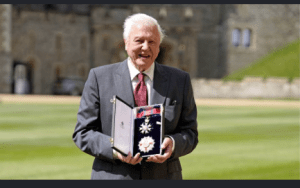
Attenborough’s entry into television came at a time when the medium was still experimental. Joining the BBC in the early 1950s, he initially worked behind the scenes before transitioning into on-screen roles. His early productions, including “Zoo Quest,” introduced audiences to wildlife programming in a format that was immersive, educational, and visually compelling. Even in these formative years, his calm, authoritative narration began to emerge as a defining trait.
His breakthrough came with landmark documentary series such as “Life on Earth,” which revolutionized natural history broadcasting. Attenborough’s performance style measured, precise, and deeply engaging transformed scientific content into universally accessible storytelling. He did not simply present nature; he interpreted it, contextualized it, and made it emotionally resonant for global audiences.
Today, Attenborough’s legacy is unparalleled. His influence extends beyond television into environmental advocacy and global awareness of biodiversity. As both a broadcaster and a cultural figure, he has shaped how generations understand the natural world, establishing a template for factual programming that continues to guide modern television.
Key Facts
- Full name of the subject: David Frederick Attenborough
- Date of birth: 8 May 1926
- Place of birth: London, England
- Family background: Son of an academic family
- Early childhood experiences: Exposure to nature and scientific exploration
- Education history: University of Cambridge (Natural Sciences)
- Influences and mentors: Early BBC producers and natural scientists
- Career beginnings: BBC production and early wildlife programs
- Major achievements: Creator of landmark natural history series
- Challenges and obstacles faced: Technological limitations in early broadcasting
- Turning points in life: Success of “Life on Earth”
- Contributions to society: Environmental awareness and education
- Personal life (marriage, children, relationships): Married, two children
- Awards and recognitions: Multiple BAFTAs, knighthood
- Beliefs, values, or philosophy: Conservation and scientific truth
- Legacy and impact: Redefined documentary television
- Historical or cultural significance: Global icon of natural history broadcasting
Notable Works: Life on Earth, Planet Earth, Blue Planet
Controversies:
A recurring public debate involving David Attenborough concerns the balance between advocacy and scientific neutrality in environmental broadcasting. Critics have occasionally argued that his later works, which emphasize climate change and ecological urgency, reflect a shift from traditional observational documentary toward advocacy-driven storytelling. This discussion gained prominence as environmental issues became central to global policy debates, involving stakeholders such as environmental organizations, scientific communities, policymakers, and audiences. Supporters contend that the overwhelming scientific consensus on climate change justifies a more direct narrative approach, while critics emphasize the importance of maintaining strict neutrality in factual programming. There have been no formal institutional findings against Attenborough, and the debate remains philosophical rather than disciplinary. Its impact has nonetheless influenced broader expectations of documentary filmmakers in an era of global environmental crisis.
2. Sir David Frost
Emerging from post-war Britain, Sir David Frost became one of television’s most influential interviewers, redefining the relationship between media and power. Raised in a modest household, Frost’s early life was shaped by discipline and intellectual ambition. His education at Cambridge placed him within a generation of thinkers and performers who would go on to reshape British media and culture.
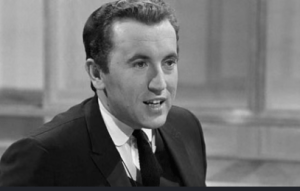
Frost’s career began in satire, notably with the groundbreaking program “That Was the Week That Was.” This early work positioned him at the intersection of journalism and entertainment, allowing him to challenge political authority through humor and sharp commentary. His ability to blend wit with incisive questioning quickly distinguished him from his contemporaries.
His global breakthrough came with the historic interviews with former U.S. President Richard Nixon. These interviews were not merely conversations but cultural events, demonstrating Frost’s ability to hold powerful figures accountable while maintaining a composed and strategic demeanor. His interviewing style probing yet controlled became a benchmark for broadcast journalism.
Frost’s legacy lies in his transformation of the television interview into a platform of global significance. He bridged entertainment and serious journalism, proving that television could engage with complex political realities while remaining accessible to mass audiences.
Key Facts
- Full name of the subject: David Paradine Frost
- Date of birth: 7 April 1939
- Place of birth: Kent, England
- Family background: Son of a Methodist minister
- Early childhood experiences: Structured upbringing with emphasis on discipline
- Education history: University of Cambridge
- Influences and mentors: British satirists and journalists
- Career beginnings: Satirical television programs
- Major achievements: Nixon interviews, global talk shows
- Challenges and obstacles faced: Transition from satire to serious journalism
- Turning points in life: Nixon interview series
- Contributions to society: Accountability journalism
- Personal life (marriage, children, relationships): Married, children
- Awards and recognitions: Knighthood, multiple awards
- Beliefs, values, or philosophy: Power of questioning authority
- Legacy and impact: Redefined political interviews
- Historical or cultural significance: Icon of broadcast journalism
Notable Works: That Was the Week That Was, Frost/Nixon interviews
Controversies:
A notable controversy involving David Frost relates to questions about the financial arrangements behind his interviews with Richard Nixon. The issue centered on the fact that Frost independently financed the interviews, reportedly paying Nixon for participation, which raised concerns about journalistic ethics and the potential influence of financial incentives on editorial independence. Stakeholders included Frost, Nixon, media critics, and journalism institutions. Critics argued that payment could compromise the integrity of the interview process, while supporters contended that the arrangement enabled a historic journalistic moment that might not have occurred otherwise. The interviews themselves were widely regarded as rigorous and impactful, and no formal sanctions were imposed. The debate remains a significant case study in media ethics, highlighting tensions between access, funding, and editorial independence.
3. Sir Terry Wogan
A master of warmth and wit, Sir Terry Wogan brought a uniquely human touch to British television. Born in Ireland and later becoming a naturalized British citizen, his early life was shaped by modest beginnings and a strong connection to storytelling and humor. His transition from radio to television would ultimately redefine audience engagement.
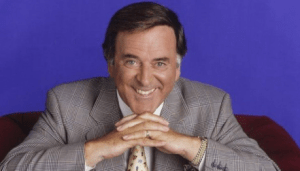
Wogan’s career began in radio broadcasting, where he developed a conversational style that felt intimate and unscripted. This approach translated seamlessly to television, allowing him to connect with audiences in a way that felt personal rather than performative. His early television roles established him as a reliable and engaging host.
His breakthrough came with flagship programs such as “Wogan” and his long-standing association with the Eurovision Song Contest. His commentary, often laced with humor and subtle irony, became as anticipated as the events themselves. Wogan’s performance style was defined by authenticity he appeared not as a distant presenter, but as a companion to viewers.
Wogan’s legacy lies in his ability to humanize television. He demonstrated that connection, warmth, and humor could be as impactful as spectacle, shaping a generation of presenters who prioritize audience rapport over formality.
Key Facts
- Full name of the subject: Michael Terence Wogan
- Date of birth: 3 August 1938
- Place of birth: Limerick, Ireland
- Family background: Working-class Irish family
- Early childhood experiences: Modest upbringing with strong cultural roots
- Education history: Crescent College
- Influences and mentors: Radio broadcasters
- Career beginnings: Radio broadcasting
- Major achievements: Host of Wogan, Eurovision commentator
- Challenges and obstacles faced: Transition from radio to television
- Turning points in life: Success of BBC television shows
- Contributions to society: Entertainment and charity work
- Personal life (marriage, children, relationships): Married, children
- Awards and recognitions: Knighthood, broadcasting awards
- Beliefs, values, or philosophy: Connection through humor
- Legacy and impact: Icon of British entertainment broadcasting
- Historical or cultural significance: Redefined audience engagement
Notable Works: Wogan, Eurovision Song Contest commentary
Controversies:
A notable public debate involving Terry Wogan concerned his commentary style during the Eurovision Song Contest, which some critics argued occasionally reflected a dismissive tone toward certain participating countries. The issue emerged within the broader context of Eurovision’s emphasis on cultural inclusivity, involving stakeholders such as international audiences, participating nations, and broadcasting authorities. Critics suggested that humor could sometimes be perceived as culturally insensitive, while supporters defended Wogan’s style as reflective of British broadcasting tradition and audience expectations. Wogan himself acknowledged the evolving nature of audience sensitivities and later moderated aspects of his commentary. No formal disciplinary action was taken, and the matter remains an example of shifting cultural norms in global entertainment broadcasting.
4. Michael Parkinson
A defining architect of the modern television interview, Michael Parkinson emerged from a working-class upbringing in Yorkshire with a deep appreciation for storytelling and conversation. His early life, shaped by post-war Britain, instilled in him both humility and intellectual curiosity qualities that would later become central to his interviewing style. Educated in English literature, Parkinson developed a nuanced understanding of narrative, character, and language.
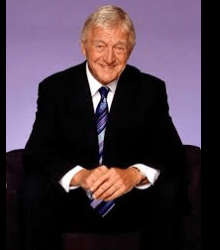
His career began in print journalism before transitioning into television, where he brought with him a writer’s sensitivity to dialogue and structure. Early roles within British media allowed him to refine a conversational approach that contrasted sharply with the rigid formats of the time. Rather than interrogating his guests, Parkinson sought to understand them, creating an atmosphere of trust that encouraged openness.
His breakthrough came with the launch of “Parkinson,” a talk show that would become synonymous with in-depth celebrity interviews. Hosting icons from across entertainment, politics, and sport, Parkinson demonstrated a rare ability to balance authority with empathy. His screen presence was understated yet commanding, allowing his guests to shine while subtly guiding the narrative.
Parkinson’s legacy lies in his transformation of the television interview into an art form. His influence can be seen in generations of presenters who prioritize authenticity, listening, and intellectual engagement. In shaping how conversations unfold on screen, he helped redefine the very language of television.
Key Facts
- Full name of the subject: Michael Parkinson
- Date of birth: 28 March 1935
- Place of birth: Yorkshire, England
- Family background: Working-class British family
- Early childhood experiences: Grew up in post-war Britain
- Education history: University of Sheffield
- Influences and mentors: Print journalists and broadcasters
- Career beginnings: Newspaper journalism
- Major achievements: Host of “Parkinson” talk show
- Challenges and obstacles faced: Transition from print to television
- Turning points in life: Launch of “Parkinson”
- Contributions to society: Elevated interview-based television
- Personal life (marriage, children, relationships): Married, children
- Awards and recognitions: Knighthood, BAFTA awards
- Beliefs, values, or philosophy: Respectful and insightful conversation
- Legacy and impact: Pioneer of modern TV interviews
- Historical or cultural significance: Redefined celebrity and political interviews
Notable Works: Parkinson talk show, BBC interviews
Controversies:
A notable controversy involving Michael Parkinson relates to retrospective criticism of certain interviews that reflected outdated gender norms. The issue centers on interviews conducted during earlier decades in which some commentators later argued that female guests were occasionally framed through a lens that emphasized appearance or personal life over professional achievements. Stakeholders include media critics, audiences, feminist commentators, and archival reviewers. While such critiques emerged long after the original broadcasts, they reflect evolving societal expectations around representation and equality. Parkinson himself acknowledged changes in cultural standards over time, noting that broadcasting norms had shifted significantly. No formal action was taken, and the matter remains part of a broader reassessment of historical media practices. Its impact has contributed to ongoing discussions about how legacy content is interpreted in contemporary contexts.
5. Graham Norton
Effervescent, quick-witted, and masterfully irreverent, Graham Norton has redefined the talk show format for a modern, global audience. Born in Ireland, Norton’s early life was shaped by a blend of humor, performance, and cultural observation. His education in drama laid the foundation for a career that would seamlessly merge acting, comedy, and hosting.
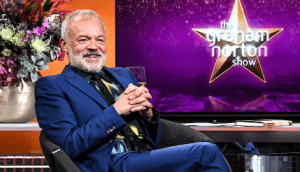
Norton’s career began in stand-up comedy and radio, where he honed his timing and audience awareness. His early television appearances capitalized on his ability to create a relaxed, playful environment, setting him apart from more formal hosts. This background in performance became a defining element of his hosting style.
His breakthrough came with “The Graham Norton Show,” where he introduced a format that encouraged spontaneous interaction among celebrity guests. Unlike traditional one-on-one interviews, Norton cultivated group dynamics, allowing for humor, unpredictability, and genuine moments. His screen presence energetic, inclusive, and self-aware transformed the talk show into a shared experience rather than a structured exchange.
Norton’s legacy lies in his reinvention of entertainment television. By prioritizing authenticity, humor, and chemistry, he has influenced a new generation of hosts and redefined audience expectations for celebrity engagement on screen.
Key Facts
- Full name of the subject: Graham William Walker
- Date of birth: 4 April 1963
- Place of birth: Dublin, Ireland
- Family background: Irish middle-class family
- Early childhood experiences: Exposure to performance and storytelling
- Education history: Central School of Speech and Drama
- Influences and mentors: Comedians and entertainers
- Career beginnings: Stand-up comedy and radio
- Major achievements: Host of “The Graham Norton Show”
- Challenges and obstacles faced: Transition from comedy to mainstream TV
- Turning points in life: Launch of flagship talk show
- Contributions to society: Modernizing entertainment television
- Personal life (marriage, children, relationships): Private
- Awards and recognitions: Multiple BAFTA awards
- Beliefs, values, or philosophy: Humor as connection
- Legacy and impact: Redefined celebrity talk show format
- Historical or cultural significance: Influential entertainment host
Notable Works: The Graham Norton Show
Controversies:
Graham Norton has occasionally been involved in public discussions regarding the boundaries of humor in entertainment television. The issue typically arises from comedic segments or remarks that some viewers perceive as controversial or culturally sensitive. Stakeholders include audiences, media regulators, and advocacy groups. Critics argue that certain jokes may cross lines of appropriateness, while supporters emphasize the importance of humor and context within entertainment programming. Norton has generally addressed such concerns by maintaining that his show is rooted in light-hearted engagement rather than offense. There have been no major regulatory sanctions, and these debates remain part of broader conversations about comedy and cultural sensitivity in modern media.
6. Anne Robinson
Sharp, uncompromising, and instantly recognizable, Anne Robinson built a career defined by authority and directness. Born in England, her early life was shaped by a disciplined upbringing that emphasized independence and resilience. Her academic background in journalism provided the foundation for a career that would span both reporting and presenting.
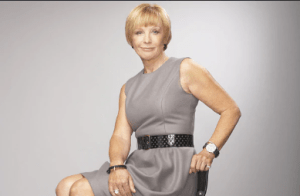
Robinson began her career in print journalism before transitioning into television, where her assertive style quickly set her apart. Early roles on programs such as “Watchdog” established her reputation as a consumer advocate unafraid to challenge institutions and authority. Her ability to confront issues directly became a hallmark of her on-screen identity.
Her breakthrough came with hosting “The Weakest Link,” a quiz show that transformed her into a cultural phenomenon. Robinson’s performance style cool, authoritative, and often confrontational redefined the role of the game show host. She turned the format into a psychological contest as much as a knowledge-based one, captivating audiences worldwide.
Robinson’s legacy lies in her reinvention of television authority. She demonstrated that a host could be both central to the narrative and a defining personality in their own right. Her influence continues to shape how presenters engage with contestants and audiences alike.
Key Facts
- Full name of the subject: Anne Josephine Robinson
- Date of birth: 26 September 1944
- Place of birth: England
- Family background: Middle-class British family
- Early childhood experiences: Strict upbringing emphasizing discipline
- Education history: Journalism-related studies
- Influences and mentors: Print journalists and broadcasters
- Career beginnings: Newspaper journalism
- Major achievements: Host of “The Weakest Link”
- Challenges and obstacles faced: Transition to television and public scrutiny
- Turning points in life: Success of “The Weakest Link”
- Contributions to society: Consumer advocacy journalism
- Personal life (marriage, children, relationships): Divorced, children
- Awards and recognitions: Broadcasting awards
- Beliefs, values, or philosophy: Directness and accountability
- Legacy and impact: Redefined game show hosting
- Historical or cultural significance: Iconic television personality
Notable Works: Watchdog, The Weakest Link
Controversies:
Anne Robinson has been the subject of sustained public debate regarding her confrontational hosting style, particularly on “The Weakest Link.” The issue centers on criticism that her sharp remarks toward contestants occasionally crossed into perceived harshness or humiliation. Stakeholders include viewers, media commentators, contestants, and broadcasting regulators. Critics argued that the tone could discourage participation or reinforce negative dynamics, while supporters contended that it was integral to the show’s format and appeal. Robinson maintained that her role was performative and aligned with the program’s design. No formal sanctions were imposed, and the show’s global success suggests widespread audience acceptance. The controversy remains a notable example of how tone and personality can shape audience perception in entertainment television.
7. Jeremy Clarkson
Bold, provocative, and unmistakably influential, Jeremy Clarkson has become one of the most recognizable figures in global entertainment television. Born in England, his early life was marked by an unconventional path into journalism, reflecting a personality that would later define his broadcasting career. His early experiences writing about motoring laid the groundwork for a distinctive voice that combined expertise with irreverence.

Clarkson’s career began in print journalism before transitioning into television, where he brought a unique blend of humor, opinion, and technical knowledge. His early appearances on motoring programs showcased a style that was unapologetically personal, challenging traditional notions of objectivity in presenting.
His breakthrough came with “Top Gear,” where he transformed a niche automotive program into a global phenomenon. Clarkson’s performance style bold, humorous, and often controversial redefined entertainment television, blending factual content with spectacle and personality-driven storytelling. His chemistry with co-presenters further amplified the show’s appeal.
Clarkson’s legacy is complex but undeniable. He has reshaped how specialized content can reach mass audiences, demonstrating the power of personality in broadcasting. His influence continues to be felt across entertainment formats worldwide.
Key Facts
- Full name of the subject: Jeremy Charles Robert Clarkson
- Date of birth: 11 April 1960
- Place of birth: Doncaster, England
- Family background: Middle-class British family
- Early childhood experiences: Non-traditional educational path
- Education history: Repton School
- Influences and mentors: Motoring journalists
- Career beginnings: Print journalism in automotive media
- Major achievements: Host of Top Gear
- Challenges and obstacles faced: Public controversies and media scrutiny
- Turning points in life: Success of Top Gear
- Contributions to society: Popularizing motoring journalism
- Personal life (marriage, children, relationships): Married, children
- Awards and recognitions: Broadcasting awards
- Beliefs, values, or philosophy: Entertainment through personality
- Legacy and impact: Redefined factual entertainment
- Historical or cultural significance: Global television icon
Notable Works: Top Gear, The Grand Tour
Controversies:
A major controversy involving Jeremy Clarkson relates to an incident with a production staff member during his tenure on Top Gear. The issue centered on a physical altercation following a dispute over production arrangements, which led to an internal investigation by the BBC. Stakeholders included Clarkson, the production team, BBC executives, and the viewing public. The investigation confirmed the incident, resulting in the non-renewal of Clarkson’s contract. While some supporters argued that his contributions to the show warranted leniency, others emphasized the importance of workplace standards and accountability. The outcome was definitive, marking a turning point in his career and leading to his subsequent work outside the BBC. The controversy significantly impacted public perception and highlighted issues of conduct within high-profile media productions.
8. Stephen Fry
A polymath of modern British culture, Stephen Fry has built a broadcasting career that seamlessly blends intellect, wit, and emotional depth. Born in London and raised in a middle-class family, Fry’s early life was marked by both academic brilliance and personal challenges. His formative years, including his education at Cambridge, placed him within a generation of performers and writers who would go on to reshape British media and comedy.
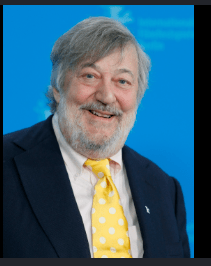
Fry’s career began in comedy alongside contemporaries such as Hugh Laurie, where his sharp intellect and linguistic dexterity quickly distinguished him. His transition into television hosting reflected a natural evolution one that allowed him to channel his curiosity and encyclopedic knowledge into engaging formats. Early appearances showcased a presenter who was as comfortable entertaining as he was educating.
His breakthrough as a host came with “QI,” a quiz show that redefined the genre by prioritizing curiosity over correctness. Fry’s performance style erudite, playful, and inclusive created an atmosphere where knowledge became accessible and enjoyable. He elevated the role of the host into that of a guide, leading audiences through complex ideas with clarity and humor.
Fry’s legacy extends beyond television into literature, advocacy, and public discourse. As a host, he has demonstrated that intelligence and entertainment are not mutually exclusive, influencing a generation of broadcasters who seek to combine depth with accessibility. His impact on modern television lies in his ability to intellectualize entertainment without alienating audiences.
Key Facts
- Full name of the subject: Stephen John Fry
- Date of birth: 24 August 1957
- Place of birth: London, England
- Family background: Middle-class British family
- Early childhood experiences: Academic excellence alongside personal challenges
- Education history: University of Cambridge
- Influences and mentors: British comedians and writers
- Career beginnings: Comedy and acting
- Major achievements: Host of “QI”
- Challenges and obstacles faced: Personal struggles and public scrutiny
- Turning points in life: Success in television hosting
- Contributions to society: Advocacy and intellectual discourse
- Personal life (marriage, children, relationships): Married
- Awards and recognitions: Multiple BAFTA awards
- Beliefs, values, or philosophy: Intellectual curiosity and openness
- Legacy and impact: Redefined quiz show hosting
- Historical or cultural significance: Influential cultural figure
Notable Works: QI, documentary series, literary works
Controversies:
Stephen Fry has been involved in public debates concerning remarks made on social and political issues, particularly those expressed in interviews and public forums. The issue centers on criticism that certain statements have been interpreted as controversial or polarizing within broader societal debates. Stakeholders include media commentators, advocacy groups, audiences, and Fry himself. Critics have occasionally challenged the framing or tone of his views, while supporters emphasize his right to intellectual expression and context-driven commentary. Fry has often clarified his positions in subsequent statements, highlighting nuance and intent. No formal sanctions have been imposed, and the debates remain part of ongoing public discourse about free speech, celebrity influence, and the responsibilities of public intellectuals. The impact has reinforced Fry’s role as a figure who operates at the intersection of entertainment and societal dialogue.
9. Cilla Black
From Liverpool’s vibrant music scene to the pinnacle of British television, Cilla Black crafted a career defined by charisma and connection. Born Priscilla White, her early life was shaped by working-class roots and a strong sense of community. Her initial success as a singer provided the foundation for a transition into television that would ultimately define her legacy.

Black’s entry into broadcasting was marked by her natural warmth and relatability. Unlike more formal presenters, she brought a sense of familiarity that resonated deeply with audiences. Her early television roles capitalized on her musical fame, but it was her ability to connect emotionally with viewers that set her apart.
Her breakthrough came with hosting iconic shows such as “Blind Date” and “Surprise Surprise.” Black’s performance style empathetic, engaging, and effortlessly personable transformed these programs into cultural institutions. She created spaces where ordinary people could share extraordinary moments, reinforcing television’s role as a medium of connection.
Black’s legacy lies in her embodiment of accessibility in broadcasting. She demonstrated that television hosts could serve as emotional anchors for audiences, bridging the gap between entertainment and everyday life. Her influence continues to shape how presenters engage with viewers on a personal level.
Key Facts
- Full name of the subject: Priscilla Maria Veronica White
- Date of birth: 27 May 1943
- Place of birth: Liverpool, England
- Family background: Working-class British family
- Early childhood experiences: Grew up in a close-knit community
- Education history: Secondary education in Liverpool
- Influences and mentors: Music industry figures
- Career beginnings: Singing career
- Major achievements: Host of Blind Date and Surprise Surprise
- Challenges and obstacles faced: Transition from music to television
- Turning points in life: Success in television hosting
- Contributions to society: Entertainment and public engagement
- Personal life (marriage, children, relationships): Married, children
- Awards and recognitions: BAFTA awards
- Beliefs, values, or philosophy: Connection and empathy
- Legacy and impact: Iconic British TV host
- Historical or cultural significance: Shaped entertainment television
Notable Works: Blind Date, Surprise Surprise
Controversies:
Cilla Black was occasionally at the center of public discussion regarding her perceived distance from her Liverpool roots after achieving national fame. The issue emerged in media narratives suggesting that her lifestyle and public persona had evolved in ways that differed from her early working-class identity. Stakeholders included fans, media commentators, and regional communities. Critics framed the discussion as a question of authenticity, while supporters argued that professional success naturally brings changes in lifestyle and perspective. Black herself addressed such perceptions by reaffirming her connection to her origins. There were no formal disputes or institutional actions, and the matter remained largely within the realm of public perception. Its impact reflects broader societal conversations about class, identity, and success in British culture.
10. Claudia Winkleman
Distinctive, enigmatic, and effortlessly modern, Claudia Winkleman has become one of the defining faces of contemporary British television. Born in London into a media-connected family, her early life provided both exposure to the industry and the independence to forge her own path. Her education and early experiences cultivated a confidence that would later translate into a unique on-screen persona.

Winkleman’s career began in journalism and entertainment reporting, where she developed a voice that was both conversational and unconventional. Her early television appearances revealed a presenter unafraid to challenge traditional norms, embracing humor, self-awareness, and a distinctive visual style. This individuality quickly became a defining feature of her brand.
Her breakthrough came with high-profile hosting roles on programs such as “Strictly Come Dancing” and “The Traitors.” Winkleman’s performance style witty, slightly irreverent, yet deeply engaging resonates with modern audiences seeking authenticity. She balances entertainment with subtle emotional intelligence, allowing her to navigate both lighthearted and high-stakes moments with ease.
Winkleman’s legacy reflects the evolution of television hosting in the digital age. She represents a shift toward personality-driven broadcasting, where individuality and relatability are as important as technical skill. Her influence continues to shape contemporary presenting styles across global media.
Key Facts
- Full name of the subject: Claudia Anne Winkleman
- Date of birth: 15 January 1972
- Place of birth: London, England
- Family background: Media-oriented family
- Early childhood experiences: Exposure to television and journalism
- Education history: University of Cambridge
- Influences and mentors: Broadcasters and journalists
- Career beginnings: Entertainment reporting
- Major achievements: Host of Strictly Come Dancing and The Traitors
- Challenges and obstacles faced: Establishing a unique identity in media
- Turning points in life: Rise to prime-time hosting roles
- Contributions to society: Entertainment and cultural engagement
- Personal life (marriage, children, relationships): Married, children
- Awards and recognitions: BAFTA awards
- Beliefs, values, or philosophy: Authenticity and individuality
- Legacy and impact: Modern television icon
- Historical or cultural significance: Represents evolution of TV hosting
Notable Works: Strictly Come Dancing, The Traitors
Controversies:
Claudia Winkleman has been involved in public discussions following a personal family incident related to a product safety issue involving a cosmetic item. The matter gained attention when it highlighted concerns about consumer product regulation and safety standards. Stakeholders included Winkleman, product manufacturers, regulatory bodies, and the public. While the incident was personal in nature, it sparked broader debate about safety oversight and consumer awareness. Winkleman addressed the issue publicly, contributing to increased awareness without attributing broader allegations beyond the specific case. No misconduct was associated with her, and the discussion remained focused on regulatory and safety considerations. The impact extended into heightened public awareness of consumer protection issues.
Notable Mentions:
Jeremy Paxman
Sir Trevor McDonald
Fiona Bruce
Davina McCall
Jonathan Ross
Bruce Forsyth
Esther Rantzen
Gordon Ramsay
Louis Theroux
Ant & Dec