
Top 10 Telugu Movie (India) Legends of the 90s
Top 10 Telugu Movie (India) Legends of the 90s
In This Content
Quick List
Chiranjeevi
Nagarjuna Akkineni
Venkatesh Daggubati
Nandamuri Balakrishna
Mohan Babu
Soundarya
Ramya Krishnan
Vijayashanti
Sridevi
Brahmanandam
1. Chiranjeevi
Chiranjeevi entered the 1990s already positioned as one of Telugu cinema’s most dynamic stars, yet the decade transformed him into a cultural institution. Born Konidela Siva Sankara Vara Prasad, his early life in Andhra Pradesh was shaped by frequent relocations due to his father’s police service. Exposure to diverse communities and cultural environments refined his observational skills and contributed to his adaptability as a performer. His early training at the Madras Film Institute sharpened his understanding of screen craft, helping him develop a performance style rooted in both physical expressiveness and emotional authenticity.

His career beginnings in the late 1970s and 1980s showcased his willingness to experiment with anti-hero roles, action dramas, and socially conscious narratives. By the dawn of the 1990s, Chiranjeevi had mastered the blend of mass appeal and acting depth. His performances combined high-energy dance, controlled dramatic intensity, and charismatic screen command. This versatility allowed him to dominate box office trends while maintaining credibility among critics. Films during this period elevated him from star to megastar, particularly through narratives addressing social justice, family values, and aspirational mobility.
The breakthrough phase of the 1990s included commercially successful films that showcased his range of romantic, action, and socio-political themes. His performances reflected evolving audience expectations, integrating larger-than-life heroism with grounded emotional storytelling. He became a benchmark for mass entertainers, influencing costume trends, dance choreography, and narrative formulas across Telugu cinema. His screen persona represented the working-class hero who rises through determination, a theme that resonated strongly with audiences.
By the end of the decade, Chiranjeevi’s legacy extended beyond cinema into philanthropy and cultural influence. He redefined the star system, setting new standards for commercial success and fan engagement. His global diaspora appeal further strengthened Telugu cinema’s international reach, solidifying his status as one of the defining legends of the 1990s.
Key Facts
- Full name of the subject: Konidela Siva Sankara Vara Prasad (Chiranjeevi)
- Date of birth: August 22, 1955
- Place of birth: Mogalthur, Andhra Pradesh, India
- Family background: Son of a police constable; part of a middle-class family
- Early childhood experiences: Frequent relocations across Andhra Pradesh
- Education history: Diploma in acting from Madras Film Institute
- Influences and mentors: Senior Telugu actors and directors of 1970s era
- Career beginnings: Debut in late 1970s Telugu films
- Major achievements: Became dominant Telugu megastar in 1990s
- Challenges and obstacles faced: Early typecasting and competitive industry
- Turning points in life: Blockbuster successes in early 1990s
- Contributions to society: Philanthropy and charitable trust initiatives
- Personal life (marriage, children, relationships): Married to Surekha; three children
- Awards and recognitions: Multiple Filmfare Awards South, Padma Bhushan
- Beliefs, values, or philosophy: Hard work and social responsibility
- Legacy and impact: Redefined commercial Telugu cinema
- Historical or cultural significance: Megastar of 1990s Telugu film industry
Notable Works: Gharana Mogudu, Gang Leader, Jagadeka Veerudu Athiloka Sundari, Muta Mestri, Indra (legacy influence)
Controversies: One notable controversy involved debates surrounding Chiranjeevi’s dominance in the Telugu film industry and allegations that his star power influenced casting and production decisions. The issue emerged during the early 1990s when his box office success led producers to structure projects around his persona. Critics argued this concentration of influence limited opportunities for emerging actors, while supporters emphasized that his commercial reliability stabilized industry economics. Chiranjeevi clarified in interviews that casting decisions were made by producers and directors, not him, and highlighted his support for new talent. No formal industry ruling occurred, and the debate remained within public discourse. The controversy ultimately reinforced his market leadership while also prompting discussions about balancing star-driven cinema with broader talent development.
2. Nagarjuna Akkineni
Nagarjuna Akkineni entered the 1990s carrying the legacy of the illustrious Akkineni family while forging his own distinct identity. Born into a cinematic household, he was exposed early to filmmaking processes and storytelling traditions. His upbringing in Chennai and Hyderabad provided both cultural grounding and industry access. Educated in engineering before pursuing acting, Nagarjuna brought intellectual discipline to his craft, which later translated into controlled and understated performances.
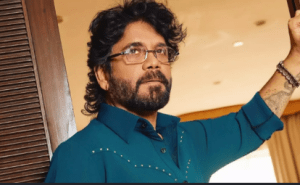
His early career in the late 1980s established him as a romantic hero with refined screen presence. By the 1990s, Nagarjuna diversified into action and devotional roles, demonstrating remarkable adaptability. His acting depth became evident in performances that balanced sophistication with emotional resonance. Unlike more flamboyant contemporaries, Nagarjuna favored subtle expressions and calm dialogue delivery, creating a modern urban hero image that appealed to younger audiences.
The breakthrough period of the 1990s included films that expanded his range into experimental narratives and mass entertainers. He successfully transitioned between commercial cinema and content-driven projects. His performances reflected maturity and narrative intelligence, often portraying characters with moral complexity. This versatility helped him maintain relevance in a competitive star-driven industry.
By the end of the decade, Nagarjuna’s legacy had been cemented as a bridge between classical Telugu cinematic traditions and contemporary storytelling. His influence extended to production ventures and support for innovative filmmaking. He remains a defining figure whose 1990s contributions shaped evolving hero archetypes.
Key Facts
- Full name of the subject: Nagarjuna Akkineni
- Date of birth: August 29, 1959
- Place of birth: Chennai, Tamil Nadu, India
- Family background: Son of actor Akkineni Nageswara Rao
- Early childhood experiences: Exposure to film industry environment
- Education history: Engineering degree from USA
- Influences and mentors: Akkineni Nageswara Rao and senior directors
- Career beginnings: Debut in Telugu cinema in mid-1980s
- Major achievements: Established leading star in 1990s
- Challenges and obstacles faced: Balancing legacy expectations
- Turning points in life: Success of major 1990s films
- Contributions to society: Film production and philanthropy
- Personal life (marriage, children, relationships): Married to Amala Akkineni; children include Naga Chaitanya
- Awards and recognitions: Filmfare Awards South, Nandi Awards
- Beliefs, values, or philosophy: Innovation within tradition
- Legacy and impact: Modernized hero image in Telugu cinema
- Historical or cultural significance: Key 1990s romantic-action star
Notable Works: Shiva, Hello Brother, Ninne Pelladata, Annamayya
Controversies: Nagarjuna faced public discussion regarding his experimentation with unconventional scripts during the 1990s, which some critics argued deviated from commercial expectations. The debate emerged when he chose content-driven films alongside mass entertainers. Producers concerned about box office risk questioned the strategy, while critics praised his willingness to innovate. Nagarjuna stated that diversification strengthened the industry and allowed creative exploration. No institutional action followed, and the issue remained interpretive. The controversy ultimately enhanced his reputation as an actor willing to balance commerce with artistic ambition.
3. Venkatesh Daggubati
Venkatesh Daggubati’s rise in the 1990s represented the evolution of the family-oriented hero in Telugu cinema. Born into the influential Daggubati family, he grew up surrounded by filmmaking. His father, producer D. Ramanaidu, provided early exposure to production dynamics, shaping Venkatesh’s understanding of cinematic storytelling. Educated in business management, he approached acting with analytical discipline.

His career beginnings in the late 1980s established him as a relatable performer capable of balancing humor and drama. Entering the 1990s, Venkatesh refined his screen presence, emphasizing emotional sincerity. His performances often portrayed compassionate protagonists navigating familial and societal challenges. This authenticity resonated strongly with middle-class audiences.
The breakthrough phase included several commercially successful family dramas and romantic films. Venkatesh’s acting depth was evident in his ability to shift seamlessly between comedy and intense emotional scenes. He became known for portraying morally grounded characters, reinforcing the importance of values within entertainment narratives.
By the end of the decade, Venkatesh had solidified his reputation as the “family hero” of Telugu cinema. His legacy rests on redefining commercial storytelling through emotional realism. His influence continues to shape narratives centered on relationships and social harmony.
Key Facts
- Full name of the subject: Venkatesh Daggubati
- Date of birth: December 13, 1960
- Place of birth: Chennai, Tamil Nadu, India
- Family background: Son of producer D. Ramanaidu
- Early childhood experiences: Exposure to film production environment
- Education history: MBA from USA
- Influences and mentors: D. Ramanaidu and senior directors
- Career beginnings: Debut in late 1980s Telugu cinema
- Major achievements: Dominant family drama star of 1990s
- Challenges and obstacles faced: Competition among top stars
- Turning points in life: Success of family-oriented blockbusters
- Contributions to society: Philanthropy and charitable initiatives
- Personal life (marriage, children, relationships): Married; children
- Awards and recognitions: Nandi Awards, Filmfare Awards South
- Beliefs, values, or philosophy: Emphasis on family values
- Legacy and impact: Defined family hero archetype
- Historical or cultural significance: Popular 1990s Telugu cinema icon
Notable Works: Bobbili Raja, Preminchukundam Raa, Dharma Chakram, Raja
Controversies: A discussion arose regarding Venkatesh’s frequent collaborations with family-backed production houses, with some critics suggesting industry favoritism. The issue emerged as multiple successful films were produced under associated banners. Stakeholders included independent producers, critics, and fans. Supporters argued that performance quality justified casting, while critics emphasized the importance of equal opportunities. Venkatesh clarified that he evaluated scripts based on merit and worked with various production teams. No formal industry ruling occurred, and the debate remained speculative. The controversy had limited impact and did not affect his sustained popularity.
4. Nandamuri Balakrishna
Born into one of the most influential film families in Indian cinema, Nandamuri Balakrishna’s early life was shaped by the towering legacy of his father, legendary actor and politician N. T. Rama Rao. Growing up in a household where cinema was intertwined with public service, Balakrishna absorbed both theatrical grandeur and disciplined professionalism. His formative years exposed him to mythological storytelling, a genre that would later become one of his defining strengths.

Balakrishna’s career beginnings came as a child artist, but his transition into full-fledged hero roles in the 1980s laid the groundwork for his 1990s dominance. During this decade, he developed a distinctive performance style characterized by powerful dialogue delivery, dramatic gestures, and intense emotional expression. His screen presence was particularly suited for historical and mythological narratives, where his commanding voice and regal bearing elevated the cinematic spectacle.
The breakthrough phase of the 1990s saw Balakrishna headline several major commercial successes, consolidating his position as a mass-action and mythological icon. His portrayals often blended heroic valor with emotional vulnerability, resonating with audiences across rural and urban demographics. His collaborations with prominent directors further refined his persona as a larger-than-life hero, capable of embodying divine, royal, and warrior-like characters.
Balakrishna’s cultural influence extended beyond cinema into regional identity politics and cultural pride. His films reinforced traditional values, heroic archetypes, and Telugu cultural heritage. By the late 1990s, he had emerged not only as a box office draw but also as a custodian of mythological storytelling traditions, leaving a lasting imprint on Telugu cinema’s narrative style.
Key Facts
- Full name of the subject: Nandamuri Balakrishna
- Date of birth: June 10, 1960
- Place of birth: Madras (now Chennai), Tamil Nadu, India
- Family background: Son of legendary actor and politician N. T. Rama Rao
- Early childhood experiences: Grew up in film-centric environment surrounded by actors and filmmakers
- Education history: Commerce degree from Nizam College, Hyderabad
- Influences and mentors: N. T. Rama Rao, Dasari Narayana Rao
- Career beginnings: Child artist appearances before transitioning to lead roles
- Major achievements: Leading box office star of 1990s Telugu cinema
- Challenges and obstacles faced: Comparisons with father’s legacy
- Turning points in life: Major 1990s commercial hits establishing independent identity
- Contributions to society: Philanthropy and public service initiatives
- Personal life (marriage, children, relationships): Married with children
- Awards and recognitions: Multiple state awards and film honors
- Beliefs, values, or philosophy: Strong emphasis on tradition and cultural heritage
- Legacy and impact: Mythological and mass-action icon
- Historical or cultural significance: Preserved heroic archetypes in Telugu cinema
Notable Works: “Aditya 369,” “Bhairava Dweepam,” “Samarasimha Reddy,” “Rowdy Inspector”
Controversies: A widely discussed controversy involved an incident related to a reported altercation at his residence, which became a public debate about celebrity conduct. The issue emerged following reports that Balakrishna had discharged a firearm during a dispute. Key stakeholders included law enforcement authorities, media outlets, and the film industry. Critics raised concerns about accountability, while supporters emphasized incomplete reporting. Official investigations documented the incident, though interpretations varied across media narratives. The controversy temporarily affected public perception but did not significantly derail his career trajectory, with his fan base remaining largely supportive.
5. Mohan Babu
Mohan Babu’s early life reflected resilience and determination. Born into a modest family, he entered the film industry through perseverance rather than legacy. His initial years were marked by character roles, where he developed a distinctive acting style grounded in sharp dialogue delivery and authoritative screen presence.

During the 1990s, Mohan Babu transitioned into a formidable leading actor and producer. His performances were defined by a commanding voice and nuanced portrayals of complex personalities. He excelled in roles that blended authority with emotional intensity, often portraying patriarchs, anti-heroes, and morally layered characters.
His breakthrough in the 1990s came through films that highlighted his versatility. Unlike conventional romantic heroes, Mohan Babu built a reputation as a performer driven by substance. His productions also contributed to shaping industry standards, as he took creative risks and encouraged unconventional narratives.
Mohan Babu’s legacy rests on his ability to redefine heroism. He represented intellect-driven characters and expanded the range of mainstream storytelling. His contributions to education and industry mentorship further cemented his influence beyond acting.
Key Facts
- Full name of the subject: Manchu Bhakthavatsalam Naidu (Mohan Babu)
- Date of birth: March 19, 1952
- Place of birth: Modhugulapalem, Andhra Pradesh, India
- Family background: Middle-class agricultural family
- Early childhood experiences: Exposure to rural lifestyle and theatre
- Education history: Physical education training
- Influences and mentors: Dasari Narayana Rao
- Career beginnings: Assistant director and supporting roles
- Major achievements: Leading actor and producer in 1990s
- Challenges and obstacles faced: Struggled to break into lead roles
- Turning points in life: Establishment as independent producer
- Contributions to society: Educational institutions founder
- Personal life (marriage, children, relationships): Married with children in film industry
- Awards and recognitions: Filmfare Awards South and others
- Beliefs, values, or philosophy: Discipline and hard work
- Legacy and impact: Character-driven hero archetype
- Historical or cultural significance: Expanded diversity of leading roles
Notable Works: “Assembly Rowdy,” “Pedarayudu,” “Major Chandrakanth”
Controversies: A notable controversy involved disputes with industry bodies regarding remuneration and production practices. The debate emerged when Mohan Babu publicly criticized certain distribution systems. Producers’ associations and media commentators were key stakeholders. Critics argued his stance disrupted industry harmony, while supporters viewed it as advocacy for fair compensation. No formal regulatory action followed, and the matter gradually subsided, though it influenced discussions on actor-producer relations.
6. Soundarya
Soundarya’s early life was shaped by academic ambition before cinema redirected her path. Born into a cultured family, she initially pursued medicine, but her natural screen charisma drew her into films. Her transition into acting during the early 1990s marked the arrival of a performer known for grace and emotional depth.
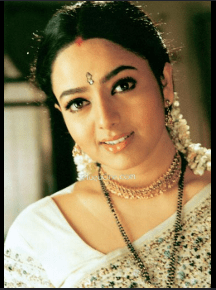
Her career beginnings were modest, yet she quickly gained recognition for her expressive acting style. Soundarya excelled in portraying strong yet relatable female characters. Her performances emphasized emotional authenticity rather than glamour, making her a favorite among family audiences.
The breakthrough phase of the 1990s saw her collaborate with leading actors and directors, delivering memorable performances that balanced commercial appeal with artistic integrity. Her roles often depicted independent women navigating social and familial complexities, contributing to evolving representations of female characters in Telugu cinema.
Soundarya’s legacy lies in her dignified screen presence and commitment to meaningful storytelling. Even beyond the 1990s, her influence shaped expectations for performance-driven roles for actresses in mainstream cinema.
Key Facts
- Full name of the subject: Sowmya Sathyanarayana (Soundarya)
- Date of birth: July 18, 1972
- Place of birth: Mulbagal, Karnataka, India
- Family background: Educated family with professional background
- Early childhood experiences: Academic-focused upbringing
- Education history: Studied medicine before acting career
- Influences and mentors: Senior actresses and directors
- Career beginnings: Early 1990s Telugu films
- Major achievements: Leading actress of family dramas
- Challenges and obstacles faced: Balancing academics and acting
- Turning points in life: Major commercial successes in 1990s
- Contributions to society: Philanthropy and social work
- Personal life (marriage, children, relationships): Married in early 2000s
- Awards and recognitions: Multiple film awards
- Beliefs, values, or philosophy: Emphasis on meaningful cinema
- Legacy and impact: Elevated female roles
- Historical or cultural significance: Symbol of graceful acting
Notable Works: “Ammoru,” “Rajendrudu Gajendrudu,” “Pavitra Bandham”
Controversies: Soundarya’s career remained largely free of major controversies; however, occasional debates emerged regarding remuneration parity. The issue surfaced when industry insiders discussed pay gaps between male and female stars. Stakeholders included producers and media commentators. While no formal dispute occurred, the discussion highlighted systemic disparities. The debate contributed to broader conversations about gender equality in remuneration.
7. Ramya Krishnan
Ramya Krishnan’s early life in Chennai exposed her to classical dance and performance arts. This training influenced her expressive acting style. Entering films at a young age, she gradually developed versatility across multiple languages, including Telugu.

Her early career featured supporting roles, but the 1990s marked her transformation into a commanding performer. Ramya Krishnan displayed exceptional range, seamlessly transitioning between glamorous characters, dramatic roles, and negative shades. Her ability to dominate screen space made her one of the most sought-after actresses of the decade.
Her breakthrough performances during the 1990s highlighted her bold character choices. She portrayed strong-willed women with confidence, challenging traditional stereotypes. Her roles often balanced sensuality with authority, redefining female screen presence.
Ramya Krishnan’s legacy lies in her versatility and fearless approach to character selection. Her contributions helped expand narrative possibilities for female performers in Telugu cinema.
Key Facts
- Full name of the subject: Ramya Krishnan
- Date of birth: September 15, 1970
- Place of birth: Chennai, Tamil Nadu, India
- Family background: Arts-oriented family
- Early childhood experiences: Training in classical dance
- Education history: Formal schooling in Chennai
- Influences and mentors: Senior filmmakers and choreographers
- Career beginnings: Supporting roles in late 1980s
- Major achievements: Versatile leading actress in 1990s
- Challenges and obstacles faced: Typecasting risks
- Turning points in life: Bold role selections
- Contributions to society: Television and film mentorship
- Personal life (marriage, children, relationships): Married with children
- Awards and recognitions: Filmfare Awards South
- Beliefs, values, or philosophy: Professional adaptability
- Legacy and impact: Expanded female character spectrum
- Historical or cultural significance: Redefined glamour with substance
Notable Works: “Allari Priyudu,” “Muddula Priyudu,” “Narasimha”
Controversies: A minor controversy involved criticism regarding her portrayal of bold characters, which sparked debates about representation and morality. Conservative commentators questioned the impact of such roles, while filmmakers defended creative freedom. No institutional action followed, and the debate contributed to evolving norms regarding female character portrayal.
8. Vijayashanti
Vijayashanti’s rise in Telugu cinema during the 1990s marked a decisive shift in how female protagonists were written and perceived. Born into a traditional Telugu-speaking family, she developed an early sense of discipline and independence. Her entry into cinema was initially shaped by commercial opportunities, but her innate intensity and commanding presence quickly set her apart from her contemporaries. Even in her early roles, she projected authority and emotional conviction, qualities that would define her career in the decade.

Her career beginnings in the late 1980s evolved rapidly into leading roles where she became known for strong, action-oriented female characters. By the 1990s, Vijayashanti had redefined the archetype of the Telugu heroine, moving beyond ornamental roles into fully empowered protagonists. Her screen presence combined physical dynamism with emotional gravitas, allowing her to portray police officers, reformers, and resilient women confronting systemic injustice.
Her breakthrough came through a series of socially charged action films that positioned her as a “woman superstar,” a rare distinction in Indian cinema at the time. These performances challenged conventional gender roles and expanded audience expectations of female-led narratives. She became a symbol of empowerment, particularly for portraying women who resisted oppression and asserted agency in male-dominated environments.
By the end of the 1990s, Vijayashanti’s legacy was firmly established as a pioneer of strong female-led commercial cinema. Her influence extended beyond film into public life, as she later transitioned into politics. Her 1990s body of work remains a benchmark for female-centric action storytelling in Telugu cinema.
Key Facts
- Full name of the subject: Vijayashanti
- Date of birth: June 24, 1966
- Place of birth: Hyderabad, Telangana, India
- Family background: Traditional Telugu-speaking family
- Early childhood experiences: Interest in performing arts and discipline-oriented upbringing
- Education history: School education in Hyderabad
- Influences and mentors: Directors and action choreographers of 1980s Telugu cinema
- Career beginnings: Supporting roles in late 1970s and early 1980s
- Major achievements: Established as “Lady Superstar” in 1990s Telugu cinema
- Challenges and obstacles faced: Gender bias in action-oriented roles
- Turning points in life: Success of female-led action films
- Contributions to society: Later political involvement and public service
- Personal life (marriage, children, relationships): Married
- Awards and recognitions: National Film Award, Filmfare Awards South
- Beliefs, values, or philosophy: Women empowerment through strong narratives
- Legacy and impact: Redefined female action hero in Indian cinema
- Historical or cultural significance: Pioneer of women-led mainstream action films
Notable Works: “Kartavyam,” “Osey Ramulamma,” “Police Lockup”
Controversies: Vijayashanti faced political and cinematic debate regarding her transition from film stardom to active political participation. The issue emerged when critics questioned whether her cinematic “rebel woman” image influenced electoral perception beyond policy substance. Stakeholders included political parties, media commentators, and the film industry. Critics argued that her on-screen persona blurred lines between fiction and political messaging, while supporters maintained that her public image reflected genuine advocacy for social issues. Vijayashanti clarified that her political decisions were independent of her film roles. No formal institutional inquiry occurred, and the matter remained within public discourse. The controversy ultimately highlighted the intersection between cinema celebrity and political identity in South India.
9. Sridevi
Sridevi entered the 1990s already established as one of India’s most celebrated actresses, with a career spanning multiple languages and industries. Born in Tamil Nadu, she began acting as a child artist, displaying extraordinary emotional expressiveness from an early age. Her transition into lead roles was marked by versatility, and by the time she reached Telugu cinema prominence, she had already mastered the art of balancing glamour with performance depth.

Her career in the 1990s reflected maturity and refinement. Sridevi’s screen presence was magnetic, combining expressive eyes, impeccable timing, and effortless command over both comedy and drama. She was equally convincing in lighthearted entertainers and emotionally intense roles, making her one of the most bankable and respected actresses of the decade.
Her breakthrough in Telugu cinema during this period reinforced her pan-Indian appeal. She collaborated with leading stars and directors, delivering performances that elevated commercial films into emotionally resonant experiences. Her ability to portray vulnerability alongside strength made her characters memorable and influential.
By the end of the decade, Sridevi’s legacy was firmly established as a transcendent performer whose influence extended beyond regional boundaries. She helped redefine the standards of Indian female stardom, inspiring generations of actresses across industries.
Key Facts
- Full name of the subject: Shree Amma Yanger Ayyapan (Sridevi)
- Date of birth: August 13, 1963
- Place of birth: Sivakasi, Tamil Nadu, India
- Family background: Tamil-speaking family
- Early childhood experiences: Began acting as a child artist
- Education history: Limited formal education due to early film career
- Influences and mentors: Directors across Tamil, Telugu, and Hindi cinema
- Career beginnings: Child actor in South Indian films
- Major achievements: Pan-Indian superstar across multiple film industries
- Challenges and obstacles faced: Early fame and industry pressure
- Turning points in life: Transition to leading lady roles in multiple languages
- Contributions to society: Cultural influence in Indian cinema
- Personal life (marriage, children, relationships): Married Boney Kapoor; two daughters
- Awards and recognitions: Padma Shri, multiple Filmfare Awards
- Beliefs, values, or philosophy: Commitment to artistic excellence
- Legacy and impact: Icon of Indian cinema across generations
- Historical or cultural significance: First female pan-Indian superstar
Notable Works: “Kshana Kshanam,” “Jagadeka Veerudu Athiloka Sundari,” “Chandni”
Controversies: Sridevi was briefly involved in a widely publicized media controversy concerning contractual and production disputes in the early 1990s. The issue arose when competing production houses reportedly disputed scheduling and remuneration agreements. Stakeholders included producers, legal representatives, and film unions. Media coverage amplified speculation, though much of the dispute was resolved privately. Sridevi maintained a neutral public stance, emphasizing professionalism. No formal legal ruling significantly altered her career trajectory. The episode remained largely industry-driven and had minimal long-term impact on her reputation.
10. Brahmanandam
Brahmanandam’s journey in Telugu cinema represents one of the most remarkable success stories in Indian comedic performance. Born in a modest family in Andhra Pradesh, he initially pursued a career in academia, working as a lecturer before entering the film industry. His early life reflected discipline and intellectual curiosity, which later contributed to the precision of his comedic timing.

His career beginnings were humble, with small supporting roles that gradually showcased his natural talent for humor. By the 1990s, Brahmanandam had become an indispensable part of Telugu cinema, redefining the role of comedy within mainstream storytelling. His facial expressions, improvisational skills, and impeccable timing allowed him to elevate even brief appearances into memorable sequences.
His breakthrough came as directors began integrating comedy tracks as essential components of commercial films. Brahmanandam’s performances became a consistent highlight, often providing emotional relief while simultaneously advancing narrative engagement. His versatility allowed him to perform slapstick, situational, and character-based comedy with equal mastery.
By the end of the decade, Brahmanandam had established himself as the most recognizable comedic actor in Telugu cinema history. His influence reshaped the structure of mainstream films, ensuring comedy became an integral narrative pillar rather than a secondary addition.
Key Facts
- Full name of the subject: Brahmanandam Kanneganti
- Date of birth: February 1, 1956
- Place of birth: Sattenapalle, Andhra Pradesh, India
- Family background: Middle-class family
- Early childhood experiences: Strong academic upbringing
- Education history: Master’s degree in Telugu literature
- Influences and mentors: Stage comedians and directors
- Career beginnings: College lecturer before film entry
- Major achievements: Record-breaking number of film appearances
- Challenges and obstacles faced: Transition from academia to cinema
- Turning points in life: Breakthrough comedic roles in 1990s
- Contributions to society: Entertainment and cultural influence
- Personal life (marriage, children, relationships): Married with children
- Awards and recognitions: Padma Shri, Filmfare Awards South
- Beliefs, values, or philosophy: Discipline in performance craft
- Legacy and impact: Redefined Indian cinematic comedy
- Historical or cultural significance: Greatest comedic icon of Telugu cinema
Notable Works: “Money,” “Hello Brother,” “Anaganaga Oka Roju,” “Aha Naa Pellanta”
Controversies: Brahmanandam’s career has been largely free of major controversies; however, periodic industry discussions have questioned the overuse of comedic “track roles” in 1990s Telugu cinema, where his appearances became highly formulaic in commercial films. The issue emerged as critics debated whether comedy was becoming repetitive due to structural reliance on star comedians. Stakeholders included directors, writers, and audiences. Brahmanandam himself maintained that he worked within the scripts provided and had limited control over narrative structure. No formal dispute or institutional intervention occurred. The discussion ultimately led to gradual evolution in how comedy was integrated into mainstream storytelling.
Notable Mentions:
Jagapathi Babu
Rajendra Prasad
Srikanth
Roja
Meena
Nagma
Suman
Bhanupriya
Tabu
J. D. Chakravarthy