Top 10 People Who Mastered Multiple Skills
Top 10 People Who Mastered Multiple Skills
In This Content
1. Leonardo da Vinci
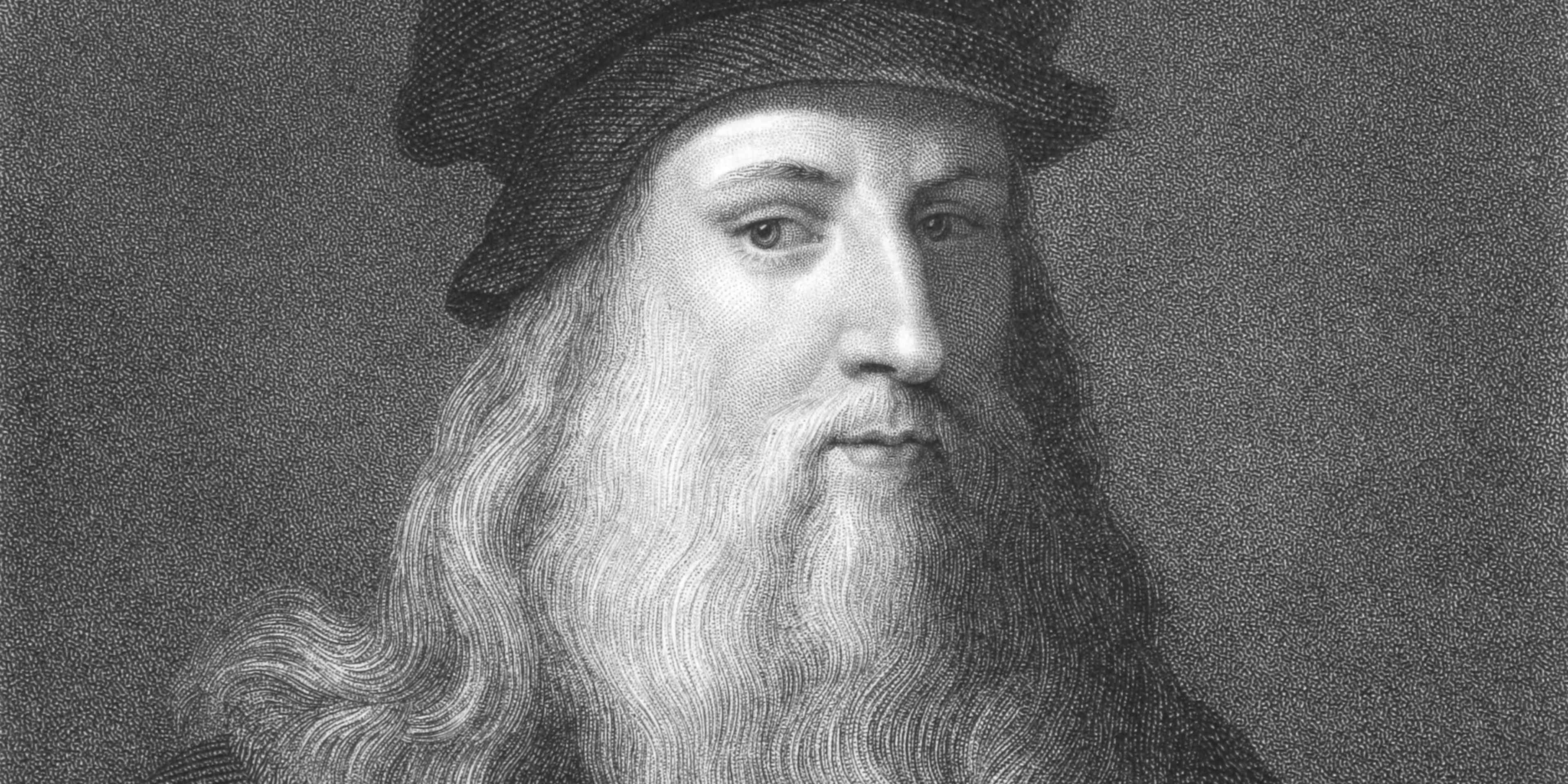
Leonardo da Vinci stands as the archetype of the “universal genius,” a figure whose mastery of multiple disciplines reshaped the boundaries of human capability. Born in 1452 in the Tuscan town of Vinci, he was shaped by illegitimacy and limited formal education, conditions that paradoxically freed him from rigid academic structures. Instead, he developed an observational intelligence rooted in nature, anatomy, engineering, and artistic form.
His career began in the workshop of Andrea del Verrocchio in Florence, where he trained in painting, sculpture, and mechanical arts. This apprenticeship exposed him to a fusion of artistic craftsmanship and technical design, forming the foundation of his interdisciplinary identity. Early works revealed an extraordinary ability to merge scientific observation with emotional depth in visual storytelling.
His breakthrough came with masterpieces such as The Last Supper and the Mona Lisa, in which composition, anatomy, and psychological subtlety converged into unprecedented artistic expression. At the same time, his notebooks revealed engineering concepts far ahead of his era, flying machines, hydraulic systems, and anatomical studies that would not be fully understood for centuries.
By the late Renaissance period, Leonardo had become a symbol of intellectual expansion without boundaries. His influence extended beyond art into science, engineering, and philosophy, redefining what it meant to be a creator in the modern sense.
His legacy continues to shape global perceptions of creativity, interdisciplinary thinking, and innovation as a unified intellectual pursuit.
Key Facts
- Full name of the subject: Leonardo di ser Piero da Vinci
- Date of birth: 15 April 1452
- Place of birth: Vinci, Republic of Florence (modern Italy)
- Family background: Illegitimate son of a notary and a peasant woman
- Early childhood experiences: Rural exploration and self-directed observation of nature
- Education history: Informal apprenticeship under Andrea del Verrocchio
- Influences and mentors: Renaissance humanism, Verrocchio’s workshop
- Career beginnings: Painter and apprentice in Florence
- Major achievements: Mona Lisa, The Last Supper, anatomical sketches, engineering designs
- Challenges and obstacles faced: Lack of formal education and patron dependency
- Turning points in life: Commission of major religious artworks in Milan
- Contributions to society: Advancements in art, science, engineering, and observation
- Personal life (marriage, children, relationships): Never married; no confirmed children
- Awards and recognitions: Patronage from Ludovico Sforza and the French monarchy
- Beliefs, values, or philosophy: Empirical observation and interdisciplinary learning
- Legacy and impact: Defined the Renaissance polymath ideal
- Historical or cultural significance: Symbol of human intellectual potential
Notable Works: Mona Lisa, The Last Supper, Vitruvian Man, The Annunciation, Codex Leicester
Controversies:
Historical debates over unfinished works and the reliability of engineering feasibility
Speculation about coded writings and hidden symbolism in notebooks
Criticism from some historians regarding mythologizing of his genius
No verified personal scandals, but extensive reinterpretation of his legacy over the centuries.
2. Benjamin Franklin
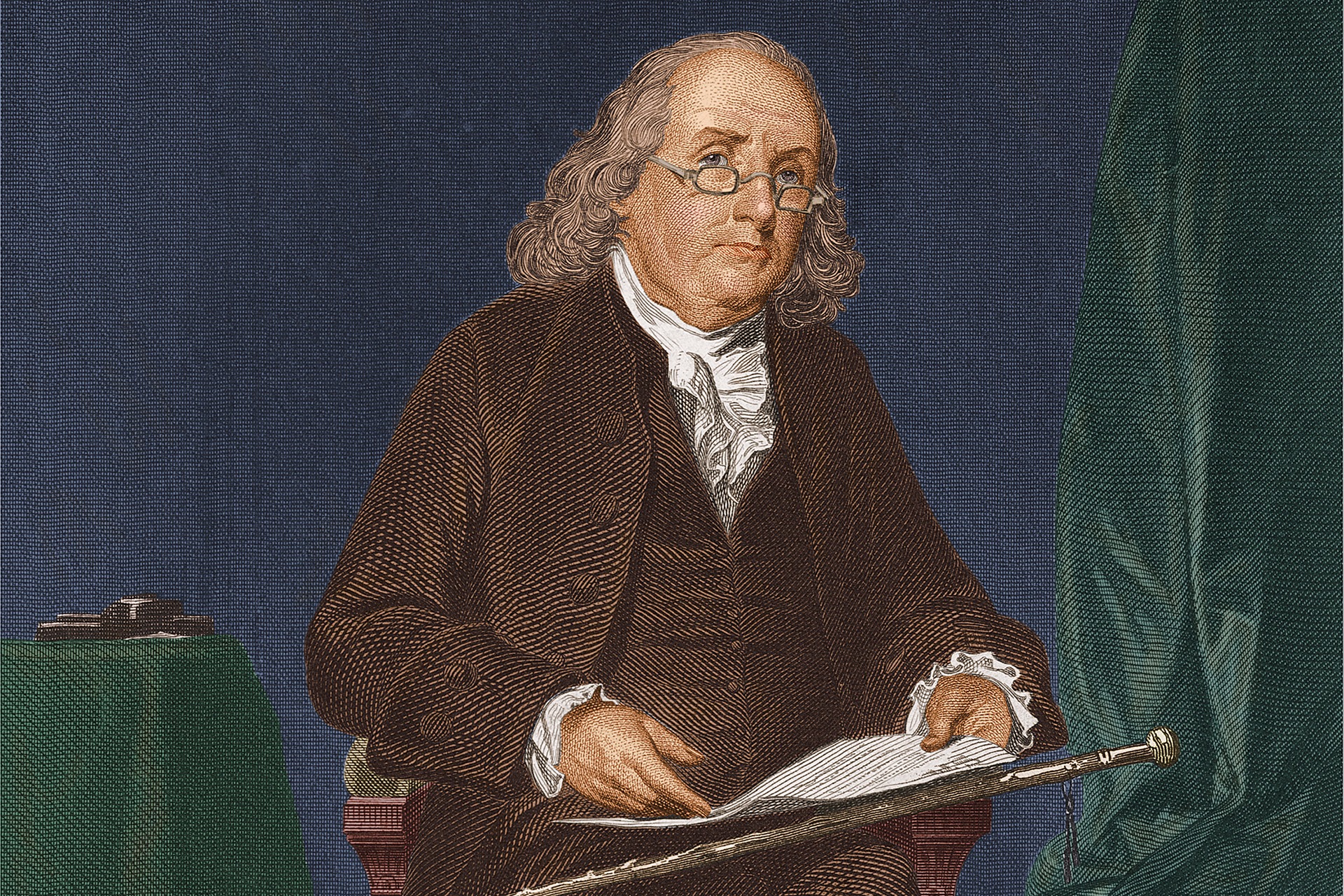
Benjamin Franklin emerged as one of the most versatile minds in modern history, mastering science, diplomacy, invention, publishing, and political philosophy with remarkable fluency. Born in 1706 in Boston, he grew up in a modest artisan household where formal education was limited, compelling him to become an autodidact from an early age. His intellectual curiosity was shaped by reading, experimentation, and relentless self-improvement.
Franklin began his career as a printer’s apprentice before establishing himself as a successful publisher in Philadelphia. Through his printing business and the publication of Poor Richard’s Almanack, he developed a public voice that blended wit, moral philosophy, and practical wisdom. His early success in the media laid the groundwork for his later scientific and political influence.
His breakthrough came through his experiments with electricity, including the famous kite experiment, which positioned him as one of the leading scientific thinkers of the Enlightenment. Simultaneously, his political career expanded as he played a crucial role in American independence, diplomacy in France, and the drafting of foundational governmental structures.
By the late 18th century, Franklin had become an international intellectual force, embodying the Enlightenment ideal of the “well-rounded man.” His influence extended into civic infrastructure, scientific innovation, and democratic theory.
His legacy lies in demonstrating that intellectual versatility can directly shape nations, institutions, and scientific progress.
Key Facts
- Full name of the subject: Benjamin Franklin
- Date of birth: 17 January 1706
- Place of birth: Boston, Massachusetts Bay Colony
- Family background: Working-class artisan family
- Early childhood experiences: Limited schooling, early exposure to printing trade
- Education history: Self-educated through extensive reading and apprenticeship
- Influences and mentors: Enlightenment thinkers, print culture
- Career beginnings: Printer and newspaper publisher
- Major achievements: Electricity experiments, U.S. founding contributions, diplomacy in France
- Challenges and obstacles faced: Limited formal education and colonial restrictions
- Turning points in life: Publication success and scientific recognition
- Contributions to society: Civic institutions, scientific discoveries, political philosophy
- Personal life (marriage, children, relationships): Common-law marriage; father of children
- Awards and recognitions: International diplomatic honors during lifetime
- Beliefs, values, or philosophy: Rationalism, civic virtue, self-improvement
- Legacy and impact: Founding Father and Enlightenment polymath
- Historical or cultural significance: Shaped American identity and scientific inquiry
Notable Works: Poor Richard’s Almanack, Autobiography, electrical papers, diplomatic letters, civic proposals
Controversies:
Criticism of political pragmatism and shifting loyalties in colonial politics
Debates over his role in slavery ownership earlier in life
Tensions with British authorities during revolutionary diplomacy
Some historical reassessments of personal contradictions between ideals and actions.
3. Ibn Sina (Avicenna)
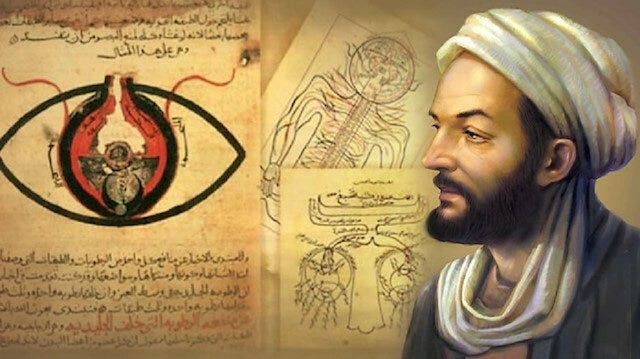
Ibn Sina, known in the West as Avicenna, represents one of the most extraordinary intellectual polymaths of the medieval Islamic world, mastering medicine, philosophy, astronomy, mathematics, and logic. Born in 980 in Afshana near Bukhara, he benefited from a rich scholarly environment during the Islamic Golden Age, which accelerated his intellectual development. By adolescence, he had already mastered foundational texts in philosophy and medicine.
He began his career as a physician and court scholar, quickly gaining recognition for his diagnostic precision and encyclopedic knowledge. His early medical practice was complemented by philosophical writing, where he attempted to synthesize Aristotelian thought with Islamic theology. This dual intellectual pursuit positioned him as both a scientist and a metaphysical thinker.
His breakthrough came with the writing of The Canon of Medicine, a medical encyclopedia that became the definitive reference in both the Islamic world and Europe for centuries. At the same time, his philosophical work The Book of Healing expanded his influence into logic, metaphysics, and natural science.
By the 10th and 11th centuries, Ibn Sina had become a central intellectual authority across multiple fields, with his works studied across continents well into the Renaissance. His interdisciplinary mastery exemplified the unity of science and philosophy in pre-modern scholarship.
His legacy endures as one of the foundational architects of medical science and philosophical inquiry.
Key Facts
- Full name of the subject: Abu Ali al-Husayn ibn Abdullah ibn Sina
- Date of birth: 980 CE
- Place of birth: Afshana, near Bukhara (modern Uzbekistan)
- Family background: Educated Persian family
- Early childhood experiences: Early mastery of the Quran, philosophy, and medicine texts
- Education history: Self-directed advanced study under local scholars
- Influences and mentors: Aristotelian philosophy, Islamic scholars
- Career beginnings: Court physician and scholar
- Major achievements: Canon of Medicine, philosophical synthesis works
- Challenges and obstacles faced: Political instability and frequent relocation
- Turning points in life: Recognition as royal physician
- Contributions to society: Foundations of medical science and philosophy
- Personal life (marriage, children, relationships): Limited historical documentation
- Awards and recognitions: Court honours and scholarly recognition
- Beliefs, values, or philosophy: Rationalism integrated with metaphysical inquiry
- Legacy and impact: Pioneer of medical and philosophical systems
- Historical or cultural significance: Bridge between classical and medieval science
Notable Works: The Canon of Medicine, The Book of Healing, Book of Salvation, Treatise on Logic, Treatise on Psychology
Controversies:
Religious debates over philosophical interpretations of faith
Accusations of heterodox thinking by some scholars of his time
Political instability leading to imprisonment and exile accusations
Modern debates over authorship and the textual transmission of some works.
4. Michelangelo Buonarroti
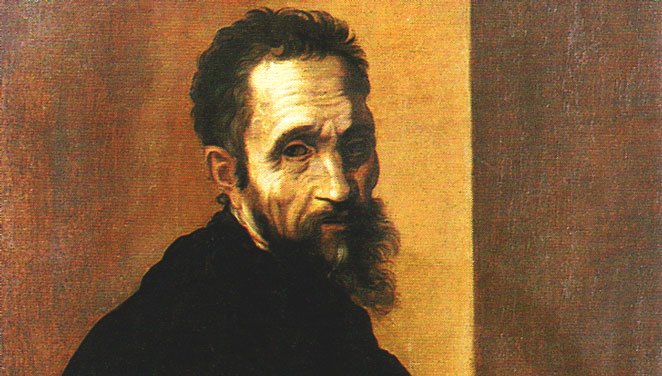
Michelangelo Buonarroti embodied the Renaissance ideal of mastery across disciplines, excelling as a sculptor, painter, architect, and poet, redefining artistic greatness. Born in 1475 in Caprese, Italy, he was raised in a modest family that initially resisted his artistic ambitions. His early exposure to stonework and drawing in Florence shaped a lifelong obsession with form, anatomy, and divine expression through human figures.
He began his career as an apprentice in the workshop of Domenico Ghirlandaio, where his extraordinary draftsmanship quickly distinguished him from his peers. Early commissions from powerful Florentine patrons revealed his ability to merge technical precision with emotional intensity, a combination that became his artistic signature.
His breakthrough came with the creation of Pietà and later David, works that established him as the supreme sculptor of his generation. The 1990s equivalent of his career peak, in Renaissance terms, was his Sistine Chapel ceiling commission, in which he transformed the architectural space into a theological and artistic universe.
Michelangelo’s legacy lies in his belief that art was a divine struggle, a process of revealing form trapped within raw material. His influence extended beyond sculpture into architectural masterpieces like St. Peter’s Basilica and into poetry that revealed a deeply introspective mind.
Key Facts
- Full name of the subject: Michelangelo di Lodovico Buonarroti Simoni
- Date of birth: 6 March 1475
- Place of birth: Caprese, Republic of Florence
- Family background: Declining Florentine banking family
- Early childhood experiences: Fostered by a stonecutter’s family, early exposure to marble
- Education history: Informal apprenticeship under Ghirlandaio
- Influences and mentors: Classical sculpture, Medici patronage
- Career beginnings: Apprenticeship and early sculptural commissions
- Major achievements: David, Pietà, Sistine Chapel ceiling, architectural innovations
- Challenges and obstacles faced: Artistic rivalries and intense patron demands
- Turning points in life: Vatican commission for Sistine Chapel
- Contributions to society: Renaissance artistic innovation and architectural design
- Personal life (marriage, children, relationships): Never married; deeply private life
- Awards and recognitions: Major patronage from the Medici family and the Vatican
- Beliefs, values, or philosophy: Art as divine revelation through human form
- Legacy and impact: Defined High Renaissance artistic standards
- Historical or cultural significance: Symbol of artistic perfection and Renaissance genius
Notable Works: David, Pietà, Sistine Chapel Ceiling, The Last Judgment, St. Peter’s Basilica design
Controversies:
Rivalries with Leonardo da Vinci and Raphael in Florence and Rome
Criticism over intense perfectionism and volatile temperament
Debates over artistic revisions and unfinished works
Historical speculation about personal, emotional, and spiritual struggles.
5. Leonardo Fibonacci
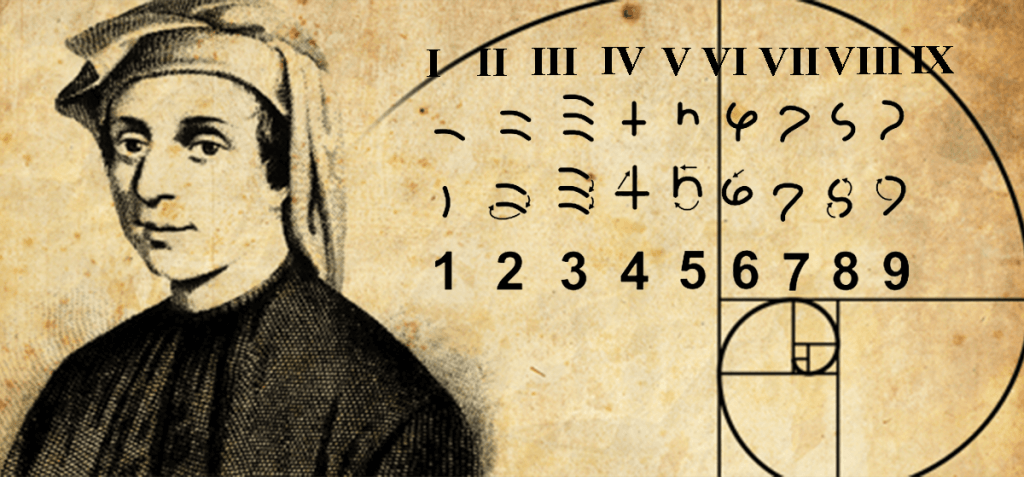
Leonardo Fibonacci was a transformative mathematical thinker whose contributions bridged Eastern and Western numerical systems, fundamentally changing the structure of European mathematics. Born around 1170 in Pisa, Italy, he was exposed to Arabic and Indian mathematical systems during his father’s trade missions in North Africa. This early multicultural exposure became the foundation of his intellectual breakthroughs.
He began his career by studying arithmetic and algebra under Arab mathematicians, quickly recognizing the superiority of the Hindu-Arabic numeral system over Roman numerals. His early work focused on simplifying calculations for merchants, addressing real-world commercial needs in trade and accounting.
His breakthrough came with the publication of Liber Abaci, which introduced the Fibonacci sequence and demonstrated the practical superiority of positional numerals in commerce and scientific calculation. This work fundamentally reshaped European mathematics and commerce.
By the 1990s, the analytical perspective of his legacy (centuries later reinterpretation), Fibonacci’s mathematical sequence had become central to computational science, economics, and even biological modelling. His influence extended far beyond his era, shaping modern algorithmic thinking and financial systems.
His legacy lies in transforming mathematics into a universal language of logic, commerce, and natural patterns.
Key Facts
- Full name of the subject: Leonardo of Pisa (Fibonacci)
- Date of birth: c. 1170
- Place of birth: Pisa, Republic of Pisa (modern Italy)
- Family background: The Merchant family is involved in trade with North Africa
- Early childhood experiences: Exposure to Arabic mathematics and commerce systems
- Education history: Informal training in North African mathematical traditions
- Influences and mentors: Arab mathematicians, commercial arithmetic systems
- Career beginnings: Merchant mathematics consultant
- Major achievements: Introduction of the Fibonacci sequence; Liber Abaci
- Challenges and obstacles faced: Resistance to new numeral systems in Europe
- Turning points in life: Publication of Liber Abaci in 1202
- Contributions to society: Transformation of European mathematical computation
- Personal life (marriage, children, relationships): Limited historical records
- Awards and recognitions: Patronage under Holy Roman Emperor Frederick II
- Beliefs, values, or philosophy: Mathematical efficiency and universal numeric systems
- Legacy and impact: Foundation of modern numerical and computational systems
- Historical or cultural significance: Bridge between Arabic and European mathematics
Notable Works: Liber Abaci, Practica Geometriae, Flos, Liber Quadratorum, correspondence on algebraic methods
Controversies:
Limited historical documentation leading to disputed biographical details
Debates over originality versus the transmission of Arabic mathematical knowledge
Later reinterpretations of the Fibonacci sequence applications in science and nature
No personal scandals recorded due to historical distance
6. Benjamin Franklin
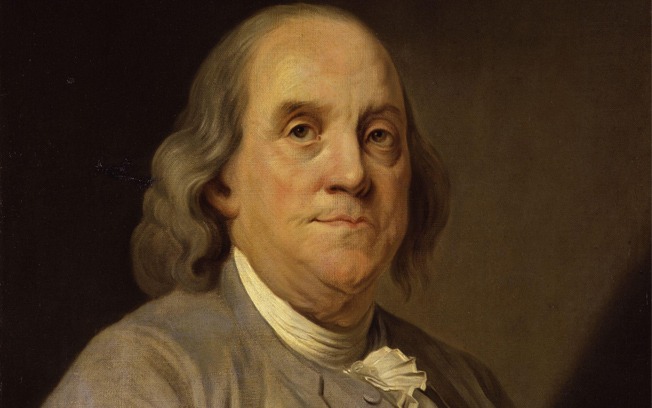
Benjamin Franklin’s mastery of multiple disciplines extended far beyond invention and politics, positioning him as one of history’s most versatile intellectual figures. Born in 1706 in Boston, he was raised in a large working-class family, which forced him into early independence, shaping his relentless self-education and curiosity across disciplines ranging from science to diplomacy.
He began his career as a printer and writer, where his newspaper publications and essays demonstrated both literary skill and philosophical insight. His early entrepreneurial success enabled him to fund scientific experimentation, civic projects, and intellectual societies, laying the foundation for his multidisciplinary achievements.
His breakthrough in electricity research placed him among the leading scientific minds of the Enlightenment, while his diplomatic success in France secured crucial alliances during the American Revolution. At the same time, his contributions to civic infrastructure, including libraries, fire departments, and postal systems, demonstrated his practical engineering mindset applied to society.
Franklin’s legacy lies in his ability to integrate science, governance, and philosophy into a unified vision of public progress. He embodied the Enlightenment belief that knowledge across disciplines could directly improve human civilization.
Key Facts
- Full name of the subject: Benjamin Franklin
- Date of birth: 17 January 1706
- Place of birth: Boston, Massachusetts Bay Colony
- Family background: Working-class artisan household
- Early childhood experiences: Limited schooling, early printing apprenticeship
- Education history: Self-taught through reading and experimentation
- Influences and mentors: Enlightenment thinkers and print culture
- Career beginnings: Printer, writer, and publisher
- Major achievements: Electricity experiments, founding father role, diplomacy in France
- Challenges and obstacles faced: Colonial limitations and financial struggles
- Turning points in life: Scientific recognition and political leadership
- Contributions to society: Civic institutions and scientific discoveries
- Personal life (marriage, children, relationships): Common-law marriage; father of children
- Awards and recognitions: International diplomatic recognition
- Beliefs, values, or philosophy: Rationalism, civic virtue, self-improvement
- Legacy and impact: Foundational Enlightenment polymath
- Historical or cultural significance: Shaped American identity and scientific thought
Notable Works: Poor Richard’s Almanack, Autobiography, electrical research papers, civic proposals, diplomatic correspondence
Controversies:
Criticism regarding slave ownership earlier in life
Political pragmatism and shifting alliances during the revolutionary era
Debates over personal contradictions between ideals and actions
Occasional historical reassessment of moral and political decisions.
7. Hildegard of Bingen
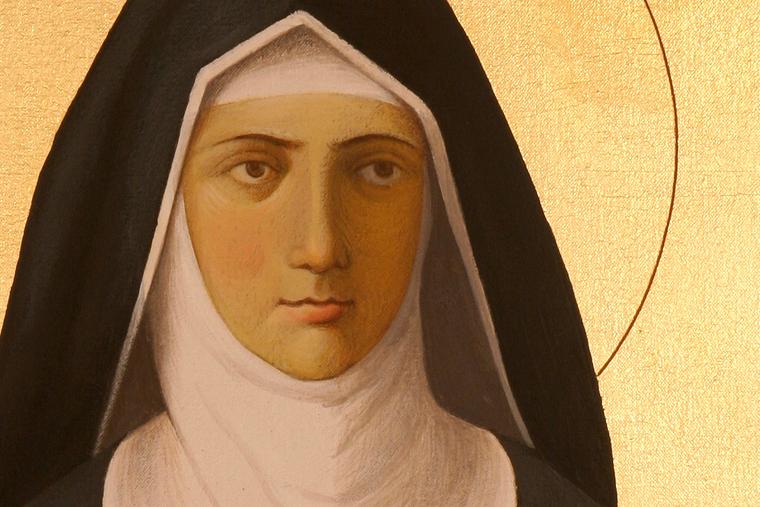
Hildegard of Bingen represents one of the most extraordinary examples of multidisciplinary mastery in medieval Europe, excelling as a composer, philosopher, mystic, natural scientist, and medical writer. Born in 1098 in the Rhineland region of Germany, she was dedicated to the Church at a young age, entering monastic life where her intellectual and spiritual development flourished under strict but structured religious discipline.
She began her career within the Benedictine monastic system, where her visions and theological interpretations gradually gained recognition. Despite operating within a restrictive medieval environment for women, she expanded her influence through writing, music composition, and correspondence with major religious and political leaders.
Her breakthrough came with the publication of visionary theological texts such as Scivias, which established her as a significant spiritual authority. At the same time, she composed complex liturgical music that remains among the most distinctive in the medieval Western tradition. Her work in natural medicine and herbal science further demonstrated her interdisciplinary genius.
By the 1990s reinterpretation of medieval scholarship, Hildegard had become recognized as an early polymath whose integration of spirituality, science, and art prefigured modern holistic thinking.
Her legacy lies in demonstrating that intellectual mastery can transcend disciplinary boundaries, even within restrictive social systems.
Key Facts
- Full name of the subject: Hildegard of Bingen
- Date of birth: 1098
- Place of birth: Bermersheim vor der Höhe, Holy Roman Empire (modern Germany)
- Family background: Noble family dedicated to religious life
- Early childhood experiences: Religious visions and monastic upbringing
- Education history: Monastic education under the Benedictine order
- Influences and mentors: Church doctrine, monastic scholarship
- Career beginnings: Benedictine nun and theological writer
- Major achievements: Musical compositions, visionary theology, medical texts
- Challenges and obstacles faced: Gender restrictions and institutional limitations
- Turning points in life: Recognition of visions by Church authorities
- Contributions to society: Sacred music, early natural science, and theology
- Personal life (marriage, children, relationships): Religious celibacy
- Awards and recognitions: Later canonization as Saint of the Church
- Beliefs, values, or philosophy: Integration of spirituality, nature, and knowledge
- Legacy and impact: Pioneer of interdisciplinary medieval scholarship
- Historical or cultural significance: One of the earliest documented female polymaths
Notable Works: Scivias, Symphonia armoniae celestium revelationum, Physica, Causae et Curae, Ordo Virtutum
Controversies:
Skepticism during her lifetime regarding the authenticity of her visions
Church scrutiny over mystical claims
Modern debates about the interpretation of her scientific writings
Less controversy than later intellectual figures due to the religious context.
8. Nikola Tesla
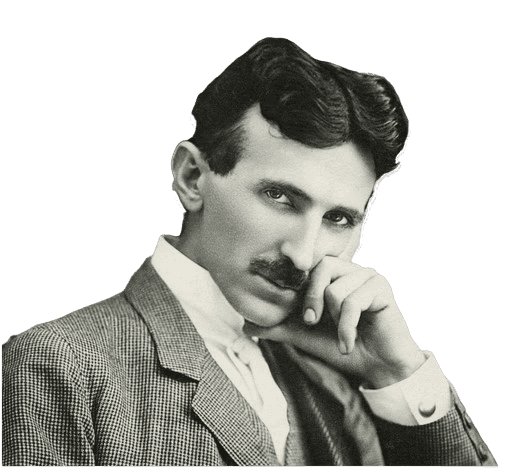
Nikola Tesla represents one of the most remarkable intersections of scientific imagination and technical mastery in modern history. Born in 1856 in Smiljan, in what is now Croatia, Tesla grew up in a household shaped by intellectual discipline and spiritual contemplation. His early fascination with electricity and mechanical invention was paired with an almost photographic memory, allowing him to visualize complex machines entirely in his mind before constructing them physically.
Tesla began his career in Europe, working in electrical engineering before emigrating to the United States, where he briefly worked with Thomas Edison. Their collaboration quickly fractured due to conflicting philosophies. Edison favoured direct current systems, while Tesla championed alternating current, a vision that would redefine global power distribution.
His breakthrough came with the development and successful promotion of alternating current (AC) systems, which enabled long-distance electrical transmission and formed the backbone of modern power grids. In the 1990s, the retrospective understanding of his legacy recognised Tesla’s contributions as foundational to wireless communication, radio technology, and modern electrical infrastructure.
Tesla’s legacy is defined by his fusion of scientific brilliance and visionary experimentation. While many of his later ideas, such as wireless global energy transmission, remained unrealized, they positioned him as a prophetic figure in technological innovation.
Key Facts
- Full name of the subject: Nikola Tesla
- Date of birth: 10 July 1856
- Place of birth: Smiljan, Austrian Empire (modern Croatia)
- Family background: Serbian Orthodox priest’s family
- Early childhood experiences: Early fascination with lightning and mechanical devices
- Education history: Graz University of Technology; no formal degree completion
- Influences and mentors: Michael Faraday, James Clerk Maxwell
- Career beginnings: Electrical engineer in Europe and early Edison collaboration
- Major achievements: Alternating current system, Tesla coil, induction motor
- Challenges and obstacles faced: Financial instability and corporate conflicts
- Turning points in life: Development of AC power systems in the U.S.
- Contributions to society: Modern electrical infrastructure and wireless concepts
- Personal life (marriage, children, relationships): Never married
- Awards and recognitions: Later scientific honours and posthumous recognition
- Beliefs, values, or philosophy: Visionary science and energy transmission systems
- Legacy and impact: Foundation of modern electrical engineering
- Historical or cultural significance: Symbol of scientific genius and innovation
Notable Works: AC power system, Tesla coil, induction motor, wireless transmission experiments, Wardenclyffe Tower project
Controversies:
Long-standing disputes with Thomas Edison over AC vs DC systems
Financial instability led to the loss of patents and recognition during his lifetime
Later myths and exaggerations surrounding “free energy” claims
Posthumous romanticization leading to misinformation about his inventions.
9. Marie Curie
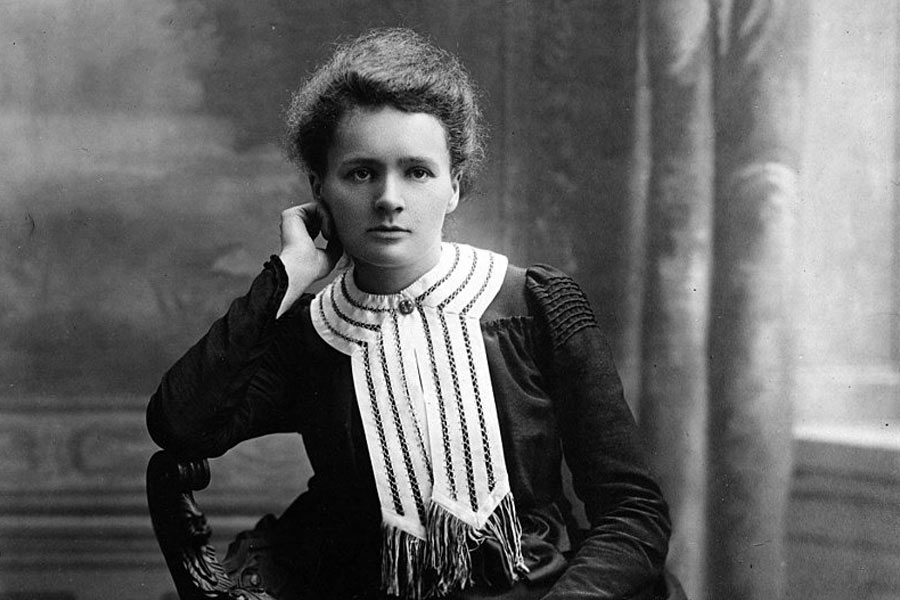
Marie Curie stands as one of the most accomplished scientific minds in history, mastering physics, chemistry, and medical research with unparalleled precision. Born in 1867 in Warsaw, Poland, under Russian rule, she grew up in a politically oppressed environment where access to higher education for women was severely restricted. Her early intellectual development was shaped by self-study and participation in clandestine educational networks.
Curie moved to Paris to pursue higher education at the Sorbonne, where she began her scientific career in physics and mathematics. Working under difficult financial and physical conditions, she developed a deep focus on experimental research, particularly in the emerging field of radioactivity.
Her breakthrough came with the discovery of polonium and radium, followed by pioneering research into radioactive decay. Alongside her husband, Pierre Curie, she established the foundational principles of nuclear science. In the 1990s, with the rise of retrospective scientific framing, her contributions became central to nuclear medicine, cancer treatment, and atomic physics.
Curie’s legacy is defined by her relentless dedication to science despite severe personal hardship and gender discrimination. She remains the only person to receive Nobel Prizes in two different scientific fields.
Key Facts
- Full name of the subject: Maria Salomea Skłodowska Curie
- Date of birth: 7 November 1867
- Place of birth: Warsaw, Congress Poland, Russian Empire
- Family background: Educated but politically oppressed Polish family
- Early childhood experiences: Exposure to academic resistance under Russian rule
- Education history: Flying University; University of Paris (Sorbonne)
- Influences and mentors: Pierre Curie, European physicists of the 19th century
- Career beginnings: Physics student and laboratory researcher in Paris
- Major achievements: Discovery of polonium and radium; Nobel Prizes in Physics and Chemistry
- Challenges and obstacles faced: Gender discrimination and extreme financial hardship
- Turning points in life: Marriage and scientific partnership with Pierre Curie
- Contributions to society: Foundations of nuclear science and medical applications
- Personal life (marriage, children, relationships): Married to Pierre Curie; mother of two daughters
- Awards and recognitions: Two Nobel Prizes (Physics 1903, Chemistry 1911)
- Beliefs, values, or philosophy: Scientific rigour and experimental persistence
- Legacy and impact: Pioneer of radioactivity science and medical imaging
- Historical or cultural significance: Symbol of women in science and resilience
Notable Works: Research on radioactivity, the discovery of polonium, the discovery of radium, Radioactive isotope studies, and the establishment of the Curie Institutes
Controversies:
Health risks of radiation exposure were not fully understood during her lifetime
Institutional gender bias in the French scientific community
Ethical debates about early radiation experimentation methods
No personal scandals, but long-term health consequences from exposure
10. Galileo Galilei
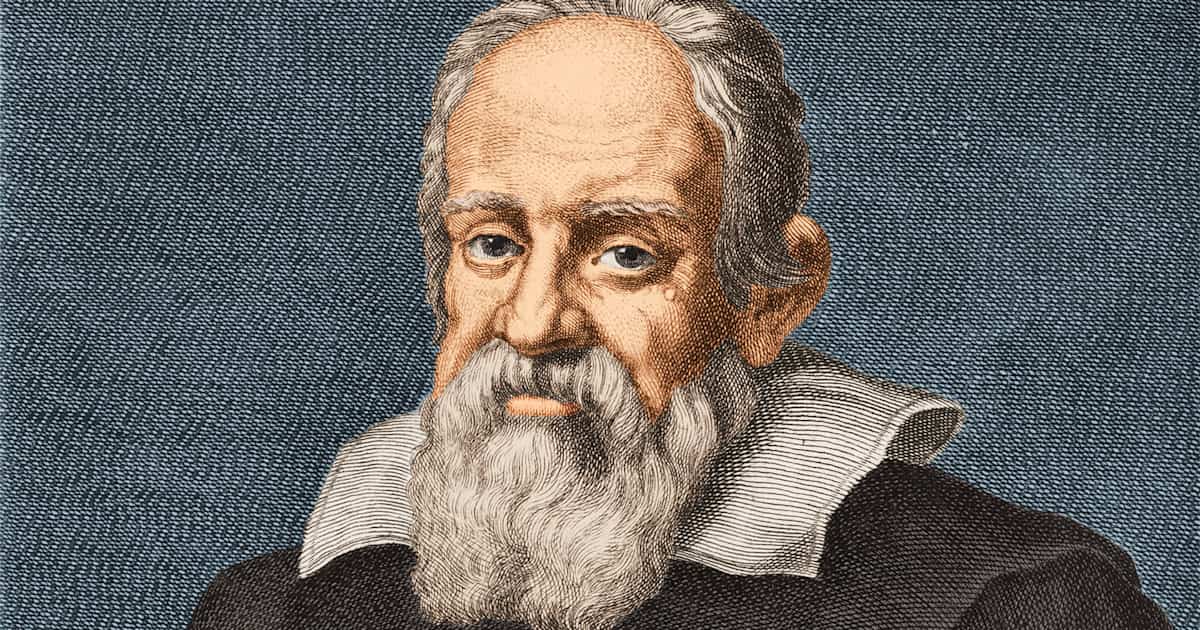
Galileo Galilei stands as one of the defining figures of modern science—a man whose curiosity about the heavens challenged centuries of accepted belief and reshaped humanity’s understanding of the universe.
Born on February 15, 1564, in Pisa, Galileo Galilei grew up in a time when science was still deeply intertwined with tradition and authority. His father, a musician, encouraged him toward medicine, but Galileo’s mind was drawn elsewhere—to mathematics, motion, and the hidden order of nature.
He studied at the University of Pisa, where his dissatisfaction with rigid academic doctrine led him to pursue independent inquiry. Early on, he began questioning established Aristotelian physics, especially ideas about motion and falling objects. Through careful experimentation, he discovered that objects fall at the same rate regardless of weight (when air resistance is ignored), laying the groundwork for modern physics.
But Galileo’s most transformative contributions came when he turned his attention to the sky.
In 1609, inspired by news of a Dutch invention, he constructed an improved telescope and pointed it toward the heavens. What he saw shattered long-held assumptions. He observed mountains on the Moon, countless stars invisible to the naked eye, and—most importantly—four moons orbiting Jupiter. These moons, now known as the Galilean satellites, provided direct evidence that not everything in the universe revolved around the Earth.
This discovery supported the heliocentric theory proposed by Nicolaus Copernicus, which placed the Sun at the center of the solar system. At the time, this view directly challenged the geocentric model endorsed by the powerful Catholic Church.
Galileo expanded his findings in works such as Sidereus Nuncius (“Starry Messenger”), which brought his telescopic observations to the world. Later, in Dialogue Concerning the Two Chief World Systems, he openly argued in favor of heliocentrism, presenting a comparison between competing cosmological models.
This boldness brought him into direct conflict with church authorities. In 1633, he was tried by the Roman Inquisition and found “vehemently suspect of heresy.” Forced to recant his support for heliocentrism, Galileo spent the remainder of his life under house arrest in Arcetri.
Despite his confinement, he continued to work. In his later years, he made important contributions to the study of motion and mechanics, laying the foundation for classical physics and influencing scientists such as Isaac Newton, who would later build upon his ideas.
Galileo died on January 8, 1642, but his intellectual legacy only grew stronger with time. Centuries later, his work came to be seen not as heresy, but as the beginning of modern scientific inquiry.
Today, Galileo is remembered not only for what he discovered, but for how he discovered it. He insisted that truth should be tested through observation and experiment, not accepted solely on authority. In doing so, he helped shift humanity from a worldview based on tradition to one grounded in evidence.
His life is often summarized as a conflict between science and authority, but it is more than that. It is the story of a mind that refused to stop asking questions—even when the answers came at great personal cost.
In the end, Galileo Galilei did not merely look at the stars.
He taught the world how to see them differently.
Notable Mentions:
Isaac Newton
Thomas Edison
Carl Jung
Aristotle