Top 10 Environmental Pioneers
Top 10 Environmental Pioneers
In This Content
1. Rachel Carson
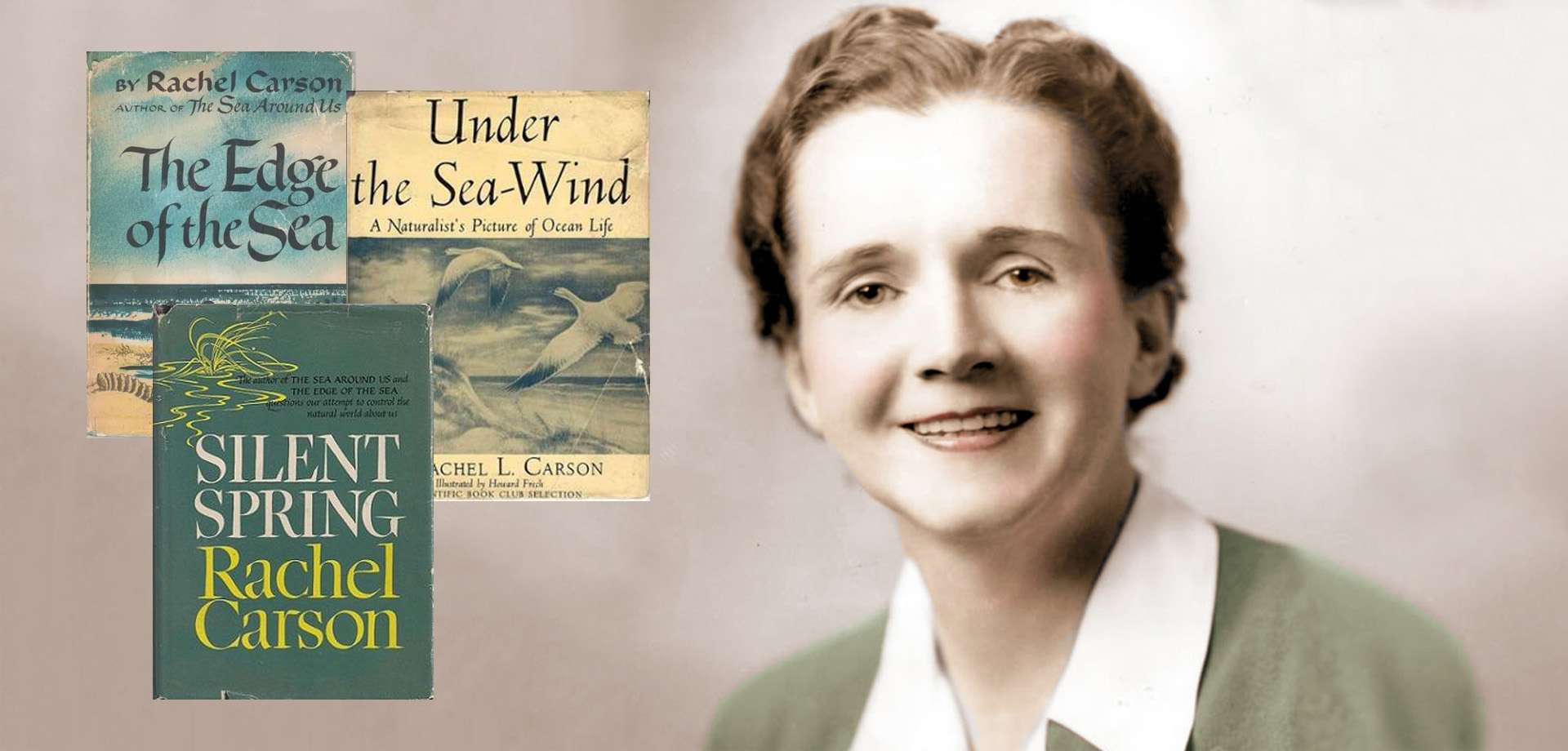
Rachel Carson’s life stands as one of the most consequential awakenings in modern environmental history. Born in 1907 in rural Pennsylvania, she grew up surrounded by forests, rivers, and coastal ecosystems that quietly shaped her lifelong sensitivity to the natural world. Her early fascination with marine life led her toward biology at a time when women were still largely excluded from scientific authority, setting the stage for a career defined by intellectual persistence and quiet defiance.
Carson began her professional journey as a marine biologist and writer for the U.S. Fish and Wildlife Service, where her ability to translate complex ecological systems into lyrical prose quickly distinguished her. Her early publications revealed a rare dual mastery: scientific precision and literary elegance. This blend would later become her most powerful tool in influencing both policy and public perception.
Her breakthrough came with the publication of “Silent Spring” in 1962, a work that fundamentally altered global environmental consciousness. The book meticulously documented the ecological and health impacts of pesticide overuse, particularly DDT, challenging powerful chemical industries and governmental complacency. Despite intense backlash and corporate pressure, Carson’s work triggered a nationwide environmental debate that reshaped regulatory frameworks in the United States.
By the late 1960s, although she did not live to see the full extent of her influence, Carson had already become the intellectual catalyst for the modern environmental movement. Her legacy is defined not only by scientific contribution but by moral courage, the willingness to confront industrial power in defence of ecological balance.
Her impact continues to resonate in environmental policy, ecological science, and public advocacy, making her one of the foundational figures in global environmental awareness.
Key Facts
- Full name of the subject: Rachel Louise Carson
- Date of birth: 27 May 1907
- Place of birth: Springdale, Pennsylvania, USA
- Family background: Middle-class rural family with strong literary influence
- Early childhood experiences: Deep connection to nature and coastal exploration
- Education history: Pennsylvania College for Women; Johns Hopkins University (zoology)
- Influences and mentors: Marine ecosystems, early American naturalist writers
- Career beginnings: U.S. Fish and Wildlife Service writer and marine biologist
- Major achievements: Author of Silent Spring, catalyst for environmental regulation
- Challenges and obstacles faced: Gender discrimination and industry opposition
- Turning points in life: Publication of Silent Spring
- Contributions to society: Environmental awareness and pesticide regulation reform
- Personal life (marriage, children, relationships): Never married; close family bonds
- Awards and recognitions: Presidential Medal of Freedom (posthumous recognition)
- Beliefs, values, or philosophy: Ecological balance and scientific responsibility
- Legacy and impact: Founder of the modern environmental movement
- Historical or cultural significance: Triggered global environmental policy reforms
Notable Works: Silent Spring, The Sea Around Us, Under the Sea-Wind, The Edge of the Sea, Help Your Child to Wonder
Controversies:
Chemical industry backlash, accusing her of alarmism and exaggeration
Government and corporate efforts to discredit her findings during her lifetime
Later criticism from some scientists who debated her conclusions on DDT intensity
No credible evidence has ever overturned her core ecological warnings
She remains widely validated by modern environmental science.
2. Wangari Maathai
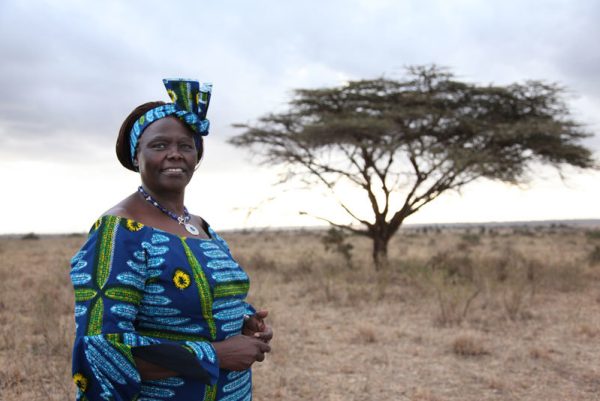
Wangari Maathai emerged from the highlands of Kenya as a transformative force in environmental activism and grassroots political change. Born in 1940 in Nyeri, she grew up in a rural agricultural community where the degradation of land and loss of forest cover would later become central to her life’s mission. Her early education under colonial rule exposed her to both opportunity and systemic inequality, shaping her dual commitment to science and social justice.
Maathai pursued higher education in the United States and Germany, becoming one of the first East African women to earn a doctorate. Upon returning to Kenya, she entered academia but soon shifted toward environmental advocacy after observing the direct link between deforestation, poverty, and rural instability. This transition marked the beginning of a movement that would merge ecological restoration with women’s empowerment.
Her breakthrough came with the founding of the Green Belt Movement in 1977, an initiative that mobilized rural women to plant millions of trees across Kenya. What began as a local conservation effort quickly evolved into a national movement addressing environmental degradation, governance, and human rights. Maathai’s activism often placed her in direct conflict with political authorities, resulting in arrests, intimidation, and sustained public scrutiny.
By the 1990s, Maathai had become an internationally recognized voice for sustainable development and democratic reform in Africa. Her work redefined environmentalism as inseparable from social equity, demonstrating that ecological survival is deeply tied to political and economic structures.
Her legacy endures as a global blueprint for community-driven environmental restoration and the empowerment of marginalized populations.
Key Facts
- Full name of the subject: Wangari Muta Maathai
- Date of birth: 1 April 1940
- Place of birth: Nyeri, Kenya
- Family background: Rural Kikuyu farming family
- Early childhood experiences: Exposure to agriculture and land dependency
- Education history: Mount St. Scholastica College; University of Pittsburgh; University of Nairobi (PhD)
- Influences and mentors: Environmental degradation in Kenya, academic mentors in biology
- Career beginnings: University lecturer and environmental researcher
- Major achievements: Founded Green Belt Movement; Nobel Peace Prize laureate
- Challenges and obstacles faced: Political persecution and imprisonment
- Turning points in life: Launch of the tree-planting movement in 1977
- Contributions to society: Reforestation, women’s empowerment, environmental policy reform
- Personal life (marriage, children, relationships): Married; mother of three children
- Awards and recognitions: Nobel Peace Prize (2004)
- Beliefs, values, or philosophy: Environmental justice tied to democracy and human rights
- Legacy and impact: Global symbol of eco-activism and sustainable development
- Historical or cultural significance: First African woman to win Nobel Peace Prize
Notable Works: Unbowed, The Green Belt Movement, Replenishing the Earth, Bottom Up, speeches at UN forums
Controversies:
Political clashes with the Kenyan government leading to arrests
Criticism from some political groups, labelling her activism as destabilizing
Debates over environmental vs. economic development priorities in Kenya
Despite criticism, her environmental achievements remain globally recognized.
3. David Attenborough
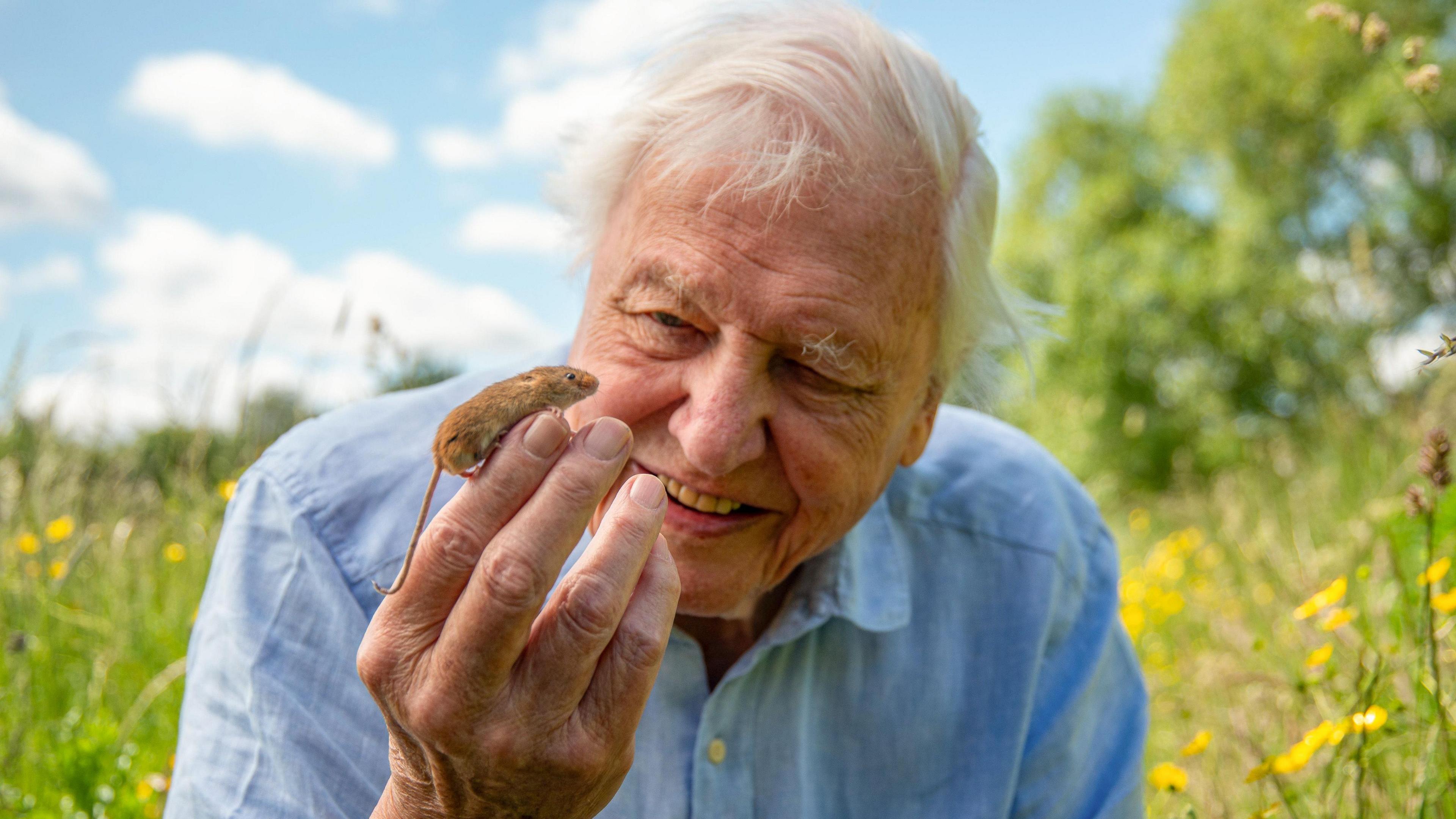
David Attenborough’s influence on environmental consciousness is inseparable from the evolution of modern nature documentary filmmaking. Born in 1926 in London, he developed an early fascination with fossils, wildlife, and scientific discovery. His academic background in natural sciences at Cambridge provided the foundation for a career that would merge broadcasting with ecological education on an unprecedented global scale.
Attenborough began his career at the BBC, initially working in radio before transitioning into television during its formative years. His early productions demonstrated an innovative approach to storytelling, combining field exploration with narrative clarity. This marked the beginning of a lifelong mission to bring the natural world into living rooms across the globe.
His breakthrough came with landmark documentary series such as Life on Earth and The Blue Planet, which redefined wildlife filmmaking through immersive cinematography and deep scientific collaboration. By the 1990s, Attenborough had become the definitive voice of nature broadcasting, shaping how entire generations perceived biodiversity, extinction, and ecological interdependence.
Beyond entertainment, his work increasingly evolved into environmental advocacy. While maintaining a traditionally observational tone, his later documentaries began to explicitly address climate change, habitat destruction, and species loss, influencing public discourse and policy debates worldwide.
His legacy lies in transforming environmental education into a visual and emotional experience, making him one of the most influential communicators of ecological awareness in modern history.
Key Facts
- Full name of the subject: David Frederick Attenborough
- Date of birth: 8 May 1926
- Place of birth: London, England, United Kingdom
- Family background: Academic household with strong scientific influence
- Early childhood experiences: Fossil collecting and natural history exploration
- Education history: Clare College, University of Cambridge (Natural Sciences)
- Influences and mentors: Early naturalists and BBC documentary pioneers
- Career beginnings: BBC radio and television production
- Major achievements: Revolutionary wildlife documentary series creation
- Challenges and obstacles faced: Technical limitations in early nature filming
- Turning points in life: Launch of Life on Earth series
- Contributions to society: Global environmental awareness through media
- Personal life (marriage, children, relationships): Married; father of two children
- Awards and recognitions: Multiple BAFTAs, Primetime Emmys, Knighted status
- Beliefs, values, or philosophy: Scientific observation and conservation advocacy
- Legacy and impact: Redefined environmental storytelling and public education
- Historical or cultural significance: Global voice of natural history broadcasting
Notable Works: Life on Earth, The Blue Planet, Planet Earth, Our Planet, Frozen Planet
Controversies:
Occasional criticism for perceived neutrality during early climate debates
Debates over broadcasting objectivity versus activism in environmental messaging
Some industry critiques regarding dramatization in wildlife documentaries
Overall, widely respected with minimal substantive controversy beyond editorial style.
4. James Lovelock
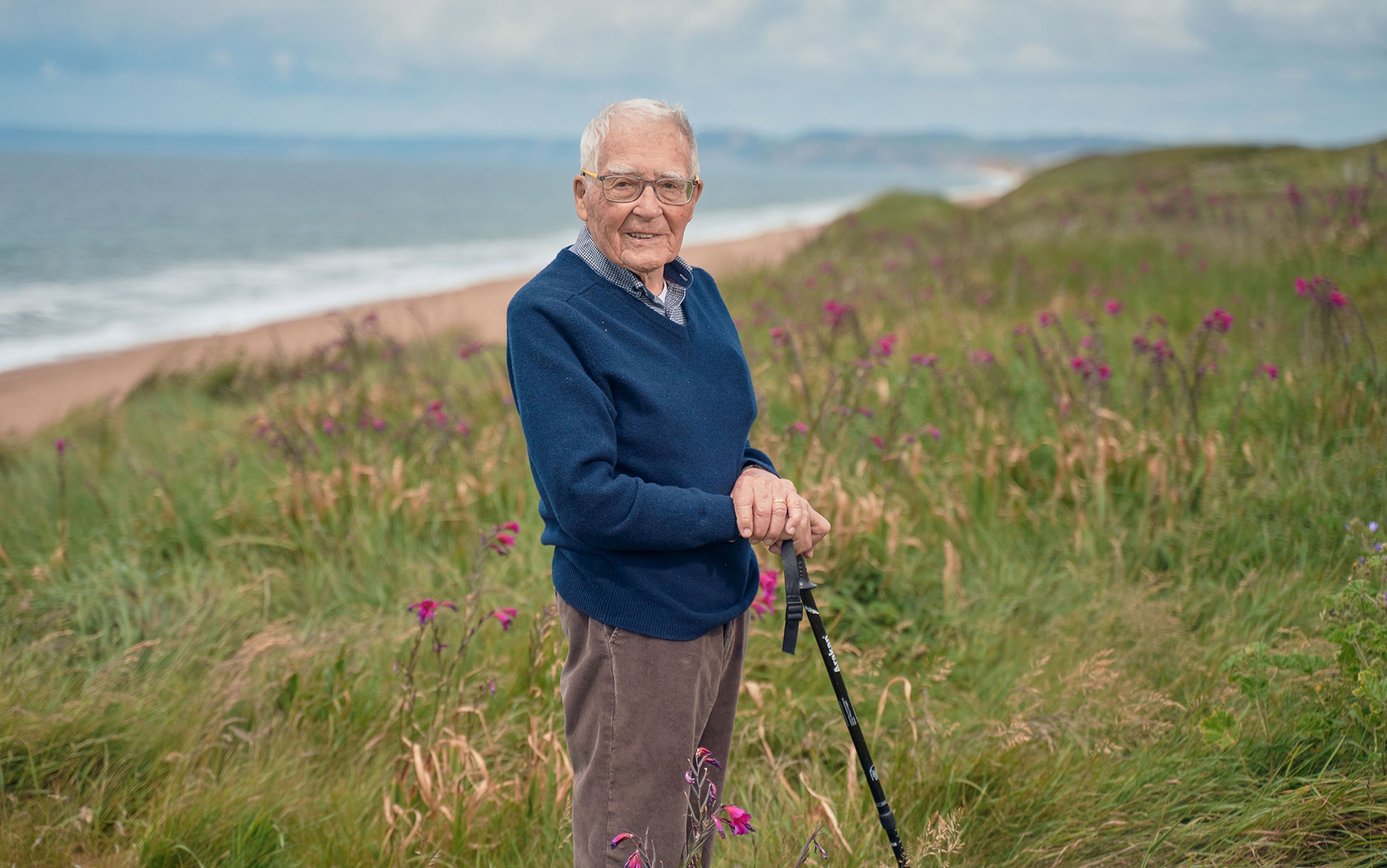
James Lovelock occupies a unique and sometimes controversial place in environmental science as the originator of the Gaia Hypothesis, a theory that reframes Earth as a self-regulating, interconnected system. Born in 1919 in Letchworth, England, Lovelock grew up during a period of rapid industrial transformation, which influenced his lifelong curiosity about the relationship between technology, atmosphere, and planetary balance. His early exposure to scientific experimentation and independent thinking set him apart from traditional academic pathways.
Lovelock’s career began not in environmental activism but in chemistry and medical research, where he worked with cutting-edge instruments and developed innovations such as electron capture detection. This scientific grounding later enabled him to detect atmospheric changes with unprecedented precision. His transition into environmental thinking was gradual but profound, shaped by his work with NASA during planetary exploration research.
His breakthrough came in the 1970s with the articulation of the Gaia Hypothesis, which proposed that Earth functions as a self-regulating organism where living and non-living systems interact to maintain conditions suitable for life. Although initially met with skepticism from the scientific community, the theory sparked intense interdisciplinary debate and reshaped ecological discourse.
By the 1990s, Lovelock had become both a celebrated and contested figure in environmental science. His later warnings about climate change and planetary tipping points positioned him as a prophetic voice, though some of his controversial positions on energy policy drew criticism. Regardless, his conceptual framework permanently altered how scientists and environmentalists perceive Earth systems.
His legacy is defined by intellectual disruption, challenging reductionist science and introducing a systems-based understanding of planetary ecology.
Key Facts
- Full name of the subject: James Ephraim Lovelock
- Date of birth: 26 July 1919
- Place of birth: Letchworth, Hertfordshire, England
- Family background: Working-class British family
- Early childhood experiences: Strong curiosity in chemistry and mechanical systems
- Education history: University of Manchester; London School of Hygiene & Tropical Medicine (PhD work)
- Influences and mentors: Physical chemistry, NASA planetary research
- Career beginnings: Medical researcher and independent scientist
- Major achievements: Development of Gaia Theory and atmospheric detection instruments
- Challenges and obstacles faced: Scientific skepticism and academic criticism
- Turning points in life: Proposal of Gaia Hypothesis in the 1970s
- Contributions to society: Earth system science framework
- Personal life (marriage, children, relationships): Married; father of children
- Awards and recognitions: Royal Society fellow; numerous scientific honors
- Beliefs, values, or philosophy: Earth as a self-regulating system
- Legacy and impact: Revolutionized environmental systems thinking
- Historical or cultural significance: Pioneer of holistic ecological science
Notable Works: Gaia: A New Look at Life on Earth, The Ages of Gaia, Novacene, Homage to Gaia, Healing Gaia
Controversies:
Criticism from climate scientists over pessimistic climate projections
Debate over his support for nuclear energy as a climate solution
Skepticism regarding the testability of the Gaia Hypothesis in the early years
Accused by some environmentalists of contradictory policy positions
Despite debate, his influence on Earth system science remains foundational.
5. Gro Harlem Brundtland

Gro Harlem Brundtland emerged as a defining political and environmental figure through her integration of public health, governance, and sustainable development. Born in 1939 in Oslo, Norway, she grew up in a politically engaged family that valued social welfare and scientific reasoning. Her early education in medicine laid the foundation for her understanding of the interconnectedness between human health and environmental conditions.
Brundtland began her career as a physician before entering politics, where she quickly rose through the ranks of the Norwegian Labour Party. Her medical background gave her a unique perspective on policy-making, particularly in areas where environmental degradation directly affected public health outcomes. This interdisciplinary approach would later define her global influence.
Her breakthrough came when she was appointed Chair of the World Commission on Environment and Development in the 1980s. The commission’s landmark report, “Our Common Future” (1987), introduced the concept of “sustainable development,” a framework that balanced economic growth with environmental protection. This report became one of the most influential policy documents of the 20th century.
By the 1990s, Brundtland had served multiple terms as Prime Minister of Norway and had become a leading voice in global environmental governance. Her work helped institutionalize sustainability within the United Nations system and influenced climate policy discussions worldwide.
Her legacy is rooted in the formalization of sustainability as a guiding principle for global development, bridging science, politics, and economics.
Key Facts
- Full name of the subject: Gro Harlem Brundtland
- Date of birth: 20 April 1939
- Place of birth: Oslo, Norway
- Family background: Political and professional middle-class family
- Early childhood experiences: Exposure to public service values
- Education history: University of Oslo (Medicine); Harvard University (Public Health)
- Influences and mentors: Public health science, Scandinavian welfare models
- Career beginnings: Physician and public health researcher
- Major achievements: Introduced the sustainable development concept; Norwegian Prime Minister
- Challenges and obstacles faced: Political opposition and gender bias in leadership
- Turning points in life: Leadership of Brundtland Commission
- Contributions to society: Global sustainability framework and health policy integration
- Personal life (marriage, children, relationships): Married; mother of children
- Awards and recognitions: Numerous international peace and environmental awards
- Beliefs, values, or philosophy: Balance between development and environmental protection
- Legacy and impact: Architect of modern sustainability policy
- Historical or cultural significance: Shaped UN environmental governance
Notable Works: Our Common Future, WHO leadership reports, speeches at UN Earth Summit
Controversies:
Political criticism within Norway over economic policies
Debates over the feasibility of sustainable development in industrial contexts
Occasional opposition from industries affected by environmental regulation
Nevertheless, her framework remains foundational in global policy.
6. Al Gore
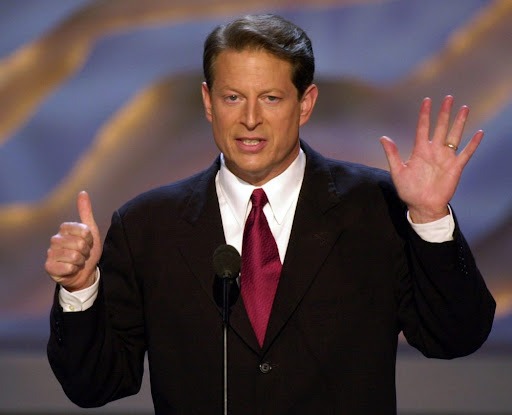
Al Gore stands as one of the most recognizable environmental advocates to emerge from the political sphere in modern history. Born in 1948 in Washington, D.C., he grew up in a politically prominent family that instilled in him a deep awareness of public service and national responsibility. His early academic path at Harvard University exposed him to environmental science and policy, laying the groundwork for his later advocacy.
Gore began his career in journalism and later entered U.S. politics, serving as a Congressman and eventually as Vice President of the United States. During his political tenure, he increasingly focused on environmental issues, particularly climate change, which was still a relatively under-discussed topic in mainstream politics at the time.
His breakthrough in global environmental advocacy came with the release of the documentary “An Inconvenient Truth” in 2006, though his environmental work had been building for decades. The film and accompanying campaign brought climate science into public consciousness at an unprecedented scale, sparking international debate and policy reconsideration.
By the 1990s, Gore was already positioning environmental protection as a central policy concern within U.S. governance, advocating for emissions reductions and sustainable energy investment. His efforts contributed to early international climate agreements and helped mainstream environmental discourse within political institutions.
His legacy lies in translating environmental science into political urgency, bridging the gap between research and public policy.
Key Facts
- Full name of the subject: Albert Arnold Gore Jr.
- Date of birth: 31 March 1948
- Place of birth: Washington, D.C., USA
- Family background: Political family (son of U.S. Senator Al Gore Sr.)
- Early childhood experiences: Exposure to political discourse and public service
- Education history: Harvard University (Government)
- Influences and mentors: Environmental scientists, political advisors, climate researchers
- Career beginnings: U.S. Congressman and journalist
- Major achievements: Climate advocacy, Kyoto Protocol involvement, environmental awareness campaigns
- Challenges and obstacles faced: Political opposition and skepticism of climate urgency
- Turning points in life: Release of An Inconvenient Truth
- Contributions to society: Climate education and policy advocacy
- Personal life (marriage, children, relationships): Married; father of children
- Awards and recognitions: Nobel Peace Prize (2007, jointly with IPCC)
- Beliefs, values, or philosophy: Urgent climate action and sustainability
- Legacy and impact: Mainstreamed climate change in global politics
- Historical or cultural significance: Political face of the modern climate movement
Notable Works: An Inconvenient Truth, Earth in the Balance, Our Choice, Climate Reality Project initiatives, speeches on global warming
Controversies:
Criticism over carbon footprint due to private travel
Political polarization of his climate advocacy in U.S. discourse
Debates regarding the effectiveness of policy influence versus activism
Some scientific debates over presentation style in documentary
Despite criticism, his role in climate awareness remains globally significant.
7. Vandana Shiva

Vandana Shiva emerged as one of the most influential eco-feminist thinkers and activists of the modern era, reshaping global conversations around biodiversity, agriculture, and corporate control of natural resources. Born in 1952 in Dehradun, India, she grew up in the Himalayan foothills, where close interaction with forests and rural ecosystems shaped her deep ecological awareness from an early age.
Shiva initially pursued physics, earning a PhD in quantum theory before transitioning into interdisciplinary environmental activism. Her scientific background gave her a unique analytical lens through which she later critiqued industrial agriculture and biotechnology systems. This shift marked a decisive turning point in her intellectual and activist journey.
Her breakthrough came during the 1980s and 1990s through her leadership in grassroots environmental movements in India, particularly those opposing deforestation and advocating for seed sovereignty. She became a leading voice against large-scale industrial farming and genetically modified organisms, arguing that they threaten biodiversity and undermine traditional agricultural knowledge.
By the 1990s, Shiva had gained international prominence as a critic of corporate agriculture and a defender of indigenous farming systems. Her work connected environmental sustainability with cultural preservation and economic justice, influencing global debates on food systems and ecological ethics.
Her legacy is defined by her defence of biodiversity, local knowledge systems, and environmental justice in the face of globalization.
Key Facts
- Full name of the subject: Vandana Shiva
- Date of birth: 5 November 1952
- Place of birth: Dehradun, India
- Family background: Academic and forest-dependent rural upbringing
- Early childhood experiences: Exposure to Himalayan ecosystems
- Education history: University of Guelph; University of Western Ontario (PhD in physics)
- Influences and mentors: Environmental degradation in India, feminist theory, and ecological movements
- Career beginnings: Physicist and research scholar
- Major achievements: Founder of Navdanya movement; global eco-feminist leader
- Challenges and obstacles faced: Corporate opposition and ideological criticism
- Turning points in life: Transition from physics to environmental activism
- Contributions to society: Biodiversity conservation and seed sovereignty advocacy
- Personal life (marriage, children, relationships): Private family life; minimal public disclosure
- Awards and recognitions: Right Livelihood Award and multiple international honours
- Beliefs, values, or philosophy: Ecological justice, biodiversity, anti-corporate monoculture systems
- Legacy and impact: Global influence on sustainable agriculture discourse
- Historical or cultural significance: Leader in eco-feminist environmental philosophy
Notable Works: Staying Alive, Soil Not Oil, Earth Democracy, Monocultures of the Mind, Water Wars.
Controversies:
Criticism from the biotechnology and agricultural sectors over the anti-GMO stance
Debates regarding scientific interpretations of crop yields and genetic engineering
Accusations of activism-driven bias in policy debates
Despite criticism, she remains a central figure in environmental justice movements.
8. E. O. Wilson
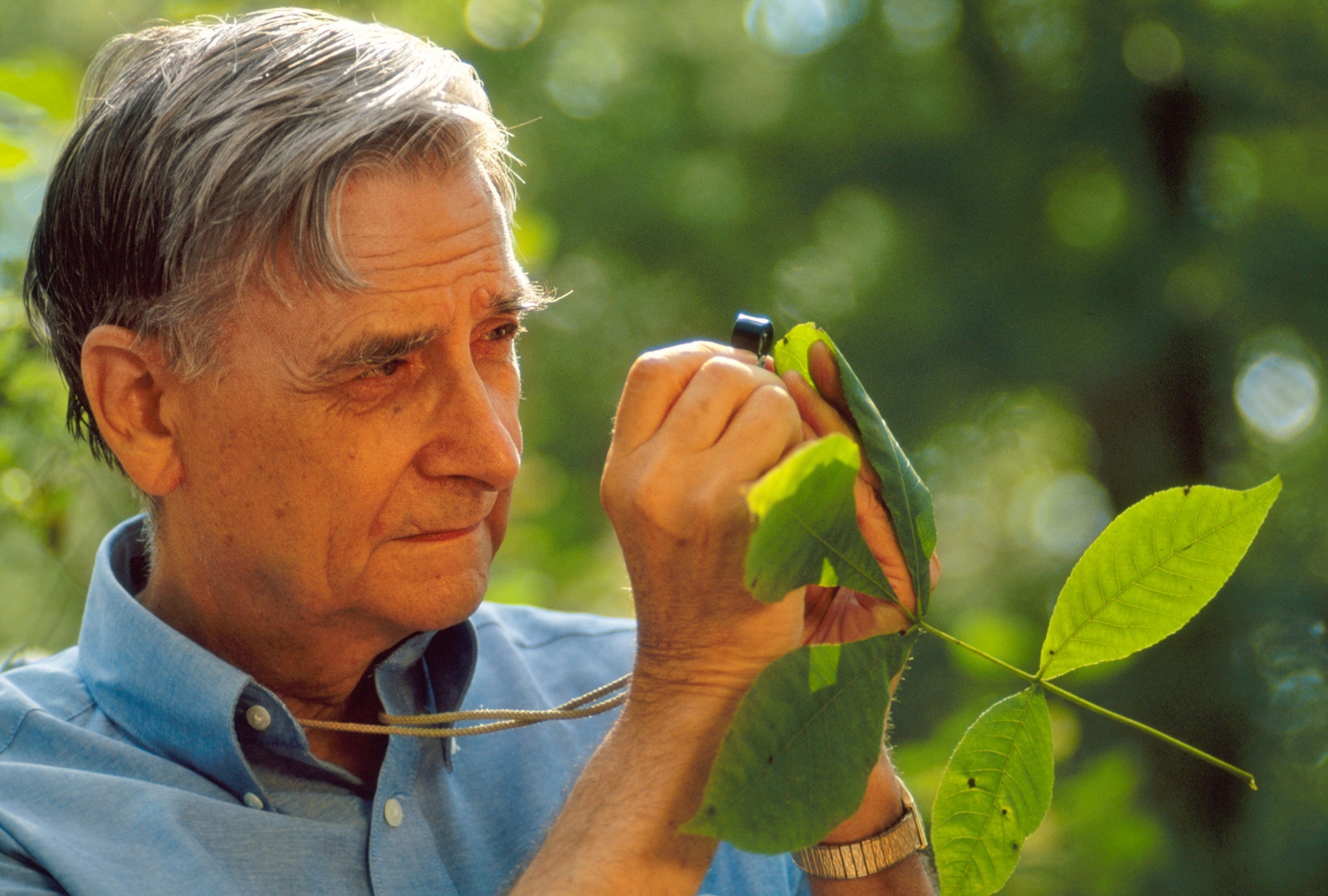
E. O. Wilson emerged as one of the most intellectually influential figures in modern biology and environmental thought, redefining humanity’s understanding of biodiversity and ecological interdependence. Born in 1929 in Birmingham, Alabama, he grew up in the American South, where early encounters with insects and forest ecosystems shaped his lifelong fascination with the natural world. A childhood accident that impaired his eyesight in one eye led him to study small organisms, particularly ants, which became the foundation of his scientific legacy.
Wilson began his academic career in biology at Harvard University, where his meticulous research on ant colonies quickly established him as a leading authority in myrmecology. His early work focused on classification, behaviour, and ecological systems, but his intellectual ambition soon expanded beyond entomology to broader questions about evolution, genetics, and patterns of biodiversity.
His breakthrough came with the publication of “Sociobiology: The New Synthesis” in 1975, which sparked both acclaim and controversy by proposing that social behaviour in animals and humans has evolutionary roots. In the 1990s, Wilson shifted his focus toward conservation biology, warning of accelerating species extinction and the irreversible loss of biodiversity caused by human activity. This period marked his transformation from a field biologist into a global environmental philosopher.
Wilson’s legacy lies in his conceptualization of biodiversity as the foundation of planetary health. His advocacy for protecting half of Earth’s land surface for conservation remains one of the most ambitious ecological proposals in modern science.
Key Facts
- Full name of the subject: Edward Osborne Wilson
- Date of birth: 10 June 1929
- Place of birth: Birmingham, Alabama, USA
- Family background: Modest Southern upbringing
- Early childhood experiences: Early fascination with insects and nature observation
- Education history: University of Alabama; Harvard University (PhD in Biology)
- Influences and mentors: Field biology, evolutionary theory, natural ecosystems
- Career beginnings: Harvard entomologist and research biologist
- Major achievements: Sociobiology theory; biodiversity advocacy
- Challenges and obstacles faced: Academic criticism and ideological backlash
- Turning points in life: Publication of Sociobiology
- Contributions to society: Conservation biology and biodiversity science
- Personal life (marriage, children, relationships): Married; father of children
- Awards and recognitions: Pulitzer Prize for Nonfiction (twice)
- Beliefs, values, or philosophy: Biodiversity as the foundation of life on Earth
- Legacy and impact: Pioneer of modern conservation biology
- Historical or cultural significance: Shaped global ecological science discourse
Notable Works: Sociobiology, The Diversity of Life, On Human Nature, Half-Earth, The Ants
Controversies:
Strong academic backlash over sociobiology’s implications for human behavior
Debates about genetic determinism and social science interpretations
Criticism from sociologists and philosophers regarding reductionism
Environmental proposals criticized as impractical by some policymakers
Despite debate, his biodiversity framework remains foundational.
9. Jane Goodall
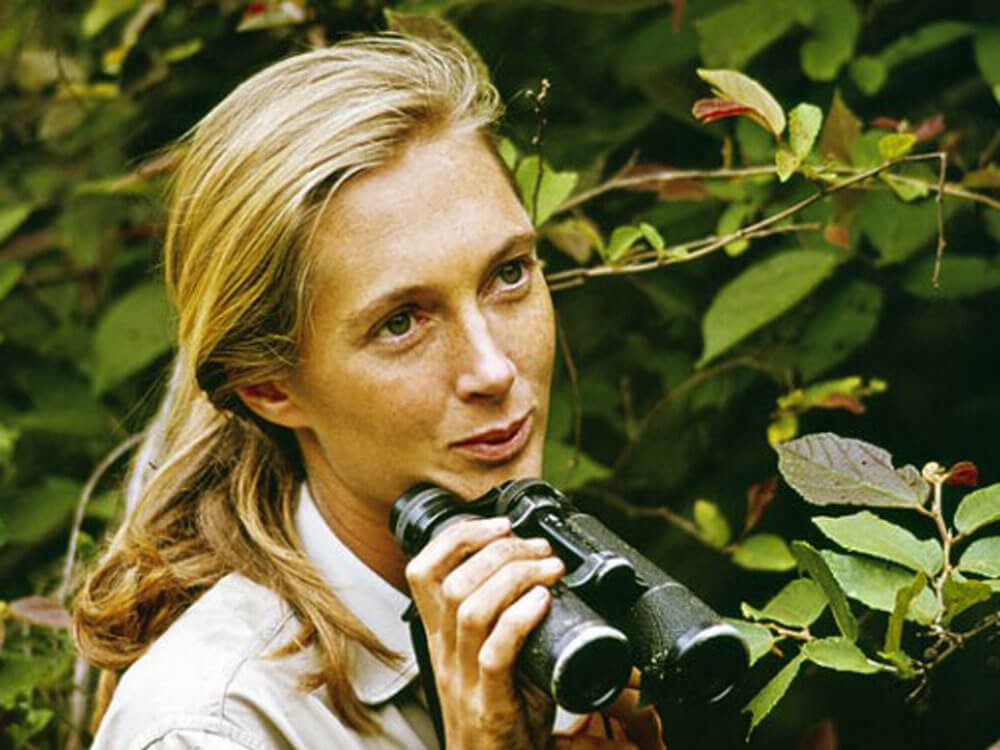
Jane Goodall stands as one of the most iconic figures in environmental science and wildlife conservation, transforming humanity’s understanding of primates and redefining the emotional intelligence of animals. Born in 1934 in London, she developed an early fascination with animals, nature, and field observation, often spending hours studying wildlife behavior with remarkable patience and empathy.
Goodall’s career began when she traveled to what is now Tanzania in the 1960s to study chimpanzees in the Gombe Stream National Park. Without formal scientific training at the outset, she introduced revolutionary observational methods that emphasized individual personality, emotional complexity, and social relationships among chimpanzees, challenging prevailing scientific assumptions of the time.
Her breakthrough came with her discovery that chimpanzees use tools, a finding that reshaped anthropological and biological understanding of the boundary between humans and animals. Throughout the 1990s, she transitioned from field research to global advocacy, focusing on conservation, habitat protection, and youth environmental education through initiatives like Roots & Shoots.
Goodall’s legacy is defined by her ability to humanize wildlife without diminishing scientific rigour, inspiring global movements in animal welfare and environmental conservation.
Key Facts
- Full name of the subject: Valerie Jane Morris-Goodall
- Date of birth: 3 April 1934
- Place of birth: London, England, United Kingdom
- Family background: Middle-class family with literary influences
- Early childhood experiences: Fascination with animals and field observation
- Education history: Uplands Secretarial School; later honorary scientific degrees
- Influences and mentors: Louis Leakey, field primatology pioneers
- Career beginnings: Secretary and assistant before field research in Africa
- Major achievements: Chimpanzee behavioral discovery; global conservation advocacy
- Challenges and obstacles faced: Gender bias and lack of formal scientific credentials early on
- Turning points in life: Discovery of tool use in chimpanzees
- Contributions to society: Wildlife conservation and animal behaviour science
- Personal life (marriage, children, relationships): Married twice; mother of one son
- Awards and recognitions: Dame Commander of the Order of the British Empire; UN Messenger of Peace
- Beliefs, values, or philosophy: Compassionate conservation and ecological respect
- Legacy and impact: Transformed primatology and global conservation ethics
- Historical or cultural significance: Redefined human-animal behavioral boundaries
Notable Works: In the Shadow of Man, Through a Window, Reason for Hope, The Chimpanzees of Gombe, Seeds of Hope
Controversies:
Early skepticism from the male-dominated scientific community
Criticism over anthropomorphism in animal behaviour interpretation
Debates within conservation circles over advocacy versus strict scientific neutrality
Despite criticism, her work remains foundational in primatology and conservation ethics.
10. Aldo Leopold
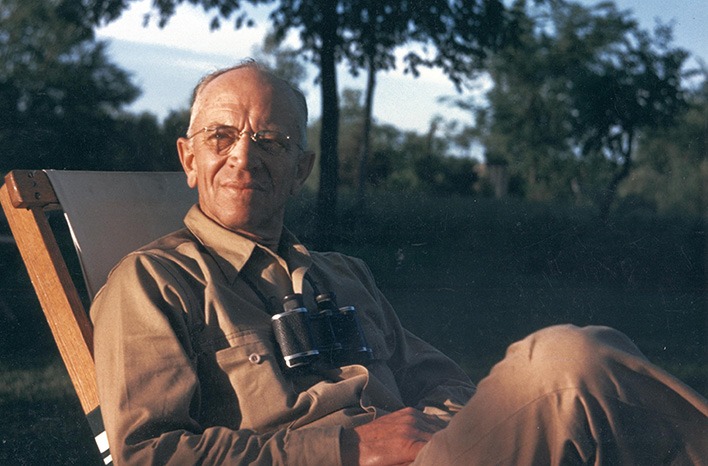
Aldo Leopold stands as one of the foundational voices of modern environmental thought—a scientist, forester, and writer whose work reshaped how humanity understands its relationship with land, wildlife, and ecological responsibility.
He was born on January 11, 1887, in Burlington, Aldo Leopold grew up in a family that valued education and close observation of the natural world. From an early age, he developed a deep fascination with birds, forests, and wilderness landscapes, spending much of his youth exploring his surroundings. This early curiosity would later evolve into a lifelong scientific and philosophical pursuit.
Leopold studied forestry at Yale University, one of the few formal programs in the United States at the time focused on scientific land management. After graduating, he joined the U.S. Forest Service, where he worked in the American Southwest. His early career involved practical forest management, but it was also where his thinking began to shift—from seeing land as a resource to be controlled, to seeing it as a living system to be understood.
During this period, he began advocating for wildlife conservation, particularly the protection of predators such as wolves, which were widely viewed as threats and routinely exterminated. Over time, Leopold came to see these actions as ecologically harmful, disrupting natural balance in ways that were not immediately understood.
His thinking matured into a broader ecological philosophy that would later become central to environmental science.
Leopold’s most influential idea is known as the “land ethic.” This concept argues that humans are not separate from nature, but part of a larger community that includes soils, waters, plants, and animals. In this view, land is not merely property or commodity—it is a living system to which humans have moral responsibility.
He expressed these ideas most clearly in his landmark book, A Sand County Almanac, published after his death. The book blends scientific observation, personal reflection, and philosophical insight, describing the rhythms of the natural world through seasonal changes on a Wisconsin farm.
One of the most famous passages in the book reflects his encounter with a dying wolf, which led him to reconsider humanity’s role in ecosystems. This moment became symbolic of his broader shift from control-oriented forestry to ecological awareness.
In addition to writing, Leopold was a professor at the University of Wisconsin, where he influenced a generation of students in wildlife management and conservation. His teachings helped establish ecology as a serious academic discipline and shaped early environmental policy thinking in the United States.
Tragically, Leopold died on April 21, 1948, while helping a neighbour fight a brush fire near his farm in Baraboo.
Although his life was cut short, his ideas continued to grow in influence. Today, he is widely regarded as one of the intellectual fathers of the environmental movement.
Aldo Leopold’s legacy is not only scientific, but moral. He challenged people to think beyond short-term gain and to recognize the long-term health of ecosystems as a shared responsibility.
In the end, his message remains simple but profound:
The health of the land is inseparable from the health of humanity itself.
Notable Mentions:
Edward Abbey
Chico Mendes
Sylvia Earle
Paul Hawken