Who Is Alex Barbir, The Vocal Missionary in Nigeria?
Who is Mr. Alex Barbir., is he a secret agent? What controversies have been tied to him outside of Nigeria?
There’s a lot of confusion around the name “Alex Barbir”, because it refers to different people in different contexts. The one you’re asking about (connected to Nigeria) is not a secret agent, based on available evidence.
Who is Alex Barbir (the one in Nigeria)?
The Alex Barbir currently being talked about in Nigeria is:
An American missionary, activist, and humanitarian
Associated with aid efforts in Nigeria’s Middle Belt (Benue, Plateau, etc.)
Linked to an organization called Building Zion
Known for:
Visiting attack sites and documenting violence
Rebuilding homes for displaced people
Attending burials and supporting victims
Publicly speaking about insecurity and killings
He has been very vocal about violence against Christian communities and has criticized authorities for what he sees as inaction.
Is he a secret agent?
There is no credible evidence from reliable sources that:
He Alex Barbir a spy?
He works for intelligence agencies (CIA, military intel, etc.)
He is secretly operating in Nigeria
What exists instead:
He is a highly outspoken foreign activist, which sometimes raises suspicion locally
He films and documents sensitive conflict zones, which can look unusual to some observers
But based on available information, he appears to be a religious/humanitarian actor, not an intelligence operative.
Controversies surrounding him
While not involved in classic “international scandals,” he has been part of several controversies and tensions:
1. Strong political and religious statements
He has accused Nigerian authorities of ignoring killings
He has used strong terms like “genocide” in describing violence
He openly criticizes government response
This has made him:
Popular among some groups
Alex Barbir Controversial among others
2. Tensions with Nigerian authorities
Reports suggest he faced:
Threats of arrest
Pushback from security agencies (like DSS)
This is likely due to:
His activism
Public criticism
Sensitive nature of the conflict he discusses
3. Involvement in sensitive religious conflict narratives
He frames violence largely as:
Targeted attacks on Christians
This framing is highly disputed and politically sensitive
Critics argue:
It may oversimplify a complex farmer–herder conflict
It could inflame tensions
4. Public disputes and threats around him
A Nigerian cleric warned that any harm to him would have consequences
His presence has become part of heated religious/political debates
Any controversies outside Nigeria?
There is no widely documented international scandal involving him outside Nigeria.
He is not known globally as a controversial figure
Most attention around him is localized to Nigeria and related advocacy circles
Bottom line
Not a secret agent (no credible proof)
He is a missionary + activist operating in a conflict zone
His controversies come from:
Strong political/religious statements
Criticism of government
Sensitive involvement in conflict narratives.
The real profile (not the simplified version)
What we can piece together from multiple sources:
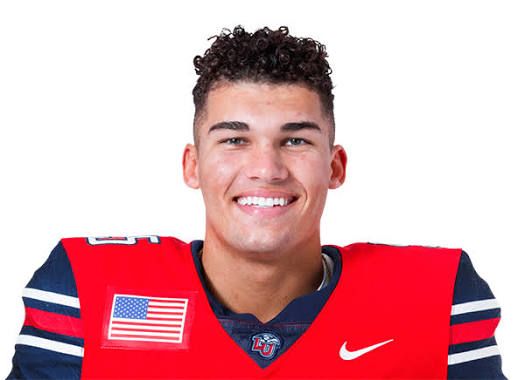
Young American (mid-20s), background in the U.S. (sports + likely evangelical networks)
Founder of “Building Zion” (faith-driven humanitarian NGO)
Operates directly in high-conflict zones (Benue, Middle Belt)
Personally oversees:
Reconstruction of villages
Aid distribution
Media exposure of violence
This is not typical missionary behavior.
Most missionaries:
Work through churches
Avoid politically sensitive narratives
Barbir does the opposite:
Goes to massacre sites
Speaks in geopolitical terms
Challenges state actors directly
That’s where suspicion begins.
2. The BIG controversy layer (often ignored)
A. He is shaping an international narrative
Barbir consistently frames the conflict as:
“Targeted killing of Christians” (often described as genocide)
Because in Nigeria, the conflict is usually described as:
Farmer–herder clashes
Resource + ethnic + climate conflict
His framing redefines the conflict globally.
Why that matters:
It attracts international religious attention
It can influence:
U.S. foreign policy
Sanctions discussions
NGO funding flows
He even called for U.S. intervention
That’s not neutral humanitarian language—that’s policy influence language.
B. Direct accusations against Nigerian government
He publicly alleged:
Corruption in humanitarian funding
Inflated government contracts
Misuse of IDP resources
Example:
Claimed projects quoted at ₦300M could be done for ₦50–60M
Said ₦1B housing plan could build 3,000 homes instead
This is explosive.
Why?
Because:
He’s a foreign national accusing a sovereign government
In a security-sensitive region
That alone can trigger:
Intelligence monitoring
Political backlash
Disinformation campaigns against him
C. He bypasses the system
Instead of:
Partnering deeply with government
He:
Builds independently
Funds directly
Engages communities without bureaucracy
This creates two problems:
Embarrasses local authorities
Raises suspicion:
“Who is funding him?”
“Why operate outside official structures?”
D. Funding opacity (this is where theories grow)
There is no widely published, audited transparency about:
Total funding sources
Donor networks
Institutional backing
We only see:
Project-level spending (e.g. tens of millions of naira)
That gap creates speculation:
Common theories (not proven, but widely discussed):
Backed by U.S. evangelical networks
Connected to international Christian advocacy groups
Soft-power religious influence project
Important:
None of these are proven—but the lack of transparency fuels them
3. Why people suspect “intelligence links”
Let’s be very clear:
There is NO verified evidence he is CIA, military intel, or a spy.
But people still suspect it because of patterns:
Pattern 1: Conflict-zone access
He operates in:
Areas with:
militia activity
ethnic violence
weak state control
That’s unusual for:
A young civilian foreigner
Pattern 2: Narrative influence
He:
Documents violence
Pushes a specific global narrative
Calls for foreign intervention
That overlaps with what analysts call:
“information shaping”
soft power influence
Pattern 3: Independence from institutions
He is not clearly tied to:
UN agencies
Major NGOs
Government programs
Yet:
Has access
Has funding
Has visibility
That combination always raises eyebrows.
4.
The religious geopolitics angle (this is the deepest layer)
This is where things get serious.
Barbir is operating in a space where:
Religion + politics + security intersect
His messaging aligns with:
Global evangelical concern about:
“Persecuted Christians”
This is a major geopolitical issue, especially in:
U.S. conservative policy circles
Faith-based lobbying groups
That means his work may indirectly feed into:
Congressional advocacy
Sanctions discussions
International pressure on Nigeria
5. Pushback & criticism
He is not universally accepted.
Criticism includes:
Oversimplifying a complex conflict
Ignoring non-religious drivers (land, climate, ethnicity)
Risk of inflaming tensions
Some commentators even dismissed him as:
An outsider interfering in local issues
6. So what is he REALLY?
Based on all available evidence:
Most likely:
A faith-driven activist with strong ideological beliefs
Operating independently in a high-risk zone
Using media + aid + advocacy together
Not proven:
Intelligence agent
Spy
Covert operative
Alex Barbir sits in a gray zone:
Aspect Reality
Humanitarian work ✅ Real
Political influence. ✅ Significant
Religious agenda. ✅ Strong
Government friction ✅ Documented
Intelligence links. ❌ No proof
The key insight most people miss
The real story isn’t “Is he a spy?”
It’s this:
He is part of a growing class of actors who combine:
Aid
Media
Religion
Political messaging
That combination is powerful—and controversial.